
Aliss Al Islam Reported for Suspect Bowling Action During UAE Tri-Series
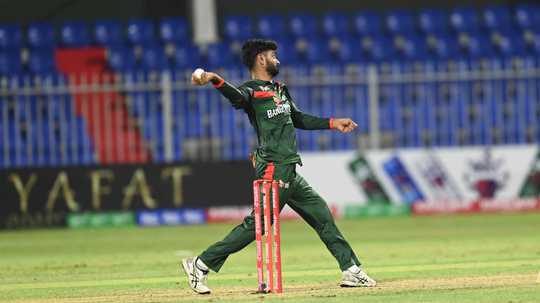
Bangladesh off-spinner Aliss Al Islam has been reported for a suspected illegal bowling action following his side’s match against Afghanistan in the United Arab Emirates (UAE) Tri-Series, the International Cricket Council (ICC) announced on Thursday, October 22. The report places the mystery spinner’s bowling technique under renewed scrutiny and means he must undergo an independent assessment before his eligibility to bowl can be confirmed.
According to the ICC, Aliss will be assessed at an accredited testing centre under the governing body’s regulations on illegal bowling actions. A report does not, by itself, amount to a finding that a bowler has broken the rules. The assessment is intended to determine whether his delivery action complies with the permitted limits for elbow extension. Until the process is complete, the case adds uncertainty to Bangladesh’s spin options and to the next stage of Aliss’s international career.
Another action concern for the Bangladesh spinner
The latest report is not the first time Aliss has faced questions about his action. In 2019, during his T20 debut for Dhaka Dynamites in the Bangladesh Premier League (BPL), he was called for a suspected illegal action. He was subsequently cleared to bowl after undergoing testing, allowing him to continue his career.
Concerns resurfaced in 2025 when Aliss was reported again while representing Chittagong Kings against Dhaka Capitals in the BPL. He was later cleared following an assessment at the Bangladesh Cricket Board’s testing centre. His return to bowling after those cases made his selection for Bangladesh’s UAE campaign possible, but the latest ICC report means his action will once again be examined through a formal process.
Before the tri-series, questions had also been raised about whether the spinner’s action might become an issue. Bangladesh chief selector Habibul Bashar defended the decision to select him, saying that the team had seen no problem with his action at the time. “We picked him because he is bowling and no problem was found as far as his action is concerned,” Bashar told Cricbuzz.
That earlier assurance reflected the information available to the selectors, but it does not determine the outcome of the ICC’s independent review. Bowling actions can be assessed in match conditions as well as through testing, and a new report can trigger another examination even when a player has previously been cleared. The upcoming assessment will therefore be important both for Aliss and for Bangladesh’s plans.
What happens after an ICC report?
Under the ICC’s illegal bowling action regulations, a reported player is required to undergo an independent assessment at an accredited facility. Specialists examine the bowler’s deliveries to establish whether the action stays within the rules. If the assessment finds that the action is illegal, the bowler may be suspended from delivering in international cricket until remedial work is completed and a further test provides clearance.
For Aliss, a successful assessment would allow him to continue bowling at the international level, as happened after previous reviews. If the test identifies a problem, he may need to adjust his action and work with coaches before being reassessed. The process is designed to protect the integrity of the game while giving bowlers a clear route to return if they can demonstrate a legal action.
The timing is significant because Bangladesh’s tri-series campaign has already been difficult. The team has lost both of its matches, going down to Zimbabwe and Afghanistan. Afghanistan and Zimbabwe are now set to meet in the final on October 23, leaving Bangladesh out of contention for the trophy.
Bangladesh’s spin plans face added uncertainty
Aliss’s case may not change the outcome of the current tournament, but it could influence Bangladesh’s preparations for upcoming fixtures. Teams rely on specialist spinners to control the middle overs, create pressure and offer a different challenge from pace bowling. A mystery spinner can be especially valuable because batters may have limited experience reading his variations.
At the same time, Bangladesh’s selectors will need clarity about Aliss’s availability before deciding how to use him in future squads. If he is cleared, the team can continue evaluating his role on cricketing grounds. If he is required to make changes, the coaching staff may need to balance his development with other spin options already available in the national setup.
The report also highlights the fine line between a bowler’s natural variation and a delivery action that falls outside the regulations. Off-spinners often use changes in pace, trajectory and release to deceive batters, but those variations must remain within the rules. An independent test can provide a more reliable answer than public speculation, particularly when a player has already been cleared in earlier assessments.
What to watch next
The key development to follow is the outcome and timing of Aliss’s assessment. Until the ICC process is completed, predictions about his immediate role in Bangladesh’s plans remain uncertain. His previous clearances may offer grounds for confidence, but they do not guarantee the result of a new test, which will assess his current action.
For Bangladesh supporters, the case is one to monitor alongside the team’s broader rebuilding after two defeats in the UAE Tri-Series. The final between Afghanistan and Zimbabwe will decide the tournament, while Aliss’s assessment will determine whether the off-spinner can remain part of Bangladesh’s bowling picture without interruption. The next official update from the ICC or the Bangladesh Cricket Board should provide greater clarity on the spinner’s status.