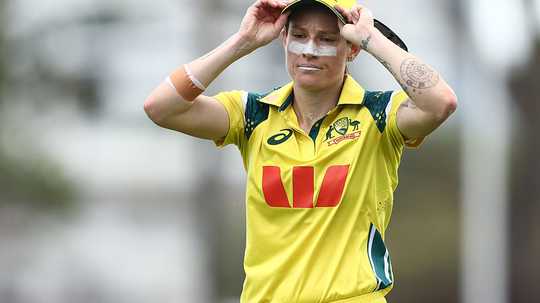

Megan Schutt Suspended for Two Matches After Prescription Medication Breach
Australia fast bowler Megan Schutt has received a two-match suspension after failing to follow Cricket Australia’s requirements for prescription medication. The breach occurred while she was out of competition and was not connected to performance enhancement, according to the governing body.
The penalty will apply to all international and domestic cricket, with the two-match period beginning at whichever level Schutt is next scheduled to play. As a result, the experienced pacer will miss Australia’s third and final T20I against New Zealand at North Sydney Oval on Thursday, October 22, as well as the Adelaide Strikers’ opening match of the WBBL 2026 season against the Melbourne Stars on October 31.
What Cricket Australia Said About the Breach
Cricket Australia said the matter involved a failure to comply with its Sports Science and Sports Medicine guidelines relating to prescription medication. The organisation described it as a single incident that took place outside the playing season and stressed that it was not undertaken for performance-enhancing purposes.
“We will continue to provide appropriate support to Megan and reinforce the standards and responsibilities expected of everyone representing our game,” Cricket Australia said in its statement.
The distinction between a medication breach and a doping offence is important. The information released by Cricket Australia does not suggest that Schutt used a prohibited substance to improve her performance. Instead, the issue was her failure to meet the required process for prescription medication—a responsibility that applies to players even when they are not competing.
Schutt Accepts Responsibility
Schutt accepted the sanction and apologised for not following the guidelines. In her statement, the 33-year-old said she understood that players receive regular education about the rules and that she was responsible for complying with them.
“I fully accept the penalty handed down and apologise for failing to meet the standards expected of me,” Schutt said. She also expressed regret for the attention the incident had generated and thanked those who had supported her.
Schutt acknowledged that the incident occurred outside competition and was not performance-related, but said those circumstances did not remove her obligation to follow the Sports Science and Sports Medicine Guidelines. Her response signals that she is not contesting the decision and recognises the importance of the procedures governing medication use.
Immediate Impact on Australia and Adelaide Strikers
The suspension comes at a busy point in the Australian women’s cricket calendar. Schutt’s absence from the final T20I against New Zealand removes a senior pace option from the squad for the series decider. Australia will need to adjust its bowling plans, particularly during the powerplay and at the death, phases in which Schutt’s experience and control have often been valuable.
Her unavailability also affects Adelaide Strikers as they prepare for the start of WBBL 2026. Missing the opener against Melbourne Stars means the franchise will have to plan without one of its established fast bowlers. The exact team changes will depend on the available squad, conditions and the balance the Strikers want between pace and spin.
For fans following team selection, this is a notable development, but it does not by itself determine the outcome of either fixture. Any cricket prediction for the Australia–New Zealand match or the WBBL opener should account for Schutt’s absence alongside other factors, including form, venue conditions, opposition match-ups and the replacement bowlers selected.
Why Medication Rules Matter in Professional Cricket
Prescription medication can require careful handling in elite sport. Players may need to disclose medicines, seek approval or follow specific documentation procedures, depending on the substance and the applicable sporting rules. These safeguards help cricket authorities manage health needs while ensuring that players understand their responsibilities under anti-doping and medical policies.
Following the process is important even when a medication is prescribed for a legitimate health reason and is taken outside competition. A player’s status as an athlete can mean that ordinary medical treatment requires additional checks. Clear communication between players, medical staff and governing bodies can help reduce the risk of errors, particularly when a treatment is started or changed away from a team environment.
Cricket Australia has not publicly detailed the medication involved or provided further information about the circumstances. Without those details, it would be inappropriate to speculate about Schutt’s treatment or the specific procedural step that was missed. The confirmed facts are that the breach concerned prescription medication guidelines, involved one out-of-competition incident, and was not performance-enhancing in nature.
A Short Suspension, but a Reminder of Player Responsibilities
Although the two-match ban is limited, the case highlights how administrative and medical responsibilities remain part of professional cricket. Players are expected to know and follow the rules that apply to them throughout the year, not only when they are selected for a match or training with their teams.
Schutt’s acceptance of the penalty and Cricket Australia’s commitment to supporting her point to a response focused on accountability and education. Her return will follow the completion of the suspension, subject to team selection. In the meantime, Australia and Adelaide Strikers must prepare for key fixtures without one of their experienced pace bowlers, while supporters will be watching to see how both teams adapt.