
World Champion or European Champion? The Ballon d’Or Debate Between Lamine Yamal and Khvicha Kvaratskhelia
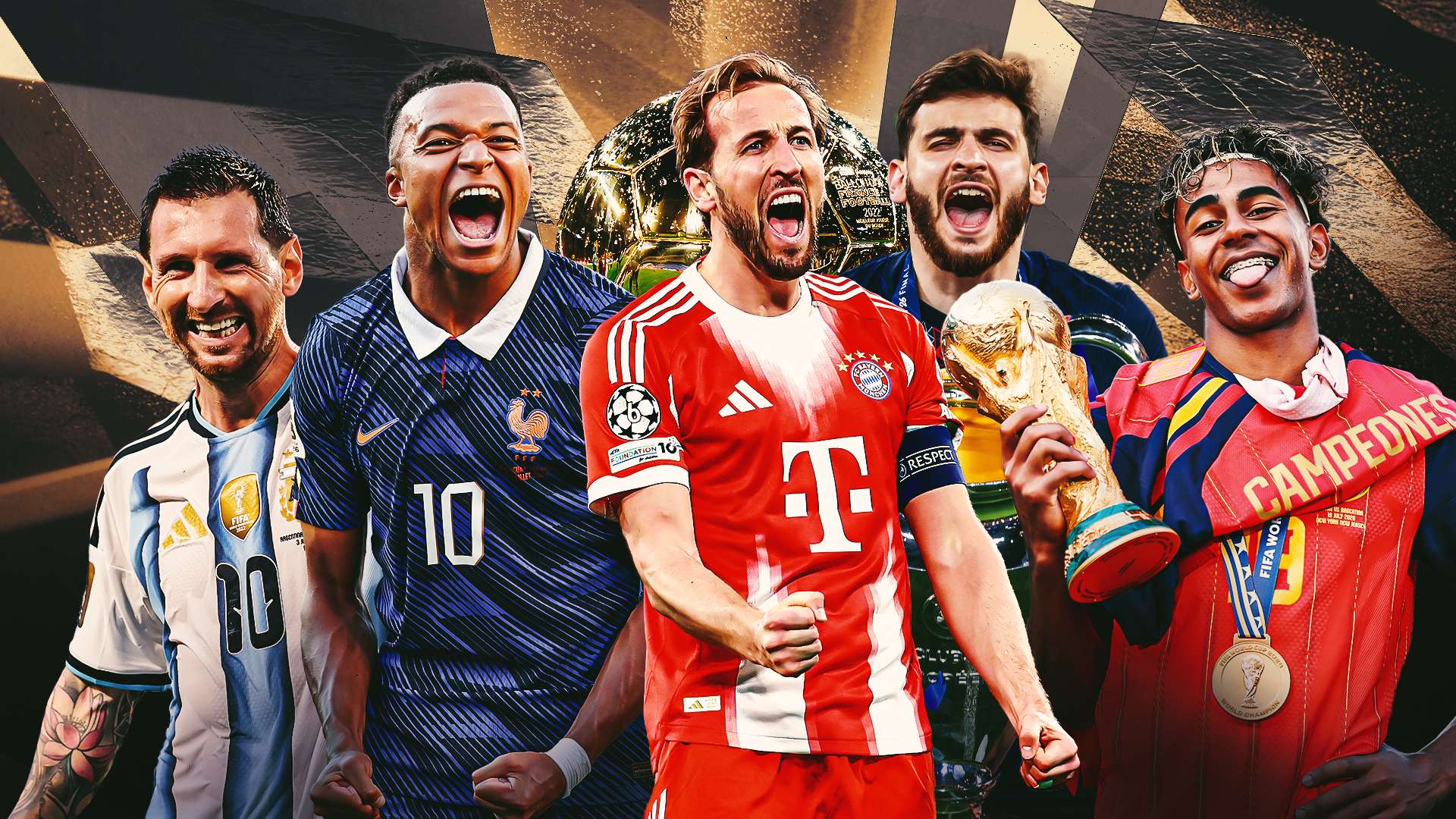
As the Ballon d’Or ceremony approaches, the comparison between Lamine Yamal and Khvicha Kvaratskhelia captures one of football’s most enduring debates: should the sport’s highest individual honour reward the season’s most impressive achievements, the strongest personal performances, or the player who has most captured the public imagination?
Yamal, Barcelona’s teenage sensation, arrives with extraordinary attention from fans and media. His confidence, creativity and ability to change a match have made him one of the most talked-about players in world football. Kvaratskhelia, meanwhile, has built a compelling case through a remarkable European campaign with Paris Saint-Germain. Yet his season was overshadowed by a devastating injury: he suffered a cruciate ligament tear during the teams’ latest encounter, a painful moment that unfolded in front of the player widely viewed as one of the leading contenders for the award.
The contrast is striking. One player represents the excitement of emerging talent and a rapidly growing global profile; the other embodies the impact of a standout campaign on Europe’s biggest stage. Their comparison is not simply about who is better. It reveals how difficult it can be to measure individual excellence across different competitions, roles and circumstances.
Yamal’s momentum and the power of a breakout season
At just 17, Yamal has already become a central figure in conversations about the future of football. His performances for Barcelona have shown a rare combination of close control, quick decision-making and composure under pressure. Rather than playing like a prospect who is still learning the demands of elite competition, he often looks comfortable taking responsibility in decisive moments.
That maturity has helped fuel the excitement surrounding his Ballon d’Or prospects. Supporters are drawn not only to his technical ability but also to the sense that they are watching the beginning of something significant. A young player producing influential performances for one of the world’s most recognised clubs naturally attracts attention—and attention can become an important part of the award conversation.
Still, a prediction about Yamal’s eventual place in the Ballon d’Or rankings should be separated from an assessment of his season against the achievements of every other candidate. Potential is not the same as accomplishment. The award is intended to recognise performance over a defined period, even though voters and fans may also be influenced by a player’s age, reputation and apparent long-term ceiling.
Kvaratskhelia’s European case—and the impact of injury
Kvaratskhelia’s claim rests on a different foundation. His European season with PSG gave him the opportunity to demonstrate his influence in high-pressure matches, where small details can determine whether a campaign continues or ends. His direct attacking style, ability to create danger and willingness to take on defenders have made him a significant presence in the side’s forward play.
European success can carry particular weight in Ballon d’Or discussions. Performances in major continental fixtures are watched by a global audience and often become defining moments in a player’s season. A contribution made on that stage may resonate more strongly than an equally impressive display in a less widely followed match. For Kvaratskhelia, that visibility strengthens the argument that his campaign deserves serious recognition.
But the injury has changed the emotional tone around his season. A cruciate ligament tear is a serious setback, bringing uncertainty about recovery and a long period away from the pitch. The incident also serves as a reminder that football’s most memorable campaigns can be interrupted without warning. Sympathy for an injured player is natural, but it is not necessarily the same as evidence for an individual award. The key question is whether voters should judge the body of work completed before the injury, or whether availability and the season’s overall narrative should influence the result.
What should a Ballon d’Or prediction measure?
There is no simple formula for deciding who deserves the Ballon d’Or. Individual statistics can help describe a player’s contribution, but they rarely tell the whole story. Goals and assists matter, yet so do chance creation, defensive work, consistency, leadership and the ability to influence important matches. A forward who repeatedly opens up a defence may be valuable even when another teammate finishes the move.
Team achievements also shape the debate. Winning a major trophy can strengthen a player’s case by demonstrating that their performances contributed to success in the most demanding competitions. However, football remains a team sport, and a trophy alone cannot explain how much an individual contributed. Voters must balance collective results with the player’s own influence rather than treating either factor as decisive on its own.
Timing and visibility complicate matters further. A spectacular performance late in the season can remain fresh in voters’ minds, while a consistently excellent campaign may receive less attention if it produces fewer headline-making moments. Media coverage, fan enthusiasm and a compelling personal story can all amplify a candidacy. That does not make public interest irrelevant, but it does raise a fair question: are voters rewarding the best season, or the season that was easiest to remember?
Talent, achievement and the story around the player
The Yamal-versus-Kvaratskhelia discussion brings those competing standards into focus. Yamal’s appeal is tied to both what he has already achieved and what he appears capable of becoming. Kvaratskhelia’s case is more closely connected to his impact in a major European campaign and the quality of his performances before injury disrupted his season.
These are not mutually exclusive measures of greatness. A player can be exceptionally talented without having the strongest trophy record, while another can help deliver a major achievement without being the most prominent name in the public conversation. The Ballon d’Or attempts to bring these factors together, but any ranking will reflect subjective judgments about which qualities matter most.
For fans making a football prediction ahead of the ceremony, the most useful approach is to look beyond a single storyline. Consider the full season, the level of competition, the player’s role within the team and the significance of their performances. Then account for the less measurable elements—consistency, influence and the moments that shaped the campaign—without allowing popularity or sympathy to decide the argument by themselves.
A debate that goes beyond one award
Whether voters favour Yamal’s remarkable rise or Kvaratskhelia’s European contribution, their comparison highlights the challenge of choosing one individual from a sport built around collective effort. The award is not merely a contest between statistics or trophies. It is also a judgment about how talent, achievement, influence and timing should be weighed.
That is why the debate remains compelling. Yamal represents the thrill of a young star already commanding the biggest stages, while Kvaratskhelia’s campaign illustrates the value of decisive European performances—and the fragility of a season shaped by injury. The final Ballon d’Or result may settle the ranking, but it will not settle the broader question: what, ultimately, makes a footballer the most deserving player of the year?