
Tanvi Sharma’s Denmark Open Run Ends Against World Champion An Se-young
India’s Tanvi Sharma bowed out of the Denmark Open in the quarterfinals on Friday after world champion An Se-young produced a composed, commanding performance to win 21-15, 21-13 in Odense. Tanvi showed determination in the opening exchanges, but An’s relentless defence, precise placement and ability to control the pace proved decisive in the two-game badminton contest.
The result ended a promising tournament run for Tanvi, who faced one of the sport’s toughest tests against the reigning world champion. For the young Indian, the quarterfinal offered valuable experience against an opponent renowned for turning difficult rallies into opportunities and making even aggressive shots feel risky.
Tanvi starts with purpose, but An controls the rallies
The opening game began evenly, with the players level at 2-2 as Tanvi looked to establish her rhythm. She used controlled length clears to push An towards the back of the court and mixed them with straight drives in an effort to keep the rallies direct. Her early approach was measured: rather than rushing for winners, she tried to build points and make the world champion cover ground.
For a time, the plan helped Tanvi remain competitive. Her deep shots tested An’s positioning, while her willingness to engage in longer exchanges showed confidence against a player who has built her reputation on consistency and court coverage. But sustaining that pressure was difficult. An repeatedly returned shots that might have ended rallies against other opponents, forcing Tanvi to play one more stroke and search again for an opening.
That defensive resilience narrowed Tanvi’s margin for error. As she attempted to increase the pace, several drives down the line drifted wide or travelled long. An, meanwhile, used accurate placements to move her opponent from side to side, often changing direction just as Tanvi appeared ready to settle into a rally.
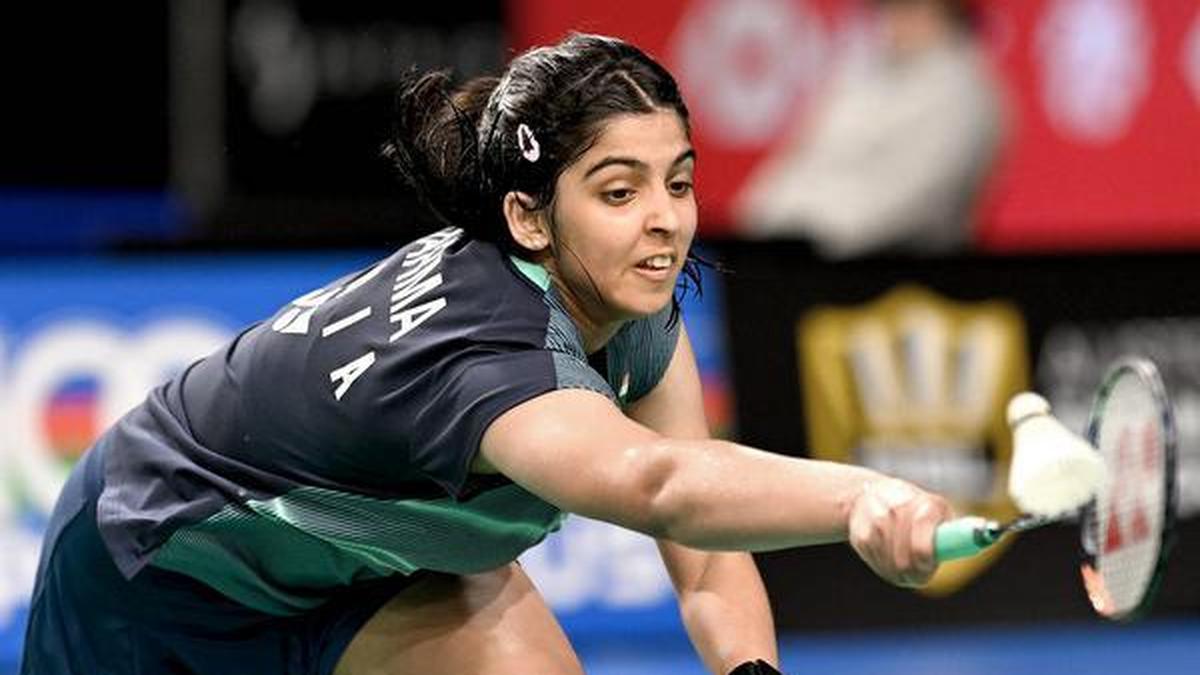
One particularly demanding baseline exchange captured the intensity of the match. Tanvi stretched deep to chase a sharp cross-court placement and ended up on the floor while trying to keep the rally alive. The effort underlined her commitment, but it also illustrated the physical challenge of facing An, whose ability to retrieve and redirect the shuttle can turn a promising attacking sequence into another test of endurance.
An closes out the first game
At 17-11 down, Tanvi continued to look for a way back. She combined deep lifts with quicker exchanges near the net, hoping to disrupt An’s rhythm and force a shorter reply. However, the world champion remained composed under pressure, covering the court efficiently and limiting the space available for Tanvi to attack.
Tanvi’s efforts to finish points more quickly brought added risk. When her attacking shots failed to land inside the lines, An was able to regain control and extend the rallies. The Indian shuttler battled to reduce the gap, but An maintained her advantage and took the first game 21-15.
The score reflected more than a strong start from the world champion. An’s consistency made it difficult for Tanvi to convert effort into clear openings, while her ability to vary placement kept the Indian from building a sustained attacking pattern. In elite badminton, a player can be forced into errors not only by speed but also by the repeated demand to make precise decisions under pressure.
Early second-game surge puts An in command
Tanvi had little time to reset before An raised the intensity at the start of the second game. The South Korean raced to a 4-1 lead with sharp, aggressive placements that pushed Tanvi into defensive positions. Rather than relying on power alone, An moved the shuttle around the court and made her opponent work to reach each return.
By the interval, An had opened a 11-5 advantage. Tanvi’s defensive clears were not consistently reaching deep enough, allowing the world champion to step forward and take control of the next shot. Once An began dictating the rallies, Tanvi was left with fewer chances to attack on her own terms.
The physical demands also became more apparent as the match progressed. Tanvi had stayed close enough to challenge in the first game, but An’s changes of pace and direction required her to cover nearly every corner of the court. Repeatedly moving from the baseline to the net and back made it harder to maintain the same accuracy and attacking threat.
An did not allow the Indian a sustained run of points. Her patient defence absorbed pressure, while her placement ensured that Tanvi had to keep moving rather than settle into a comfortable rhythm. Tanvi continued to compete, but the gap created early in the game proved difficult to close. An eventually secured the second game 21-13, sealing her place in the next round and ending Tanvi’s Denmark Open campaign.
A demanding test and a valuable learning opportunity
Although the defeat brought Tanvi’s tournament to a close, the quarterfinal was a significant test against a player at the top of the women’s game. Facing An gave the Indian a clear measure of the demands required at this level: sustained accuracy, the ability to defend multiple attacking shots and the patience to wait for openings without forcing the pace.
For Tanvi, the match also highlighted areas that could shape her development. Improving the depth of defensive clears would help prevent opponents from taking the shuttle early, while greater control on straight drives could reduce unforced errors when rallies become intense. Just as importantly, finding ways to vary her own pace may help her disturb the rhythm of opponents who excel in long exchanges.
An’s victory, meanwhile, demonstrated why she remains such a formidable force in international badminton. She combined movement, discipline and precise shot selection to keep Tanvi under pressure from start to finish. The 21-15, 21-13 scoreline brought the quarterfinal to a relatively swift conclusion, but the contest still offered a demanding lesson in the fine margins that separate promising attacks from winning ones.