
Argentina Begin a New Chapter With Friendlies Against Uruguay and Costa Rica
Argentina’s national football team will face Uruguay and Costa Rica in November friendlies, marking the squad’s first scheduled matches since Lionel Messi’s international retirement. The fixtures offer coach Lionel Scaloni an early opportunity to test his options without the country’s record goalscorer and most-capped player, while giving supporters a first look at how the team may evolve after the end of an era.
The Argentine Football Association announced the games on Friday through its official account on X. Argentina are due to meet Uruguay on 13 November in Buenos Aires before taking on Costa Rica four days later, on 17 November, in Córdoba. Reports in the Argentine press have identified La Bombonera as the likely venue for the Uruguay match, with the Mario Kempes Stadium expected to host the Costa Rica fixture.
Two opponents, two different tests
The opening match against Uruguay should provide a demanding measure of Argentina’s readiness. The neighbouring sides share a long football rivalry, and their meetings are rarely short on intensity. Uruguay’s pressing, physical approach and quick transitions could challenge Argentina’s ability to control the midfield and build attacks patiently—particularly as Scaloni experiments with new combinations.
Costa Rica present a different kind of examination. The Central American side can offer Argentina a chance to work on possession, attacking movement and finishing against a compact defensive shape. Taken together, the two games give the coaching staff useful variety: one opponent likely to test Argentina in a high-pressure contest, and another that may require the reigning champions to find solutions against a disciplined block.
For fans searching for an early football prediction ahead of the fixtures, Argentina will naturally enter both matches with strong expectations. However, friendlies are also built around experimentation. Scaloni may use the games to assess younger players, adjust the team’s structure and identify who can take greater responsibility in the final third. The results will matter, but the performances and emerging partnerships may be more revealing.
Life after Messi begins in familiar surroundings
Messi’s departure leaves a major sporting and emotional gap. For more than two decades, Argentina’s attack was shaped around his ability to create chances, score from difficult positions and change the rhythm of a match with a single touch. The team must now find ways to distribute those responsibilities rather than expect one player to reproduce his influence.
That does not mean Argentina are starting from scratch. The squad still includes players who have won major international honours and have competed together through difficult qualifying campaigns and high-pressure tournaments. Scaloni’s challenge is to preserve the team’s collective identity while allowing new leaders to emerge. The November fixtures may therefore be less about finding a direct replacement for Messi and more about building a balanced attack with several sources of creativity.
Argentina’s depth will be important in that transition. Wide forwards, attacking midfielders and full-backs may all be asked to contribute more to chance creation, while the central players will need to keep the team connected when possession is lost. The coaching staff can also assess whether Argentina should retain the same tactical shape or adapt it to make better use of the players available.
A historic international career
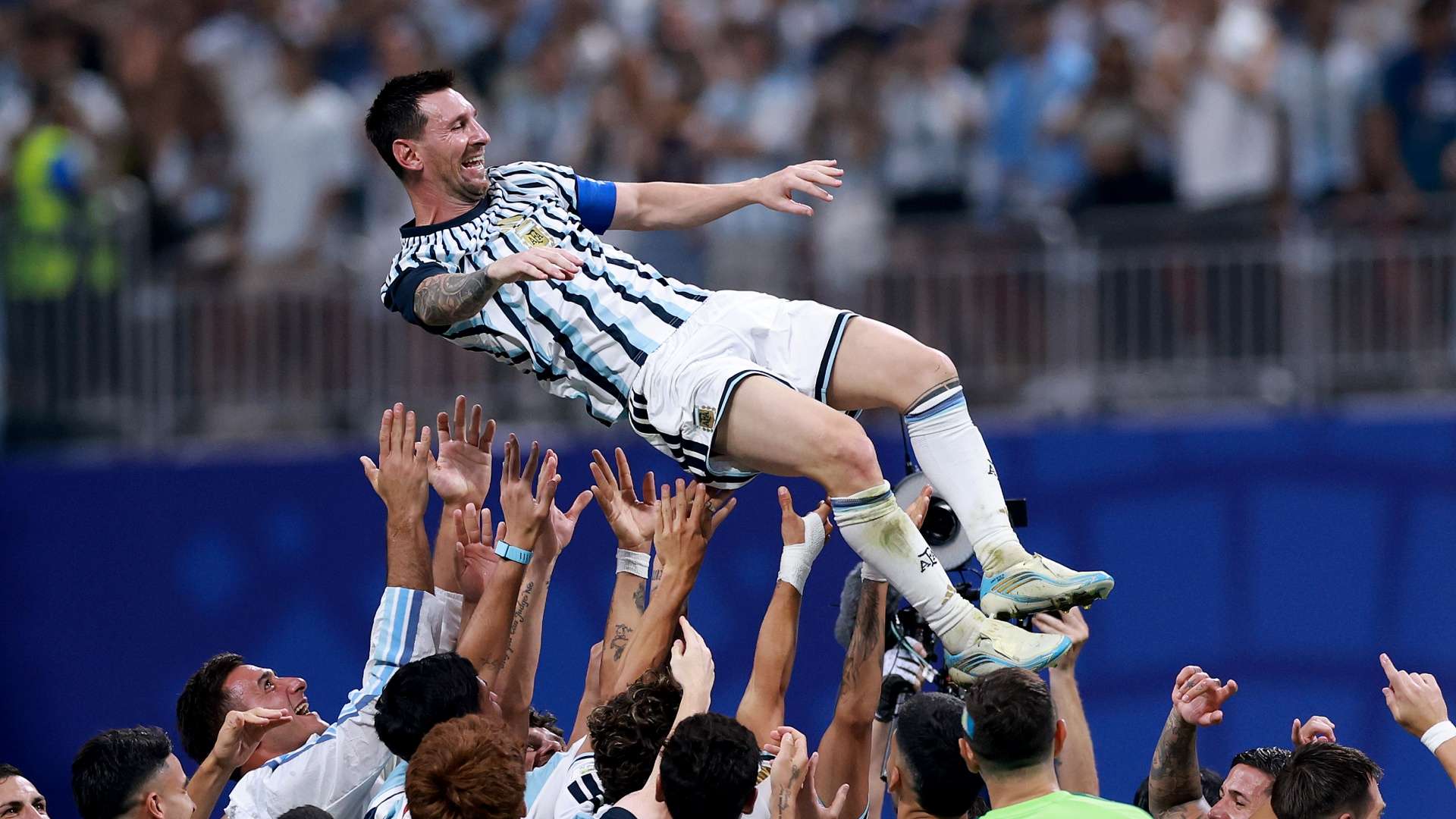
Messi’s farewell came in a friendly against Benin at Buenos Aires’ Monumental Stadium on 6 October, according to the original report. Argentina won 3–0, and the captain marked the occasion with a penalty goal and two assists. It was a fitting final performance for a player whose influence extended far beyond his scoring record.
He finished his international career with 126 goals in 208 appearances, both national records. His journey with Argentina began in 2005, when he made his debut as an 18-year-old. Across 21 years, he experienced setbacks as well as triumphs, eventually helping the country win the 2022 World Cup and two Copa América titles. Those successes transformed the story of his international career and cemented his place among Argentina’s most celebrated sporting figures.
According to the supplied account, Messi’s final official appearance came at the 2026 World Cup, where he scored eight goals and provided four assists as Argentina reached the final. Spain won the match 1–0 after extra time. Although the result denied Argentina another title, Messi’s contribution to the campaign added a remarkable final chapter to his record at the highest level.
What the November matches could reveal
The friendlies against Uruguay and Costa Rica will not settle every question about Argentina’s post-Messi future, but they can provide an important starting point. Supporters will be watching to see who takes charge of set pieces, which players become the main creators and whether the team can maintain its attacking confidence without its most influential figure.
Scaloni may also use the fixtures to broaden the pool of players capable of contributing in meaningful roles. International windows are valuable opportunities to build depth, especially with a demanding schedule ahead. A strong showing from emerging players could give Argentina more tactical flexibility and reduce the pressure on any single star to carry the attack.
For the crowd in Buenos Aires and Córdoba, the occasion will carry a mix of anticipation and nostalgia. Messi’s absence will be felt, but the team’s next chapter is already taking shape. Argentina’s November football schedule offers a chance to honour the past while testing the ideas, players and partnerships that could define the national side in the years ahead.