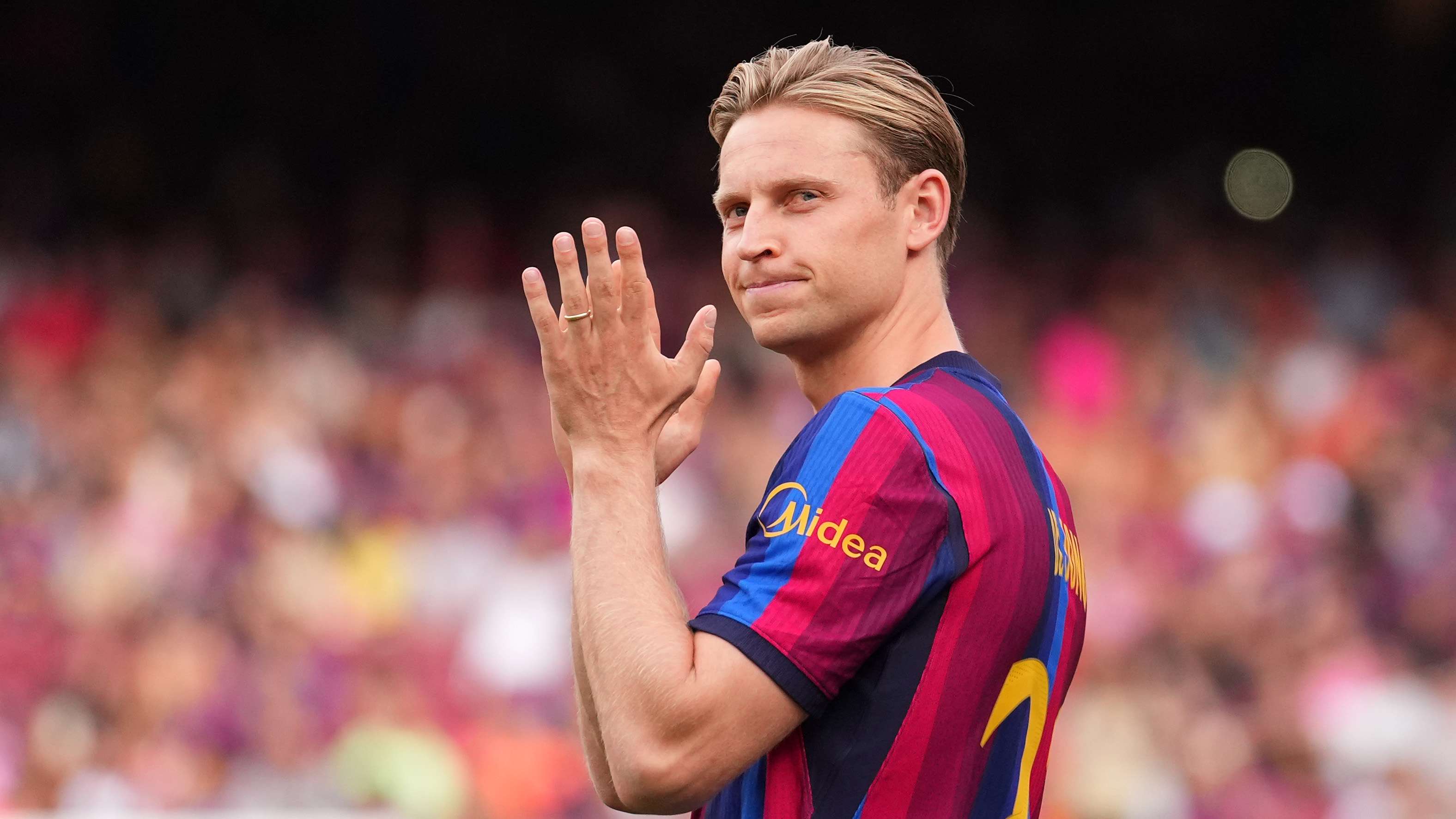

Frenkie de Jong Returns to Barcelona After a Long Injury Ordeal
Barcelona have received a major boost with Frenkie de Jong declared fully fit and available to head coach Hansi Flick. The Dutch midfielder has returned to the squad for the eagerly anticipated meeting with Real Betis, bringing an end to a difficult spell marked by injuries, missed matches and uncertainty over his recovery.
For Barcelona supporters, De Jong’s comeback is about more than adding a familiar name to the team sheet. His absence has stretched across a turbulent period, and his return gives Flick another technically gifted option as the club navigates a demanding schedule. It also raises an intriguing question for fans following the latest football news: will De Jong reclaim his usual midfield role, or could the coach use him in a new position?
A Timeline of De Jong’s Injury Setbacks
De Jong’s recent difficulties followed a season in which he had already missed nine matches because of four separate injuries. According to Spanish newspaper Mundo Deportivo, another series of setbacks then interrupted his progress and ultimately led to a lengthy absence.
5 September: An early muscle injury
The first reported problem came while De Jong was representing the Netherlands against Lithuania. He sustained a minor injury to the external obturator muscle in his right leg, forcing him to miss Barcelona’s match against Valencia. At the time, the issue appeared relatively minor, and there was little indication that a much longer spell on the sidelines might follow.
26 February: A training-ground setback
A later injury occurred during training, when De Jong reportedly damaged the lower part of a muscle in his right leg. The problem ruled him out of six matches, including fixtures against Villarreal, Atlético Madrid, Athletic Bilbao, Newcastle, Sevilla and Rayo Vallecano. Missing games across several competitions disrupted his rhythm and limited Flick’s options in midfield.
11 May: An unexplained absence
De Jong then missed matches against Alavés and Real Betis after another setback. Barcelona did not provide a detailed public explanation at the time, leaving supporters uncertain about the seriousness of the issue. The lack of clarity added to concerns that the midfielder was struggling to return to full fitness.
June: The World Cup injury that changed everything
The most significant episode came during the World Cup, where De Jong played six full matches for the Netherlands despite experiencing discomfort. Barcelona later confirmed that he had suffered a tear to the medial collateral ligament in his right knee. The revelation raised questions about how the injury had been assessed and about the risks involved in continuing to play.
De Jong Explains His Decision to Keep Playing
In an interview with Barcelona’s media, De Jong described his frustration at being unable to play and explained how the knee injury happened. He said another player fell on top of him, causing what he initially understood to be a minor problem. After undergoing tests, he was told he could continue, although he might feel pain and discomfort.
De Jong said he had been assured that playing would not make the injury worse. With the World Cup representing a major opportunity for the Netherlands midfielder, he chose to carry on. He later acknowledged how much the experience had affected him, explaining that playing football for Barcelona and his national team is what he enjoys most.
His account offers useful context for fans assessing the recovery. A player’s willingness to compete can be powerful, but it does not remove the need for careful medical monitoring, particularly when knee ligaments are involved. In De Jong’s case, the eventual diagnosis meant that a seemingly manageable problem developed into a substantial interruption to his season.
The Cost of the Knee Injury
The ligament damage proved to be the most damaging setback of the run. De Jong missed 14 matches during the season: 10 for Barcelona and four for the Netherlands. His club absences included games against Elche, Athletic Bilbao, Rayo Vallecano, Valencia, Feyenoord, Levante, Racing Santander, Sevilla, Getafe and Galatasaray. He also missed international fixtures against Germany, Serbia and Greece, among others.
Those missed appearances affected more than the team’s selection plans. De Jong is valued for his ability to receive the ball under pressure, carry it through midfield and connect defensive possession with attacking play. When he is unavailable, Barcelona lose a player who can help control the tempo and provide an alternative to more direct routes forward.
What De Jong’s Return Means for Flick
Now medically cleared, De Jong faces a different challenge from the one he left behind. Barcelona’s midfield has continued to evolve during his absence, and competition for places remains intense. Reports suggest that Flick is considering how best to fit the Dutchman into the current structure, including the possibility of using him as a left-sided centre-back.
That idea would represent a notable change for a player best known as a midfielder. De Jong’s composure, passing range and ability to progress the ball could offer advantages in a deeper role, although adapting to centre-back would also demand different defensive responsibilities. Flick may choose to test the option gradually rather than immediately move De Jong away from the position where he has built his reputation.
His return should therefore be viewed as a fresh start, not an automatic guarantee of a regular starting place. Barcelona will need to manage his workload carefully after such a prolonged injury spell, while De Jong will need time to rebuild match fitness and regain consistency. A gradual reintegration could be more valuable than rushing him into consecutive high-intensity fixtures.
Barcelona’s Next Step: A Careful Comeback
De Jong’s availability for the Real Betis fixture gives Flick welcome flexibility and gives supporters reason for optimism. The midfielder’s recovery ends a painful chapter, but the next phase will be about proving that his fitness can hold up and finding the role that best serves the team.
For fans looking ahead, any prediction about De Jong’s immediate impact should account for both his quality and the time he has spent away from competitive football. If he returns steadily, Barcelona could regain a valuable playmaker capable of strengthening possession and improving their options across the pitch. His comeback is a significant boost—but how Flick uses him may be just as important as the return itself.