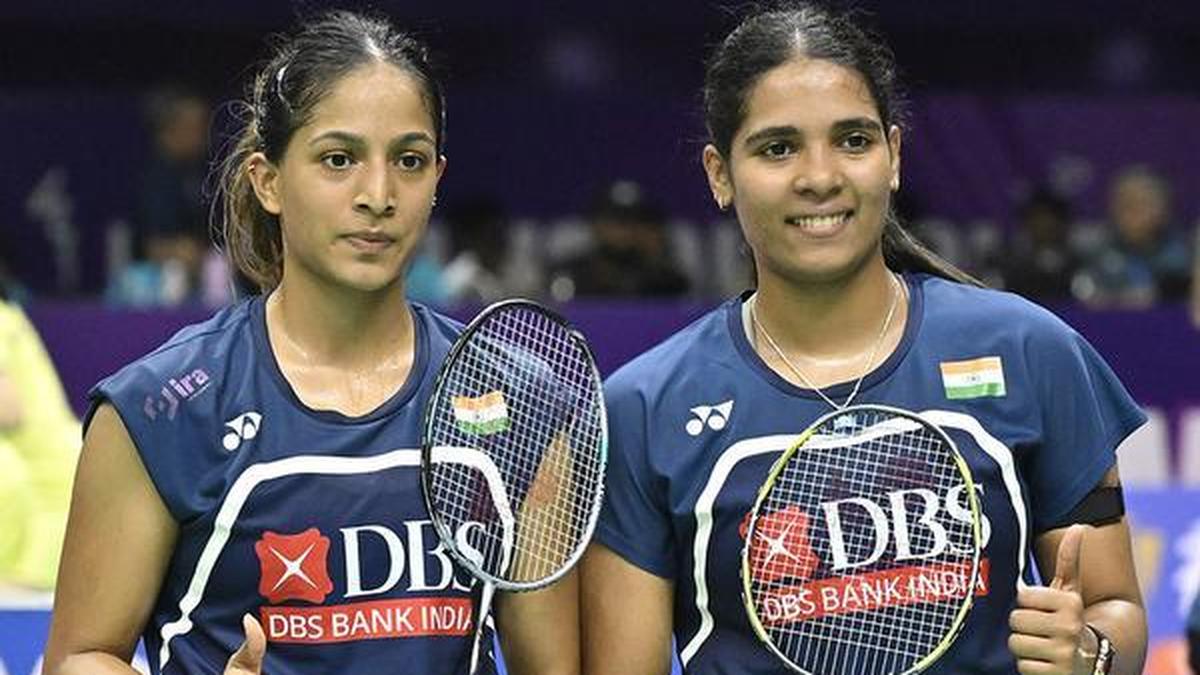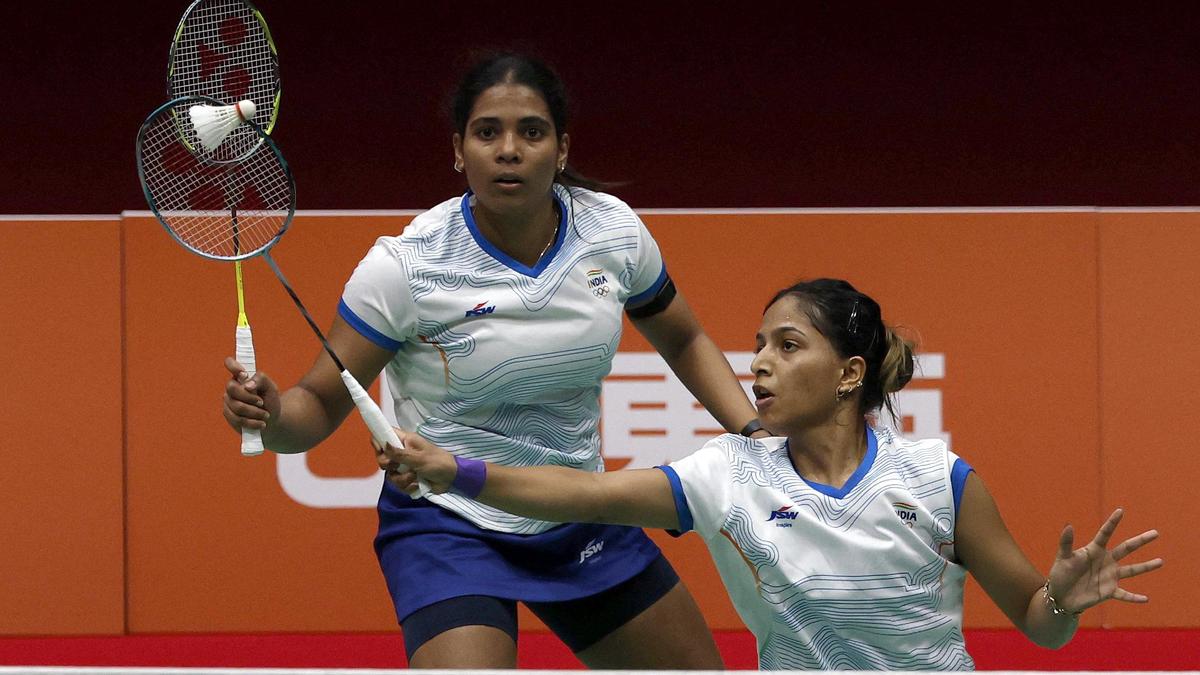

Treesa Jolly and Gayatri Gopichand Exit Denmark Open in Quarterfinals
India’s Treesa Jolly and Gayatri Gopichand bowed out of the Denmark Open after a three-game quarterfinal defeat to Malaysia’s second-seeded women’s doubles pair, Pearly Tan and Thinaah Muralitharan. The Indian duo claimed the opening game 21-14 but could not maintain its advantage, falling 17-21, 11-21 in a contest that shifted decisively in the Malaysians’ favour.
The result ends the World No. 18 pair’s run at the prestigious badminton tournament, but their strong start showed the quality that has made them a competitive presence on the international circuit. Tan and Muralitharan, meanwhile, demonstrated their ability to adjust under pressure and take control through sharper angles, sustained rallies and effective court coverage.
India make a confident start
Jolly and Gopichand opened the match with purposeful net play, using accurate touches to disrupt the Malaysians’ positioning and move into an early 8-4 lead. Their willingness to take the shuttle early helped them dictate the pace, while well-placed shots made it difficult for Tan and Muralitharan to settle into their preferred attacking rhythm.
The Malaysian pair responded with a tight cross-court shot that interrupted India’s momentum, but the Indians continued to manage the opening game effectively. They reached the mid-game interval with an 11-7 advantage, having built their lead through patient construction rather than relying solely on power.
After the break, Tan and Muralitharan began to stretch the court more deliberately. Their wider shots forced the Indian pair to cover additional ground and created openings for attacks. One such exchange ended with a smash that caught Gayatri off guard, signalling a shift in the rally patterns as the Malaysians looked to move India away from the net.
Jolly and Gopichand faced a difficult spell late in the game, particularly when the score reached 19-12. Several attempts from the back court drifted wide, giving the Malaysians opportunities to close the gap. The Indian pair, however, recovered their composure and finished the game strongly, taking it 21-14 to move one game from the semifinals.
Tan and Muralitharan turn the match around
The second game began with India again finding its footing. Jolly and Gopichand moved ahead 6-4, suggesting they could carry the confidence of their opening-game win into the next phase. But the Malaysians gradually began to exploit gaps in the Indian pair’s rotations, making it harder for the two players to maintain a consistent defensive shape.
Tan and Muralitharan used their experience and court awareness to create pressure, combining attacking placement with steady control of the exchanges. Their improved coordination helped them take an 11-9 lead into the interval. From there, the match became increasingly close, with India working hard to stay within reach and extend rallies whenever possible.
At 17-19, Jolly and Gopichand fought through a lengthy rally that offered a chance to narrow the deficit. But the next crucial point went against them when Gayatri missed a net shot at the front of the court. The error gave the Malaysians the opportunity to close out the game, and they levelled the match at 21-17.
The second-game loss changed the contest’s momentum. With the score tied at one game apiece, the deciding game placed a premium on quick recovery, communication and precise shot selection—areas in which the Malaysian pair found greater consistency as the match progressed.
Malaysians dominate the deciding game
Tan and Muralitharan came out aggressively in the third game, using sharp, angled shots to pull the Indians out of position. They quickly established a 7-2 lead, putting Jolly and Gopichand under pressure to defend across the full width of the court. By the interval, the Malaysian pair had extended its advantage to 11-4.
The Indians continued to compete, but the Malaysians were now controlling more of the exchanges and forcing their opponents into difficult recovery shots. At 14-7, the match produced one of its most demanding rallies: an 81-shot exchange that tested the players’ stamina, concentration and defensive skills. Tan and Muralitharan eventually won the point, reinforcing their control of the decider.
That rally captured the physical and tactical demands of elite badminton doubles. Long exchanges can shift momentum as much as a powerful smash, particularly when players are required to maintain accuracy while moving repeatedly from defence to attack. The Malaysians emerged from the point with renewed confidence and continued to press their advantage, taking the third game 21-11 to seal the quarterfinal victory.
What the result means for India’s campaign
Although the defeat ends their Denmark Open campaign, Jolly and Gopichand can take encouragement from their first-game performance and their ability to challenge a highly ranked opponent. Their early net control was effective, and their fight in the second game showed that they remained competitive even after the Malaysians began to impose their preferred patterns.
The match also offered useful lessons for the Indian pair. Against experienced opponents, maintaining clear rotations and limiting unforced errors become especially important when rallies are stretched and the court is opened up. The Malaysians’ adjustment—moving the Indians wider and creating opportunities through angled attacks—proved decisive after the opening game.
For Tan and Muralitharan, the comeback underlined why they entered the match as the second seeds. Their ability to adapt, recover from a slow start and sustain pressure in the deciding game carried them into the next stage of the tournament.
Jolly and Gopichand will now turn their attention to the French Open, scheduled for October 20 to 25. The event gives the Indian women’s doubles pair an immediate opportunity to build on its Denmark Open performance, refine its coordination and pursue another strong run on the badminton circuit.