
Jagsher Singh Khangurra Wins Bronze at BWF World Junior Championships
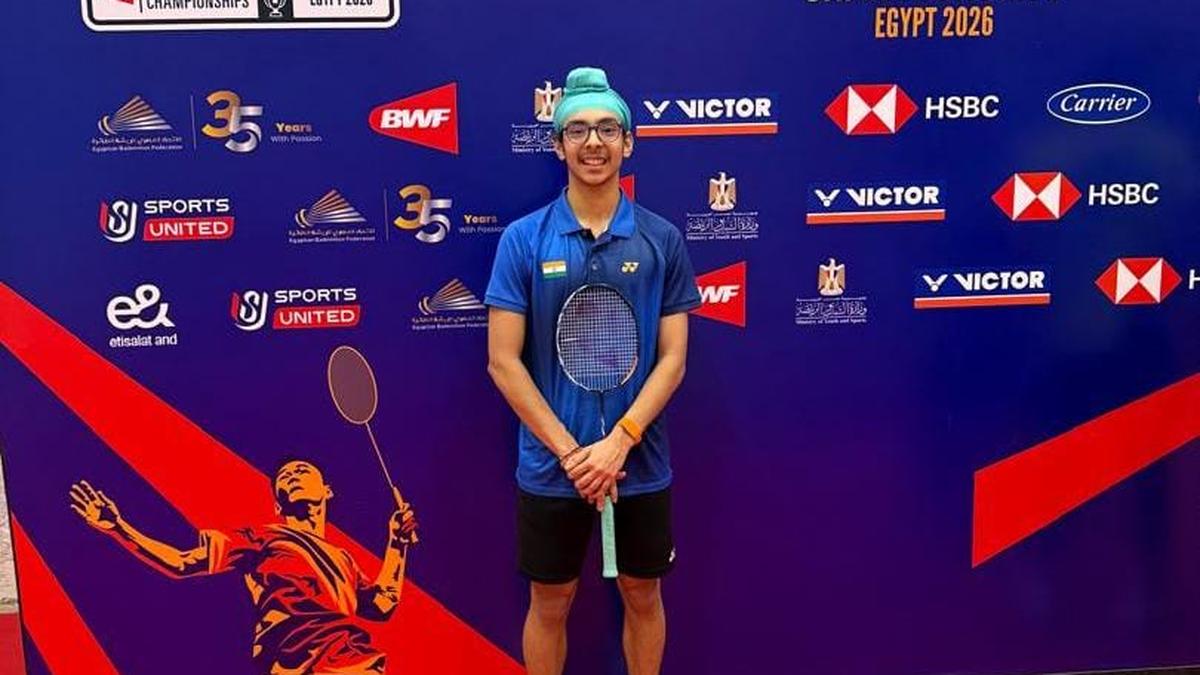
India’s Jagsher Singh Khangurra claimed a bronze medal at the BWF World Junior Championships in Cairo, Egypt, after a spirited semifinal against Indonesia’s Radithya Bayu Wardhana. Khangurra went down 6-15, 15-13, 3-15 in a 49-minute contest, but his run to the last four secured India another podium finish in junior badminton.
The Indian showed resilience after a difficult start, recovering from a one-sided opening game to level the match and force a decider. Wardhana, however, found another gear in the third game, using his attacking quality to take control and close out the match. Under the tournament format, both semifinalists receive bronze medals, meaning Khangurra’s campaign ended with a place on the podium.
A determined comeback in the semifinal
Wardhana set the early pace, winning the first game 15-6 and putting Khangurra under pressure from the outset. The Indonesian’s sharp attacking play made it difficult for the Indian to settle into longer exchanges, while the early deficit left little room for error.
Khangurra responded with greater composure in the second game. He stayed in the contest, worked his way back into the rallies and held his nerve during a close finish. At 15-13, he took the game and brought the semifinal level, demonstrating the fighting spirit that had carried him through the earlier rounds.
The deciding game proved more challenging. Wardhana regained the initiative and applied sustained pressure, limiting Khangurra’s opportunities to build momentum. The Indonesian pulled away to win 15-3 and book his place in the final. While the scoreline in the decider was emphatic, Khangurra’s second-game recovery reflected his ability to adapt and compete against a high-level opponent.
Quarterfinal victory set up India’s medal
Khangurra had confirmed his place in the medal rounds on Thursday with a hard-fought win over Chinese Taipei’s Yuan-Syue Jhuang. After losing the opening game 6-15, the Indian rallied to take the next two games 17-15 and 15-12.
That quarterfinal performance was a significant test of his endurance and mental strength. Khangurra had to recover from a substantial early setback and then navigate a tight second game before completing the comeback. The win guaranteed him at least a bronze medal and gave him the opportunity to compete for a place in the final.
Although he could not carry that momentum all the way through the semifinal, his run in Cairo remains a notable achievement. Reaching the final four at a world junior event requires consistency across multiple rounds, and Khangurra’s results showed both his competitive resolve and his capacity to respond when matches become difficult.
India’s growing medal record in junior badminton
Khangurra’s bronze adds to India’s record at the individual championships, taking the country’s total to 13 medals: one gold, five silver and seven bronze. His result is also India’s seventh bronze in the individual competition, underlining the country’s continued presence among the leading nations in junior badminton.
Medals at the World Junior Championships are closely watched because the event brings together promising players from across the globe. Strong performances can offer young athletes valuable experience against different playing styles and help them prepare for the demands of senior international competition. Khangurra’s matches in Cairo provided precisely that kind of exposure, from his comeback against Jhuang to his three-game semifinal against Wardhana.
India’s overall medal tally reflects success across generations and events, while each new podium finish highlights the depth of emerging talent. A bronze medal may not carry the same spotlight as a title, but it represents a major accomplishment in a tournament where the world’s best junior players compete for international recognition.
What Khangurra’s campaign showed
The semifinal offered a clear picture of both Khangurra’s strengths and the areas that can shape his development. His response in the second game showed patience and determination, particularly after Wardhana had dominated the opening. At the same time, the deciding game demonstrated how quickly an opponent can seize control when attacking pressure is sustained.
For a developing player, these close encounters can be as valuable as the medal itself. Competing against an opponent capable of changing the pace of a match helps build tactical awareness, decision-making and resilience. Khangurra’s ability to recover from a first-game loss in both his quarterfinal and semifinal also points to a strong competitive mindset.
His campaign in Cairo therefore ends with a podium finish and useful experience at one of junior badminton’s most important international tournaments. Wardhana advanced after a commanding final game, while Khangurra secured India’s seventh individual bronze at the championships and contributed to a 13-medal national tally.
For Indian badminton followers, the result is another encouraging sign of the talent coming through the junior ranks. Khangurra’s bronze may be one step in a longer sporting journey, but his determined performances in Egypt have given him a strong platform for future international challenges.