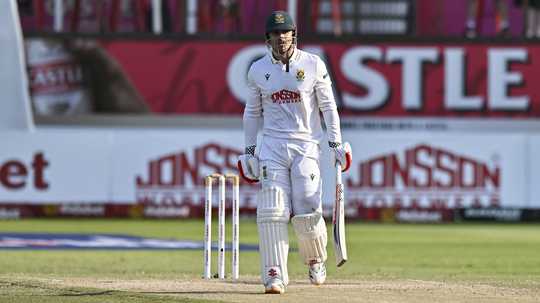

David Bedingham Seeks a Fresh Start as South Africa Prepare for Australia Test
David Bedingham is approaching the next chapter of his Test career with a simpler mindset: play freely, trust his game and avoid getting caught up in the pressure to produce a score. That approach will be important as South Africa attempt to respond to a heavy defeat by Australia in the second Test at St George’s Park.
Australia won the opening match at Kingsmead by 214 runs, leaving the home side needing a major improvement to keep the series alive. Bedingham, who spoke to reporters in Gqeberha on Friday, believes South Africa’s best response is to show their resilience in the middle. For the batter, that means focusing less on expectation and more on the basics of cricket.
A Tale of Two Periods in Bedingham’s Test Career
Bedingham’s Test numbers show a clear contrast between his promising start and the period that followed. Across his first five Tests, he scored 376 runs in eight innings at an average of 47.00, with a top score of 110. His early returns also included scores of 56 and 87, helping establish him as a player capable of making a meaningful contribution at the highest level.
Since then, however, he has made 547 runs in 20 innings at an average of 32.18. His best scores in that stretch have been 82 and 59. The difference is not simply a matter of technique, Bedingham suggested. When he made his Test debut against India in Centurion in December 2023, he did not expect the opportunity to arrive so soon. That helped him play without the burden of high expectations.
After a strong opening run, his mindset changed. He began to feel pressure to maintain his early success and became more conscious of his technique and outside commentary. “I put myself under loads of pressure,” he said, describing the period after his first five Tests as a difficult one.
County Cricket Helped Restore Confidence
A productive season with Durham in England’s County Championship offered Bedingham a chance to reset. He scored 1,029 runs at an average of 73.50 in 16 innings, including five centuries. Those performances placed him fourth among the competition’s run-scorers and second on the averages list, helping Durham decide to extend his contract for another season.
The contrast with his 2025 county campaign was marked. In 11 Championship innings that year, he made 333 runs at 30.27 and did not score a century. Bedingham believes improved confidence and a more relaxed approach have been important this time around. He said he is glad to be representing South Africa again and wants to accept that results cannot always be controlled.
That outlook is more than a motivational slogan. Batters often perform best when they can respond to the ball in front of them rather than anticipate failure or chase a particular milestone. Bedingham said he felt free during his first Tests because he was not preoccupied with his technique. His goal now is to recapture that instinctive style while recognising that international cricket will always bring pressure.
Does Batting Position Affect His Game?
His role in the batting order may also be part of the wider picture. Bedingham batted at No. 5 in each of his first eight Test innings. Since then, he has appeared at Nos. 3, 4, 5 and 6, and has even opened once. At Durham, all of his innings this season came at No. 4, whereas the previous year he also batted at No. 6 and No. 8.
Different positions bring different conditions. A No. 3 may come in when the new ball is still moving and a large cordon is in place, while a No. 5 could face a different field and match situation. Bedingham said he does not make major changes to his approach based on his position, though he recognises that each place presents its own challenges. His flexibility could be useful against Australia, but consistency in role may also help him settle into a clear rhythm.
South Africa Need Longer, More Substantial Innings
The first Test exposed how quickly a promising position can slip away. South Africa reduced Australia to 124 for six but allowed the visitors to recover and reach 390. In reply, the hosts lost their top four—Ryan Rickelton, Aiden Markram, Temba Bavuma and Bedingham—with only 88 runs on the board. South Africa were eventually dismissed for 200, conceding a first-innings lead of 106.
Bedingham’s 49 was the highest score in that innings, despite six South African batters reaching 30. The problem was not a complete inability to get established; it was the failure to turn starts into innings that could change the match. Australia’s Matt Renshaw made 190 and 82, illustrating the value of converting a strong beginning into a major contribution.
In the second innings, Bedingham spent 80 minutes at the crease and scored 46 as South Africa tried to save the match. He shared a 66-run partnership with Markram, who later added 69 with Wiaan Mulder. Markram’s 75 came from 237 balls across nearly six hours at the crease, underlining the patience and discipline required to resist Australia’s attack.
Australia’s Bowling Challenge and the Match Prediction
South Africa’s task is complicated by the depth of Australia’s bowling unit. Mitchell Starc, Josh Hazlewood and Pat Cummins offer pace, accuracy and sustained pressure, while Nathan Lyon provides a high-quality spin option. Bedingham described the challenge of facing one elite bowler after another, rather than being able to relax when a frontline quick completes a spell.
His friends’ informal advice—try a reverse sweep or attack across the line—may raise a smile, but South Africa will need a more measured plan. The key is likely to be batting time, choosing scoring options carefully and making Australia’s bowlers work through long partnerships. The hosts showed in Durban that several players can get set; the next step is to build those starts into hundreds or substantial partnerships.
As for a match prediction, Australia will enter the second Test with momentum after their commanding victory, and their pace attack gives them a strong platform. But St George’s Park offers South Africa an opportunity to reset, particularly if their top order can survive the early pressure and convert starts. A more disciplined batting display could make the contest far closer, even if Australia remain favourites on recent form.
Markram’s availability will also matter. His absence from Friday’s training session prompted questions, though team management said he was dealing with a personal matter and expected him to rejoin the squad that evening. After his determined effort in the first Test, his presence would be valuable to a South African dressing room seeking both experience and stability.
For Bedingham, the immediate challenge is to bring his freer mindset into a demanding Test environment. If he can combine the confidence he found with Durham with the patience required against Australia’s attack, he may help South Africa turn a difficult series position into a more competitive contest. Ultimately, the home side’s response will depend on more than one batter—but Bedingham’s form and approach could be central to their hopes.