
La Liga to Let Referees Speak After Matches in Historic Spanish Football First
La Liga is preparing to take a significant step towards greater transparency in Spanish football. Beginning this weekend, referees will be permitted to give interviews after matches, extending a media experiment that has already allowed officials to speak to broadcasters before kick-off.
The change is expected to put referees in front of television cameras for the first time after the final whistle in the history of Spanish football. According to Spanish newspaper Marca, at least two officials are due to take part in the initial round of post-match interviews, giving viewers a chance to hear directly from the people responsible for enforcing the laws of the game.
A new phase in La Liga’s referee interviews
The move builds on an initiative introduced earlier this season by the Technical Committee of Referees. Under that trial, referees sat down with journalists from La Liga’s rights-holding broadcasters before selected fixtures. Those conversations offered an opportunity to explain their preparations and discuss aspects of officiating ahead of the action.
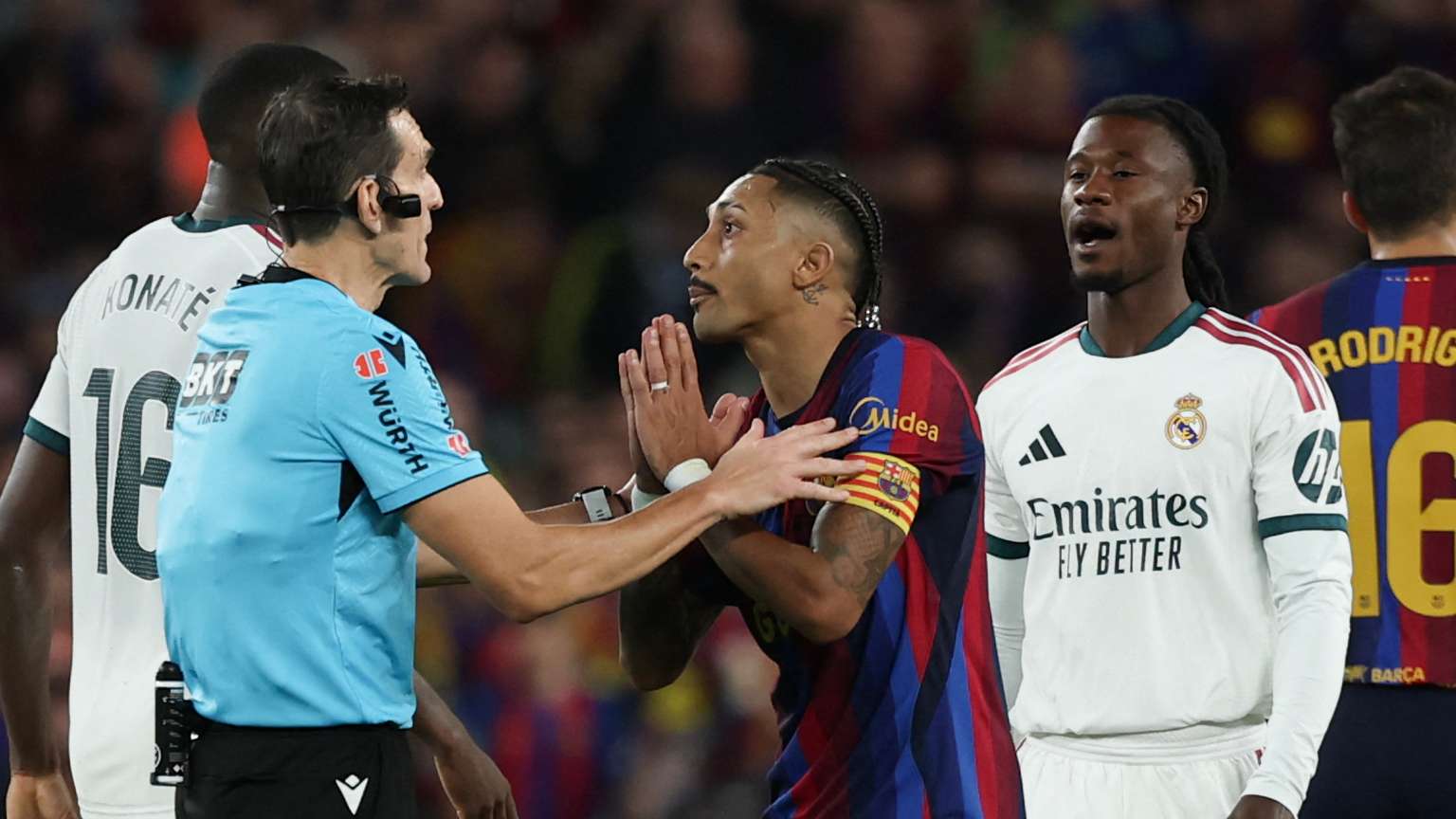
Post-match interviews represent a more consequential next step. Once a game has ended, officials may be asked to clarify decisions that shaped the contest, including penalties, red cards, disallowed goals and the use of the Video Assistant Referee (VAR). The aim is to provide supporters with more context about how key calls are assessed, rather than leaving debate to speculation and slow-motion replays.
That does not necessarily mean every controversial decision will receive an immediate, detailed explanation. The format and scope of the interviews will matter, as will the rules governing what referees can discuss. Still, allowing officials to address viewers directly could help make the decision-making process more understandable for fans watching at home and in the stadium.
A test at the Basque derby
One of the first fixtures expected to feature the new approach is the Basque derby between Athletic Bilbao and Real Sociedad. DAZN reports that the referee will speak after the rivals meet at San Mamés on Sunday at 9 p.m. The highly anticipated encounter offers a prominent setting for the trial, with two passionate fan bases and the intensity that often accompanies a local rivalry.
Derbies can be especially demanding for match officials. High stakes, fast transitions and emotionally charged moments can make decisions more contentious, while a single call may have a major influence on the result. A post-match conversation could therefore offer useful insight into the referee’s perspective—particularly if a major incident becomes a talking point during or after the game.
For supporters, the interview will be an additional part of the match-day coverage. Instead of hearing only analysis from former players, coaches and commentators, viewers may also get an explanation from the official who made the decisions on the pitch. That could enrich the broadcast and give audiences a clearer picture of how referees interpret incidents in real time.
Why transparency matters in modern football
Refereeing has become one of football’s most closely scrutinised subjects. VAR has expanded the number of decisions reviewed, but it has not eliminated disagreement. In some cases, technology has created fresh questions about the length of reviews, the consistency of interpretations and the difference between what viewers see on screen and what officials are told during a check.
Direct communication may help bridge that gap. A concise explanation of why a goal was ruled out or why a penalty was awarded could show how the laws were applied to a particular incident. It may also help fans distinguish between a referee’s judgment, a factual decision and an intervention made following a VAR review.
There are practical challenges, however. Referees must be able to explain decisions accurately without compromising their independence or discussing confidential elements of the officiating process. Interviews also need to avoid becoming a substitute for formal review procedures. If the initiative is to build trust, it will require clear guidelines, consistent access and answers that are informative without turning officials into participants in post-match arguments.
What the trial could mean for La Liga
The expansion of referee interviews signals a broader effort by La Liga and the Technical Committee of Referees to bring audiences closer to the game. The pre-match experiment focused on the officials’ preparation; the post-match stage could focus on how decisions were made under pressure. Together, the initiatives suggest a gradual shift towards more open communication between referees, broadcasters and supporters.
Whether the format becomes a regular feature will likely depend on how the first interviews are received. Broadcasters will be looking for clear, useful explanations, while officials will need an approach that protects the integrity of their role. Fans, meanwhile, will judge the experiment by whether it answers genuine questions rather than simply repeating general statements about the laws of the game.
The change may not settle every debate—football decisions will always invite differing interpretations—but it could improve the quality of discussion around them. For La Liga, the first post-match interviews are a notable development in the relationship between referees and the public. As the trial begins, attention will be on what officials choose to explain, how candid the conversations can be and whether the initiative becomes a lasting part of Spanish football coverage.
Match prediction and the focus on officiating
The Athletic Bilbao–Real Sociedad fixture is likely to attract attention for its football as well as its new media format. A derby can be difficult to forecast, with form, atmosphere and individual moments all capable of shifting the balance. Any prediction should therefore account for the intensity of the occasion, not just recent results. Whatever the outcome, the referee’s post-match interview could become an equally important talking point—offering a first glimpse of how Spanish football plans to make officiating more visible to its audience.