
Sami Al-Jaber Questions Cristiano Ronaldo’s Form After Al-Nassr’s Narrow Win
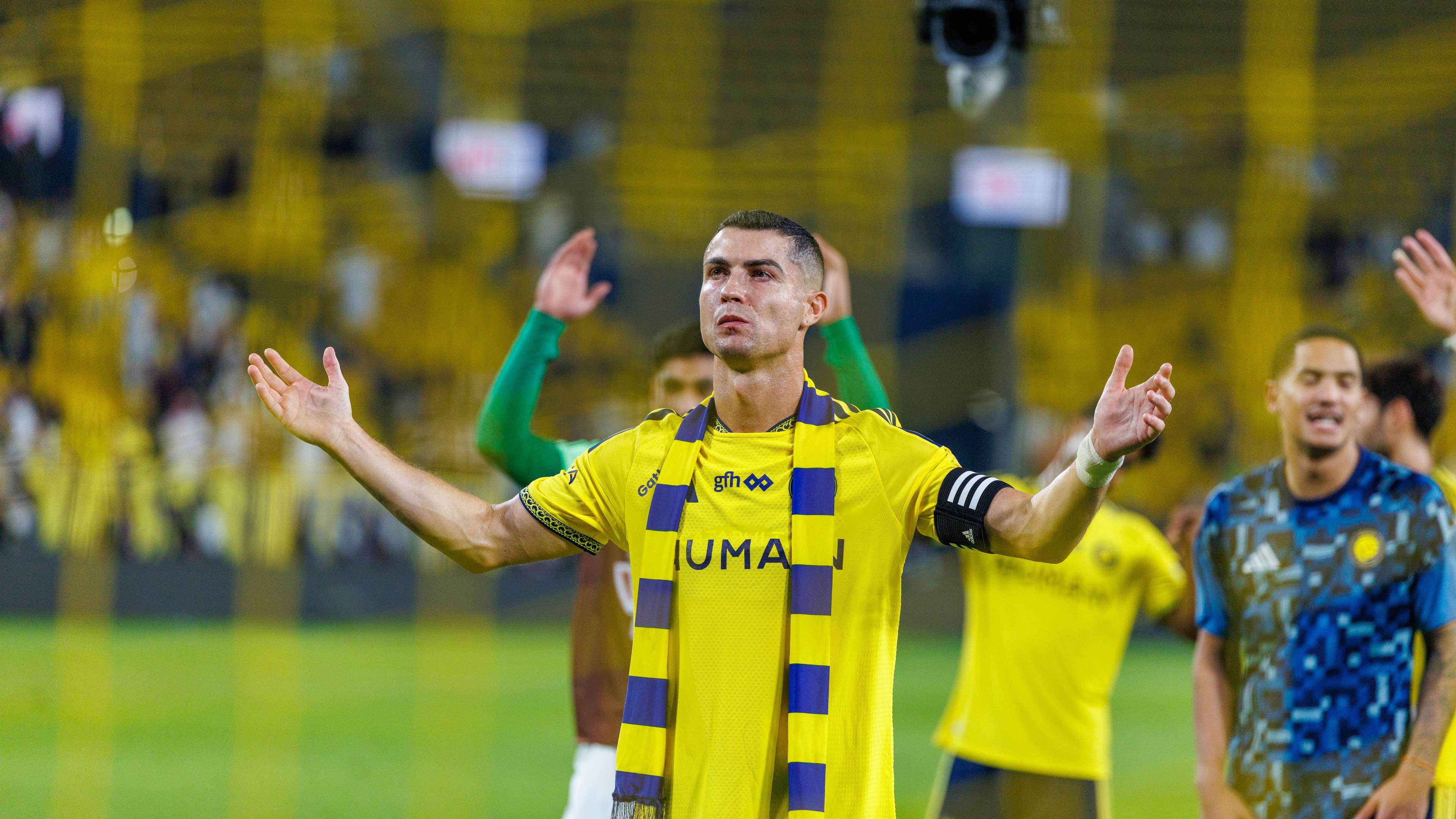
Al-Hilal great Sami Al-Jaber has offered a pointed assessment of Cristiano Ronaldo’s recent struggles, suggesting the Al-Nassr captain may be dealing with a psychological setback after events involving Portugal’s national team. His comments followed a difficult outing for Ronaldo in Al-Nassr’s 1-0 victory over Neom in the 10th round of the Roshn Saudi League.
Although Al-Nassr collected all three points, the match was far from straightforward for their leading forward. Ronaldo missed several promising opportunities, including a penalty shortly before half-time. The missed spot-kick became the most striking moment of an evening in which the five-time Ballon d’Or winner was unable to convert chances that he would normally be expected to take.
Al-Jaber points to a possible mental hurdle
Speaking on the Saudi television programme Nadeena, Al-Jaber said Ronaldo’s performance looked unlike the standard supporters have come to expect. He argued that the Portuguese star appeared distracted and suggested that recent developments with the national team could be affecting his confidence and concentration.
“Ronaldo is clearly suffering from a psychological crisis because of what happened to him with the Portugal national team,” Al-Jaber said. He added that the forward’s display against Neom supported his view, noting that Ronaldo is usually a dependable finisher rather than a player who repeatedly wastes clear opportunities.
Al-Jaber’s comments are an opinion, rather than confirmation of Ronaldo’s personal circumstances. Still, they reflect a wider question facing Al-Nassr: whether the striker’s recent misses are simply a temporary dip in finishing or a sign that pressure is beginning to affect his game.
A rare sight for a prolific goalscorer
Ronaldo’s career has been built on relentless scoring and an ability to respond to difficult moments. From his years at Real Madrid to his current role in Saudi football, he has often been judged by the chances he converts—and by his capacity to influence a match even when his team is under pressure.
That history helps explain why his missed penalty against Neom attracted so much attention. For a forward with Ronaldo’s record, a single failure from the spot would not normally define a performance. The concern arose from the combination of the penalty miss and several other squandered openings, making the display feel unusually out of character.
Al-Jaber referred to Ronaldo’s Real Madrid period when explaining his expectations. He said he had followed the striker closely during those years and remembered him as a player who regularly punished opponents whenever opportunities appeared. In his view, the number of chances missed against Neom was difficult to reconcile with the Ronaldo supporters know.
Al-Nassr still depend heavily on Ronaldo
Despite criticising the performance, Al-Jaber also identified a structural issue within Al-Nassr’s attack. He described João Félix as the team’s leading star and a player who frequently makes the difference, but argued that the squad lacks another centre-forward of Ronaldo’s level. That shortage, he suggested, leaves the club with little choice but to keep relying on its captain.
The point highlights a tactical challenge for Al-Nassr. Ronaldo remains a major presence in the penalty area and draws close attention from opposing defenders, but a team that depends too heavily on one scorer can become predictable. If he is tightly marked or has an off night, the burden falls on creative players such as Félix to provide goals as well as create chances.
Building more attacking variety could help ease that pressure. Midfield runners, wingers cutting inside and a second forward capable of occupying defenders would give Al-Nassr alternative routes to goal. It would also allow Ronaldo to conserve energy for the moments when his movement and finishing can be most decisive.
What the performance could mean for Al-Nassr
One difficult match does not erase Ronaldo’s record or prove that his form has entered a lasting decline. Penalties are missed by even the best players, and finishing can fluctuate across a long season. The more useful measure will be how he responds in the next fixtures: whether he regains his sharpness, gets into the same dangerous positions and turns those openings into goals.
For Al-Nassr, the 1-0 result was valuable, but the narrow scoreline also underlined the importance of taking chances. In a competitive league, missed opportunities can quickly change the outcome of matches. The club’s coaching staff will likely want to maintain Ronaldo’s confidence while ensuring the attack is not dependent on him alone.
There is also a difference between a player experiencing a brief loss of rhythm and one affected by wider pressure. Al-Jaber’s prediction that Ronaldo’s mindset may be influencing his performances will attract attention, but the coming games will provide a clearer indication. A quick return to scoring could quieten the discussion; further missed chances would intensify scrutiny around the captain and Al-Nassr’s attacking options.
Prediction: Ronaldo’s response will be closely watched
Ronaldo’s reputation suggests he will be eager to answer criticism on the pitch. His career has repeatedly featured comebacks after disappointing moments, and his competitive nature makes a strong response plausible. However, Al-Nassr may need more than an individual recovery to sustain its ambitions: the team must create a reliable supply of goals from across the squad.
Al-Jaber’s remarks therefore raise two connected questions for Saudi football fans. Can Ronaldo quickly rediscover the finishing touch that has defined his career, and can Al-Nassr develop enough attacking depth to avoid placing the entire scoring burden on him? The answer will shape the club’s prospects as the Roshn League season continues.