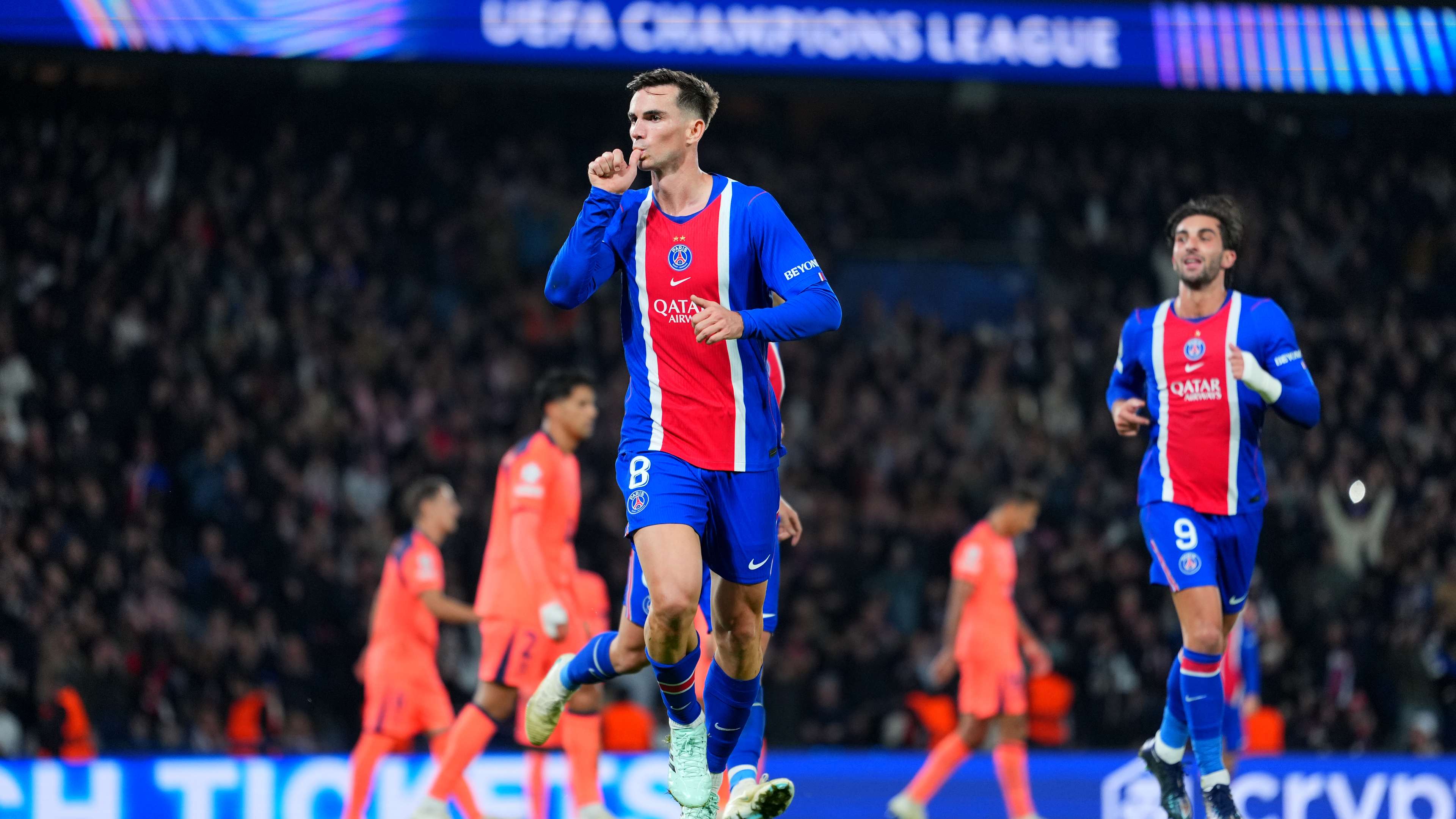

PSG’s Four-Goal Form Puts Europe on Notice in the 2026–27 Champions League
Paris Saint-Germain have made a formidable start to the 2026–27 UEFA Champions League, turning their opening fixtures into a showcase of attacking football. Their latest statement came on Tuesday, when the French champions defeated Barcelona 4–2 in a high-profile third-round league-phase clash. The result extended an impressive run and underlined PSG’s growing reputation as one of the competition’s most dangerous teams in front of goal.
The victory was the latest in a sequence of emphatic performances. PSG had previously overwhelmed Slovan Bratislava 6–1 before beating Manchester City 4–2. Across those three matches, they have scored 14 goals—an exceptional return that places them among the most prolific teams at this stage of a Champions League campaign.
PSG Match Arsenal’s Early-Stage Scoring Record
According to Opta, PSG’s 14 goals after their first three matches equal the highest total recorded at this point in a single Champions League season. Arsenal set the benchmark during the 2010–11 campaign, and more than 15 years later, the Parisian side has matched it with a blend of pace, movement and clinical finishing.
That statistic reflects more than a brief spell of good fortune. PSG have found ways to score against different types of opposition: they ran up a large total against Slovan Bratislava, traded goals with Manchester City and Barcelona, and still emerged victorious in both heavyweight contests. The variety of those performances suggests an attack capable of adapting rather than relying on one predictable route to goal.
For supporters following the Champions League prediction conversation, PSG’s early numbers naturally make them an important team to watch. Their scoring rate is eye-catching, but it should be considered alongside the quality of their opponents, the balance of their performances and the challenges still ahead. Three matches can reveal a team’s potential; the longer league phase and knockout rounds will show whether that potential can be sustained.
A Home Record Built on Relentless Attacking
PSG’s scoring surge has been particularly striking at home. They have scored at least four goals in each of their last three home Champions League matches, a run that highlights how difficult they can be to contain in Paris. The atmosphere, familiarity of the surroundings and confidence gained from recent results can all contribute to that momentum, although the team’s execution in the final third remains the central factor.
The achievement also carries historical significance. No team had scored four or more goals in three consecutive home Champions League matches since Barcelona managed the feat across four fixtures between September 2016 and March 2017. PSG have now produced a comparable burst, placing their current home form in the context of one of Europe’s most celebrated attacking sides of the modern era.
Home advantage is never a guarantee of victory, especially in a competition where elite opponents are equipped to punish defensive mistakes. Still, PSG’s ability to turn home fixtures into goal-rich occasions gives them a valuable platform. A strong performance in front of their own fans can help build confidence, improve their position in the league-phase standings and put pressure on visiting teams from the opening whistle.
Barcelona Win Shows Both Strength and Areas to Improve
The 4–2 result against Barcelona was significant not only because of the scoreline, but because it came against a club with the experience and attacking quality to make the match difficult. PSG’s four goals demonstrated their ability to exploit openings in a major European contest. At the same time, conceding twice offers a reminder that attacking excellence does not remove the need for defensive control.
That balance may become increasingly important as the tournament progresses. Opponents in the later rounds are likely to be more cautious, more prepared to deny space and more capable of turning a single lapse into a decisive moment. PSG’s challenge will be to preserve their attacking edge while managing matches more efficiently when the opposition’s pressure rises.
For analysts and fans weighing up a Champions League prediction, this is an important distinction. A team can lead the scoring charts and still face questions about consistency, defensive organisation and its response to difficult periods. PSG’s opening results provide strong evidence of their attacking threat, but the most demanding tests will come when matches are tighter and chances are harder to create.
What Comes Next for the French Champions?
PSG’s immediate momentum gives them plenty to build on as the league phase continues. Their next European opponents will have a clear warning: allowing the Parisian attack time and space can lead to a punishing evening. The team’s recent results should also encourage confidence within the squad, particularly after victories over established European rivals.
However, the season is long, and records set in the opening rounds do not decide the final outcome. PSG will need to maintain their intensity, keep key players available and show that they can deliver when opponents adapt their tactics. Their ability to vary the attack—through quick combinations, movement between the lines and pressure in the final third—could prove as important as the raw number of goals they score.
For now, the message from Paris is unmistakable. Fourteen goals in three matches, a 4–2 win over Barcelona and a run of four-goal home performances have made PSG one of the standout stories of the 2026–27 Champions League. The numbers match a historic Arsenal benchmark and recall Barcelona’s earlier home-scoring run, but the French side’s ultimate measure will be how it performs when the stakes rise. If PSG can pair their firepower with greater control in the toughest fixtures, they will have a compelling case as serious contenders for the European title.