
Lucas Hernandez Makes Champions League History Against Barcelona
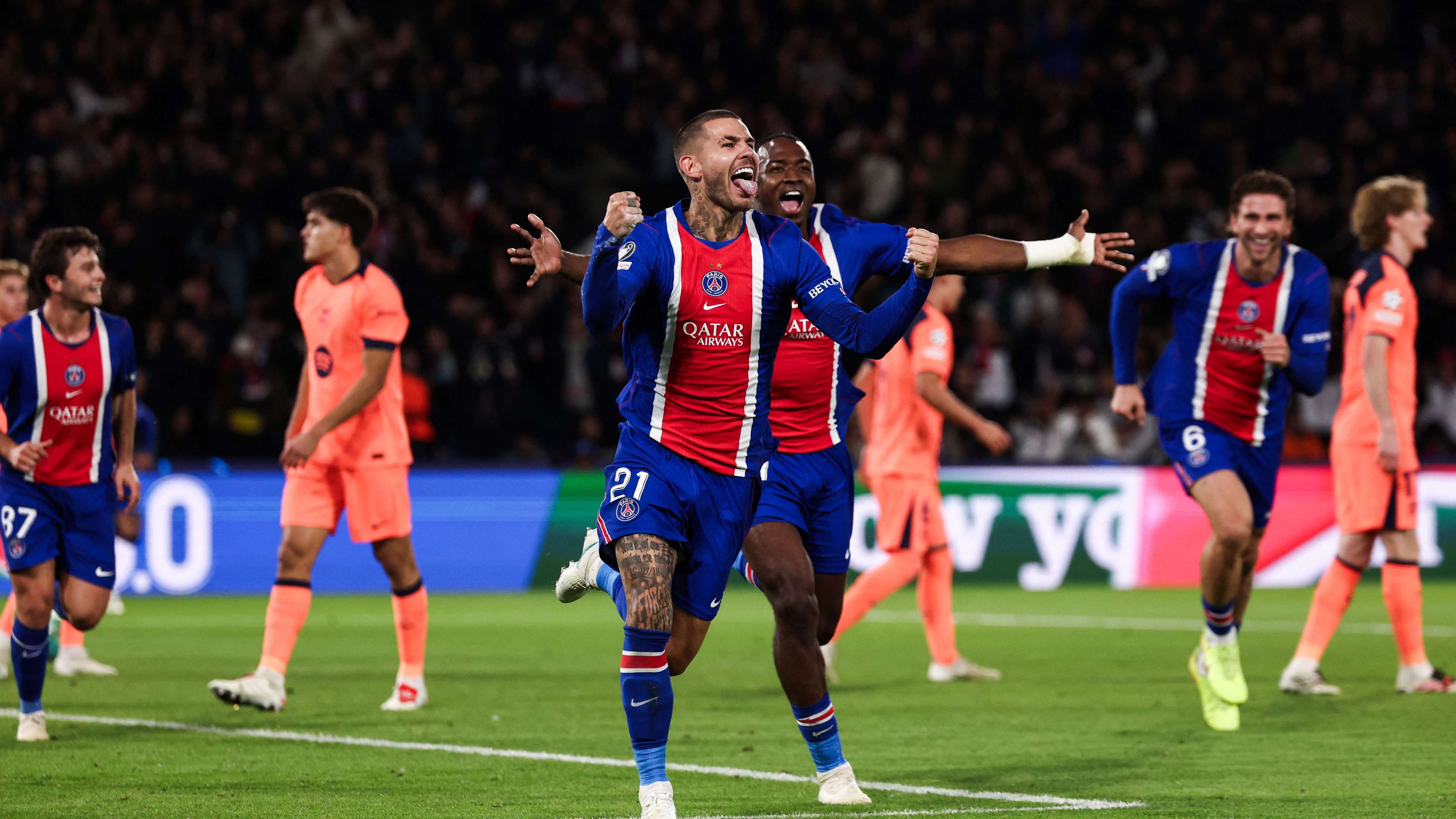
Lucas Hernandez added another remarkable chapter to his Champions League story on Tuesday night, scoring Paris Saint-Germain’s second goal against Barcelona at the Parc des Princes. His 72nd-minute header did more than shift the momentum of a high-profile football match: it strengthened an unusual personal record against the Catalan club.
According to statistics shared by football data specialist Mister Chip on X, Hernandez has now scored four goals in the Champions League, with two of them coming against Barcelona. The French defender has found the net against the same opponent while wearing two different shirts, first for Bayern Munich and now for PSG.
A Familiar Opponent for Hernandez
Hernandez’s latest goal was not his first against Barcelona in Europe’s premier club competition. He also scored against them for Bayern Munich on 13 September 2022, when the German side faced the Catalans in the group stage. That earlier strike established a curious pattern: whenever Hernandez has scored in the Champions League against Barcelona, his team has benefited from his timing and presence in the penalty area.
The PSG goal came from a set piece, an area where defenders can often make a decisive contribution. Hernandez attacked the delivery with conviction and directed his header into the net, giving Barcelona another problem to solve. For a player whose primary responsibilities are defensive, such moments underline the value of having a reliable aerial threat at the other end of the pitch.
His record is especially striking because goals are not usually the main measure of a centre-back’s performance. Positioning, defensive communication, tackling and the ability to manage pressure are central to the role. Yet Hernandez has shown that he can also influence major matches through attacking contributions, particularly when his team wins a corner or free kick.
Doue’s Delivery Continues to Make an Impact
Desire Doue supplied the corner that led to Hernandez’s goal, earning another Champions League assist and continuing a productive run in the competition. The young attacker had also recorded an assist in the previous round, highlighting his growing influence in PSG’s forward play.
For Paris, the connection between Doue’s delivery and Hernandez’s movement offered a reminder that goals can come from more than open-play combinations. Well-worked set pieces give teams an alternative route to scoring, especially in tightly contested European fixtures where space can be limited. A precise corner, combined with a defender’s well-timed run, can quickly change the shape of a match.
Doue’s contribution also reflects the importance of young players adapting to the demands of elite football. Assists in consecutive Champions League rounds are a meaningful sign of progress, although consistency over a longer period will be the real test. If he continues to deliver quality service, PSG could gain a valuable creative option from wide areas and dead-ball situations.
Why the Goal Matters in a Champions League Match
Goals from defenders can have an outsized effect on a game. Opponents typically focus their defensive plans on stopping forwards and attacking midfielders, so a centre-back arriving in the box can create a difficult marking decision. Hernandez’s header demonstrated how a set-piece threat can force defenders to divide their attention and leave space for dangerous runners.
For PSG, the goal also carried psychological value. Scoring against a major European rival can energise a team and its supporters, particularly in a match where every shift in momentum matters. Barcelona, meanwhile, had to respond to pressure from both PSG’s attacking players and the threat posed by defenders joining the attack.
The fixture was part of the Champions League’s league phase, where each result contributes to a broader campaign rather than a traditional group-stage table. That format makes every match important: clubs are competing not only for a strong position but also for the best possible route into the knockout rounds. A goal such as Hernandez’s can therefore matter beyond the immediate scoreline, influencing confidence and the wider picture of qualification.
Hernandez’s Value Beyond the Scoresheet
Although the headline statistic is his record against Barcelona, Hernandez’s broader contribution is rooted in his versatility and experience. He has played for several major European clubs and has operated in demanding defensive systems, giving him a perspective that can be valuable in high-pressure fixtures. His ability to contribute at both ends makes him a useful option when PSG need to defend a lead or find a breakthrough.
Set-piece goals are also a reminder that football teams increasingly treat every dead-ball situation as an opportunity to create an advantage. Coaches plan runs, screens and delivery zones, while players must judge the flight of the ball in a crowded penalty area. Hernandez’s finish was the culmination of that combination: Doue’s service created the chance, and the defender’s timing converted it.
What Comes Next for PSG and Barcelona?
One goal does not decide an entire Champions League campaign, but it can shape the narrative around a player and a fixture. Hernandez’s latest strike has revived attention on his unusual scoring record against Barcelona, while Doue’s assist adds to the discussion about PSG’s emerging attacking options.
For fans considering a football prediction for PSG’s next European match, the performance offers several points to weigh. PSG’s ability to threaten from corners may be significant, particularly against opponents who defend deep. Hernandez’s aerial presence and Doue’s recent creativity could make set pieces an important factor again. At the same time, predictions should account for the opponent, team selection, injuries and the unpredictable nature of Champions League football.
Hernandez’s goal was ultimately a moment of individual achievement within a larger team effort. By scoring against Barcelona for a second time in the competition—and doing so for a different club—he turned a routine statistic into a memorable Champions League storyline. His header showed how defenders can leave a mark on Europe’s biggest stage, while Doue’s delivery demonstrated how one accurate corner can help change the course of a major football match.