
Kompany backs Neuer as Bayern weigh Urbig’s growing role
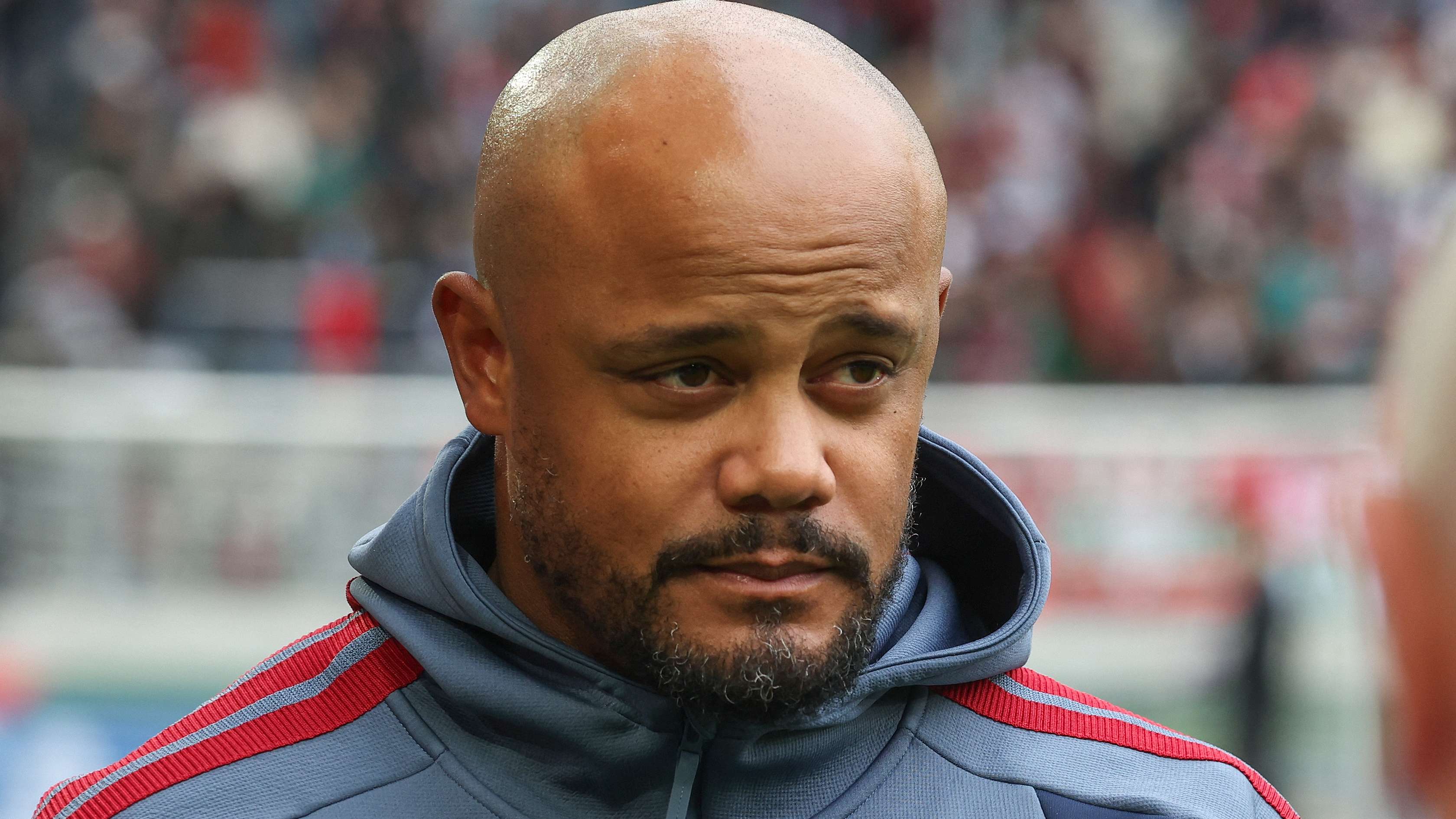
Bayern Munich manager Vincent Kompany has reaffirmed that Manuel Neuer remains the club’s first-choice goalkeeper, while making clear that promising deputy Jonas Urbig is expected to receive more playing time. The comments come amid renewed debate over Bayern’s long-term plans in goal and ahead of a demanding run of fixtures, including the Bundesliga meeting with RB Leipzig.
Speaking to Sky on Saturday evening, Kompany said the club had been consistent about its approach. “Manu is the number one and we want to increase Jonas’s playing time,” he explained. Asked whether Urbig could soon take over as Bayern’s regular starter, the coach pointed back to the existing plan rather than suggesting an immediate change in the hierarchy.
That plan, Kompany stressed, depends in part on Neuer’s contribution. He praised the veteran’s leadership, character and performances, describing those qualities as essential to the way Bayern are developing Urbig. The manager’s remarks offered a clear distinction between giving a young goalkeeper meaningful opportunities and declaring that he is ready to replace one of the most accomplished players in modern football.
Neuer absence opens the door for Urbig
Neuer was unavailable for the Leipzig match after foot problems also kept him out of Bayern’s midweek 3-3 Champions League draw away to Viking Stavanger. His absence followed a difficult 2-2 Bundesliga draw in Augsburg, where mistakes from the experienced goalkeeper attracted widespread criticism. That scrutiny has added intensity to the discussion, but Kompany did not frame the situation as a reaction to one performance.
Instead, Bayern’s coach presented Urbig’s increased involvement as part of a longer-term development process. The 23-year-old started against Leipzig, marking his fourth appearance of the season. Each opportunity gives him valuable experience in a high-pressure environment, while also allowing the coaching staff to assess how he handles the demands of playing for a club where expectations are exceptionally high.
For Bayern supporters, the central question is not simply whether Urbig can perform well in a short run of matches. It is whether he can eventually take on the consistency, authority and responsibility expected of a first-choice goalkeeper. Kompany’s comments suggest the club wants to prepare him for that possibility without rushing the transition or undermining Neuer while he remains part of the team.
Kompany highlights Urbig’s progress
Kompany also addressed how perceptions of Urbig have changed since Bayern signed him from Köln in early 2025. At the time, some observers questioned whether the young goalkeeper could ever follow in Neuer’s footsteps. The manager noted that people now describe Urbig as a strong number two—a significant shift from the doubts that surrounded his arrival.
“The fact that you’re now talking about a strong number two, you weren’t saying that at the beginning,” Kompany said, pointing to the work that has helped Urbig reach his current level. His progress has also been reflected in his emergence as a senior Germany international, a notable milestone for a player still building his experience at the highest level.
The Bayern manager credited goalkeeping coach Michael Rechner and his staff, as well as Urbig, Neuer and Sven Ulreich, for contributing to the goalkeeper’s development. That acknowledgement underlines the importance of a supportive training environment: young players can learn from established teammates while receiving specialist coaching and carefully managed match opportunities.
Kompany added that many clubs would like to have the options Bayern possess. The comment reflects a broader advantage for the German champions: they can rely on an experienced leader in Neuer, give Urbig a pathway toward a larger role and retain Ulreich as another familiar presence in the goalkeeping group.
Bayern’s succession plan remains in focus
Neuer’s future is an important part of the conversation. His contract is due to expire at the end of the season, and retirement next summer is widely considered a possibility. Nothing in Kompany’s latest comments confirms a final decision, however, and the goalkeeper’s immediate availability remains uncertain as he deals with his foot problem.
Urbig is expected to be central to Bayern’s succession planning. His contract runs until 2029, giving the club time to build continuity around him if Neuer does depart. But a long contract does not automatically guarantee a starting place: Urbig will still need to demonstrate that he can deliver reliably across domestic and European competitions, where a single mistake can quickly become a major talking point.
That is why Bayern’s approach appears designed to balance present needs with future planning. Neuer’s experience remains valuable in the short term, while Urbig’s growing involvement can help prepare him for greater responsibility. The challenge for Kompany is to maintain competition without creating unnecessary uncertainty in a position where confidence and communication are crucial.
What the goalkeeper debate means for Bayern
For now, Kompany’s message is straightforward: Neuer remains Bayern’s number one, and Urbig’s role is set to expand. The Leipzig fixture provided another chance for the younger goalkeeper to show what he can do, but it should not automatically be read as a permanent change of status. Bayern appear to view his development as a gradual process, supported by training, mentorship and carefully chosen appearances.
As the season progresses, supporters will watch both Neuer’s recovery and Urbig’s performances closely. Any prediction about Bayern’s next long-term goalkeeper must account for those two moving parts: the veteran’s fitness and future decision, and the younger player’s ability to turn potential into consistent top-level output. For a club with Bayern’s ambitions, the succession question is significant—but Kompany’s comments indicate that the transition is being managed rather than rushed.