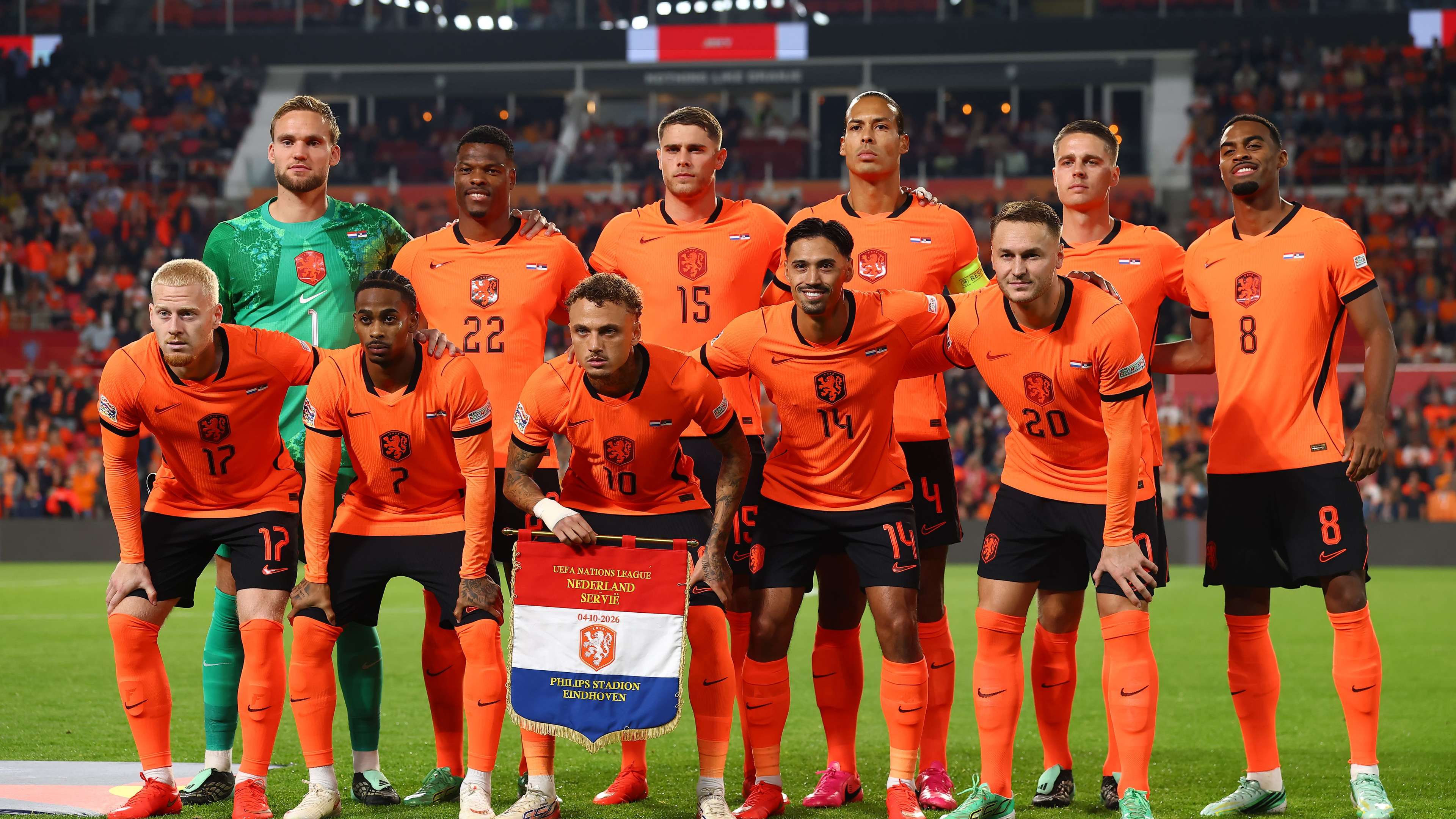

Netherlands Face Suspension Risk Ahead of Crucial Greece Nations League Match
The Netherlands head into Friday’s UEFA Nations League meeting with Greece knowing that discipline could shape the final stages of their group campaign. Five players available for the match are one yellow card away from suspension, while captain Virgil van Dijk is also close to a ban but will miss the fixture through injury.
Jan Paul van Hecke, Quinten Timber, Jurriën Timber, Noa Lang and Tijjani Reijnders would all be suspended for the Netherlands’ next group match if they are booked against Greece. That next fixture is a potentially decisive meeting with Germany in Berlin on 16 November, giving the Dutch players a difficult balance: they must compete aggressively without putting themselves at risk of missing a key game.
Five Dutch Players Must Avoid Another Booking
The Netherlands’ disciplinary concerns are spread across several areas of the team. Defenders Van Hecke and Jurriën Timber will need to be cautious at the back, while midfielder Quinten Timber and Reijnders face the same threat in the centre of the pitch. Lang, meanwhile, will have to manage the risks that come with taking on defenders in one-on-one situations.
Van Dijk is also one caution away from suspension, but the Netherlands captain is unavailable for Friday’s match because of injury. His absence removes one name from the immediate booking equation, though it also leaves the Dutch without an experienced leader for an important contest.
The players’ cautions came in different matches during the group campaign. Quinten Timber, Van Hecke and Van Dijk were booked in the Netherlands’ 1-1 draw with Germany in September. Jurriën Timber and Reijnders received yellow cards in the away match against Serbia, while Lang was cautioned during the Netherlands’ trip to Greece.
Why the Greece Match Matters
Friday’s game is more than a chance to protect a position in the standings. The Netherlands and Greece are level on eight points after four matches, making their head-to-head meeting central to the race for the top spot in Nations League Group B. Germany are close behind on five points, while Serbia have yet to earn a point.
With the group still tightly contested, the result could influence who finishes first and how much pressure each side carries into the final round. A Dutch win would strengthen their position and give them valuable momentum before travelling to face Germany. A defeat, however, could allow Greece to take control of the group and leave the Netherlands needing a strong result in Berlin.
The standings also make the suspension risk more significant. A booking against Greece would not only affect a player’s availability for the Germany match; it could also weaken the Netherlands at a stage when every point may matter. The coaching staff will therefore need to weigh the value of each player’s contribution against the danger of losing them for the finale.
Lessons from the Previous Meeting
The earlier encounter between the sides offered a reminder of how quickly the contest can change. Greece went into half-time with a 2-0 lead, putting the Netherlands under considerable pressure. The Dutch responded after the break, with goals from Van Dijk and Reijnders earning a 2-2 draw.
That comeback showed the Netherlands’ ability to recover when a match appears to be slipping away, but it also highlighted the threat Greece can pose. The hosts will likely look to use their intensity and attacking movement to unsettle the Dutch again. For the Netherlands, a more controlled start could be crucial, particularly with several players needing to avoid unnecessary fouls and cautions.
The previous match may also shape the tactical approach. The Dutch will want to limit Greece’s opportunities to build momentum, while finding ways to create chances without leaving themselves exposed in transition. Maintaining composure will be especially important for players already on a booking, as a mistimed challenge or a heated exchange with the referee could have consequences beyond Friday’s result.
How Nations League Yellow-Card Rules Work
Under UEFA Nations League regulations, a player receives a one-match suspension after accumulating two yellow cards. Further suspensions apply when a player reaches four, six or eight cautions. That system means a single booking in Friday’s match would be enough to rule any of the five at-risk Dutch players out of the Germany fixture.
Yellow cards carry over through the group stage and are not cleared until the quarter-finals. As a result, the Netherlands cannot treat the Greece match as an isolated disciplinary concern. Bookings collected now can continue to affect player availability later in the competition, making careful game management important throughout the campaign.
Netherlands vs Greece: Match Prediction and Key Factors
Any football prediction for Friday’s meeting must account for the teams’ close positions in the group, their previous 2-2 draw and the Netherlands’ suspension concerns. The Dutch have the advantage of playing at home, but Greece have already shown they can trouble them and take control of the game for extended periods.
The Netherlands’ best route may be to start with greater defensive security than they showed in the first meeting, while using their technical quality to create chances patiently. Greece, by contrast, could look to press aggressively and exploit any uncertainty caused by the Dutch absences or the need for caution among players on yellow cards.
A close contest appears likely, with the opening goal potentially carrying extra weight. If the Netherlands can avoid falling behind and keep their discipline, they should have a strong chance of earning a positive result. But Greece’s form in the previous encounter makes an easy home win far from certain.
What to Watch in the Final Group Match
The Netherlands’ visit to Germany at Berlin’s Olympiastadion on 16 November is already looming over Friday’s fixture. The Dutch will want to arrive with their key players available, but they cannot afford to hold back so much that they surrender control of the match against Greece.
That tension between intensity and restraint could become one of the defining features of the game. For supporters, the key details to follow will include how the Netherlands cope without Van Dijk, whether the five players on a booking can avoid further cautions, and whether the team can improve on its slow start from the previous meeting.
With the group standings so close, the Greece match could prove pivotal in the Netherlands’ Nations League campaign. The result will matter immediately, but so will the team’s discipline: one yellow card could change the availability of a key player when the race for the group’s top position reaches its final day.