
Unraveling the Mystery Behind Murshida Khatun Happy’s Selection for Australia Tour: A Deep Dive into Bangladesh Women’s Cricket Prediction and Squad Dynamics
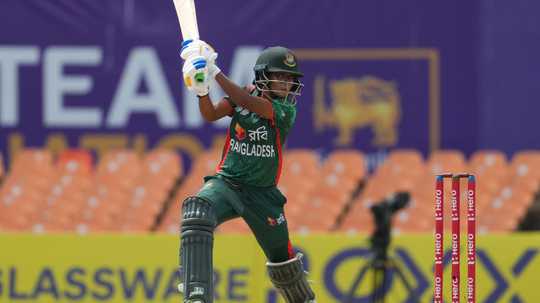
In the world of cricket, team selection often sparks intense debates among fans, analysts, and stakeholders alike, especially when it involves promising players and high-stakes series. Recently, Bangladesh’s women’s cricket team found itself at the center of such a controversy, revolving around the unexpected inclusion of Murshida Khatun Happy in the three-match One Day International (ODI) series against Australia. Scheduled to commence on October 9 in Australia, the squad selection process for this series has raised questions about transparency, meritocracy, and the influence of internal politics within the Bangladesh Cricket Board (BCB).
The Enigma of Murshida Khatun Happy’s Inclusion
Initially, the 16-member squad announced by the BCB for the upcoming Australia tour did not feature Murshida Khatun Happy. Cricket enthusiasts and industry insiders quickly noticed her absence from the original 15-player lineup, which was meticulously prepared by the selection committee. The omission prompted speculation about the criteria and decision-making process behind the selection, especially given Murshida’s recent performances and potential as a rising star in Bangladesh women’s cricket.
The situation took a turn when BCB officials announced an expanded squad, adding Murshida after higher authorities intervened to ensure no deserving player was left behind. This decision sparked a flurry of discussions across social media platforms and cricket forums, with many questioning the fairness and transparency of the selection process.
The Role of Influential Figures in the Selection Process
Crucially, the controversy centers around Rafiqul Islam Babu, the chairman of the BCB women’s wing, who publicly revealed that he personally advocated for Murshida’s inclusion. In an interview with Cricbuzz, Babu admitted that Murshida was not part of the initial squad but was pushed forward for selection based on her recent performances, particularly her exploits against the South Africa Emerging team.
“I requested that we should pick Murshida because she deserves a chance, considering her performance against South Africa,” Babu explained. “She scored 61 runs in that series, and despite having been dropped previously for a poor performance, I believed she merited a spot in the squad for the Australia tour.”
This candid admission sheds light on the internal dynamics of cricket team selection in Bangladesh, highlighting how individual influence and subjective judgments can impact the composition of national squads. It also raises questions about whether merit alone dictated her inclusion or if other factors played a role.
Performance, Politics, or Personal Favor? Dissecting the Selection Debate
The question of cricket prediction—predicting a player’s future impact based on current form—becomes particularly relevant here. Murshida’s recent performances, including a notable 61 against South Africa’s Emerging team, suggest she has the potential to contribute meaningfully during the ODIs in Australia. However, her exclusion from the earlier Asia Cup and Asian Games squads has fueled skepticism about whether her selection was purely performance-based or influenced by other considerations.
It’s noteworthy that the Asia Cup and Asian Games squads were reportedly finalized before Babu took charge of the women’s cricket department, which complicates direct comparisons. Nonetheless, his support for Murshida highlights a broader debate about the criteria used in team selection—should it be solely based on recent form and talent, or do political and personal influences also play a role?
The Broader Context of Bangladesh Women’s Cricket and Internal Politics
Bangladesh women’s cricket has faced its share of challenges, including questions over transparency and fairness in team management. The recent controversy involving Murshida’s inclusion echoes issues observed in the men’s cricket setup, where former BCB president Nazmul Hasan was known for exerting significant influence over team selection decisions.
However, sources close to the current BCB administration, led by President Tamim Iqbal, suggest that the women’s team selection process has been relatively insulated from such interference. According to reports, Tamim Iqbal has maintained a hands-off approach, allowing selectors and coaching staff to make independent decisions. Despite this, some insiders allege that political pressures and behind-the-scenes lobbying may have influenced Murshida’s inclusion, though Babu strongly refutes such claims, asserting, “It’s not true that there was any political pressure on me to include Murshida.”
Implications for Bangladesh’s Cricket Prediction and Future Strategy
The controversy surrounding Murshida Khatun Happy’s selection underscores vital issues in cricket prediction and talent management within Bangladesh. As cricket analysts and fans evaluate the team’s chances against formidable opponents like Australia, understanding the selection dynamics becomes crucial for making informed predictions about the team’s future performance.
From a strategic perspective, selecting players based on a blend of current form, potential, and team balance is essential. Murshida’s case highlights the importance of transparent processes to foster team cohesion and morale. If players perceive selections as fair and merit-based, it enhances overall team confidence and performance—key ingredients in cricket prediction models aiming to forecast match outcomes accurately.
What Does This Mean for Upcoming Matches?
As Bangladesh prepares for the three ODIs in Australia, the team’s composition and the selection process will inevitably influence their chances in these high-profile matches. While Murshida’s inclusion may boost morale and bring a fresh perspective, critics argue that consistency and merit should remain the guiding principles to ensure the team’s competitiveness.
Cricket experts are closely watching how Murshida performs in her debut series abroad. Her success or failure could significantly impact future selection strategies and team dynamics, shaping cricket prediction models for Bangladesh women’s cricket in the coming years.
Conclusion: Transparency and Meritocracy as Pillars of Team Selection
The saga of Murshida Khatun Happy’s unexpected inclusion in Bangladesh’s women’s cricket squad highlights the delicate balance between influence, merit, and strategic planning in team selection. For the sport to grow and attain greater credibility, especially in countries like Bangladesh where cricket is a national passion, transparency and meritocracy must be prioritized.
As fans and analysts continue to debate the implications, one thing remains clear: the future of Bangladesh women’s cricket hinges on fostering an environment where talent is recognized and rewarded fairly. This approach not only enhances the accuracy of cricket predictions but also strengthens the foundation for sustained success on the international stage.
Ultimately, the coming matches against Australia will serve as a litmus test for the team’s resilience and the effectiveness of its selection process. Cricket enthusiasts worldwide will be watching closely, eager to see if the team’s composition translates into positive results, and whether the principles of fairness and meritocracy prevail in shaping Bangladesh’s cricketing destiny.