
India and West Indies Face Fines for Slow Over-Rate in Recent ODI Match: What It Means for Cricket Predictions and Future Series
The recently concluded third One Day International (ODI) between India and West Indies in Mullanpur has not only been remembered for its thrilling cricketing action but also for an unusual disciplinary development. Both teams received fines for maintaining slow over-rates, a concern that continues to influence strategic planning, team discipline, and predictions in cricket’s fast-evolving landscape. This article delves into the details of the over-rate violations, their implications for cricket predictions, and what cricket enthusiasts and analysts need to know about this recurring issue in international cricket.
Understanding the Over-Rate Violation: The Core Details
During the third ODI, match officials found both India and the West Indies guilty of failing to bowl their respective overs within the allotted time. According to the regulations set forth by the International Cricket Council (ICC), teams are expected to complete their overs within a strict time frame to ensure the smooth flow of the game. When teams fall short, penalties are enforced, which can influence team morale, strategies, and prediction models for upcoming matches.
In this particular match, West Indies completed their 50 overs in 48.2 overs, effectively being two overs short. Despite chasing a formidable target of 352 runs, they managed to do so comfortably, but their over-rate violation resulted in a 10 per cent fine of their match fee. India, on the other hand, fell four overs short of their required over count, leading to a 20 per cent deduction from their match fee. These sanctions are not just administrative formalities—they serve as reminders of the importance of discipline and pace in modern cricket.
The Disciplinary Framework and Official Proceedings
The sanctions were levied by match referee Prakash Bhatt, following the guidelines stipulated in Article 2.22 of the ICC Code of Conduct for Players and Player Support Personnel. This article specifies that each over a team fails to bowl within the scheduled time results in a five per cent fine on the team’s match fee. The decision was supported by on-field umpires Jayaraman Madanagopal and Sam Nogajski, along with third umpire Sharfuddoula and fourth umpire Virender Sharma.
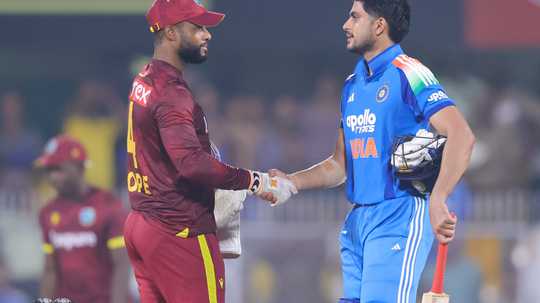
Interestingly, both captains—Shubman Gill of India and Shai Hope of the West Indies—accepted the sanctions without contesting them, which means there was no need for a formal hearing. This acceptance underscores a collective acknowledgment of the importance of punctuality and discipline on the field, especially in high-stakes international cricket.
Historical Context: Past Sanctions and Their Significance
This incident isn’t isolated. West Indies’ recent history shows a pattern of over-rate sanctions, with this being their second in just three months. Previously, they received a five per cent fine during the final ODI against New Zealand in July. For India, the last over-rate penalty was in December 2025 during their ODI against South Africa, where they faced a 10 per cent fine.
These recurring sanctions highlight an ongoing challenge in maintaining discipline during tightly contested matches, especially in formats like ODIs and T20Is where time management is critical. For cricket predictions, understanding such disciplinary trends can influence betting strategies, team performance forecasts, and even the mental preparedness of players in upcoming series.
Implications for Future Series and Cricket Predictions
As both teams gear up for the upcoming five-match T20I series starting in Lucknow on October 6, the focus on punctuality and pace will be more prominent than ever. The sanctions serve as a wake-up call for teams to refine their time management tactics, which can directly impact their performance and predictions in future matches.
For cricket analysts and enthusiasts making predictions, such disciplinary issues can be a subtle yet significant factor. Teams that struggle with over-rate discipline might face increased pressure, possibly affecting their strategic decisions, especially during high-pressure moments. Conversely, teams with a reputation for punctuality often gain a psychological edge, which can be pivotal in tight contests.
The Broader Impact: Discipline, Strategy, and the Modern Cricket Landscape
The enforcement of over-rate penalties reflects the ICC’s commitment to maintaining the game’s integrity and pace. As cricket continues to evolve with faster formats gaining popularity, the importance of discipline behind the scenes becomes increasingly vital. Teams now need to balance aggressive gameplay with disciplined time management, especially in tournaments where the schedule is tight, and every over counts.
Moreover, the increasing scrutiny on over-rates has led to a shift in coaching strategies, with teams investing more in their bowling and fielding drills that emphasize efficiency and speed. This not only enhances their prediction models for match outcomes but also helps in cultivating a culture of discipline among younger players aspiring to international cricket.
Conclusion: What Cricket Fans and Predictors Should Watch For
The recent sanctions on India and West Indies for slow over-rates serve as a reminder of the evolving dynamics of international cricket. As the sport becomes faster and more competitive, maintaining discipline is crucial—not just for compliance but also for strategic advantage. For cricket enthusiasts, analysts, and bettors, keeping an eye on teams’ punctuality and discipline levels can provide an edge in prediction models and game analysis.
With the upcoming T20I series, all eyes will be on whether these teams can improve their over-rate discipline and deliver high-quality cricket without the risk of further penalties. As always, the key to successful cricket predictions lies not only in understanding player form and pitch conditions but also in recognizing the subtle influences of discipline and game management that shape the outcome of each match.
Final Thoughts: The Future of Cricket and Over-Rate Discipline
As cricket continues its journey into faster formats, the importance of adhering to time regulations cannot be overstated. The recent fines imposed on India and West Indies highlight a broader movement within international cricket to uphold the sport’s integrity and ensure a fair, fast-paced game for fans worldwide. For those involved in cricket predictions, analyzing teams’ discipline trends can be just as critical as statistical data, offering a comprehensive view of potential outcomes in upcoming series.
In conclusion, while the penalties for slow over-rates may seem minor in the grand scheme, they are indicative of a larger shift towards professionalism, discipline, and strategic excellence in cricket—a game that is as much about mental fortitude and time management as it is about skill and talent.