
Thailand’s Pitchamon Opatniputh Receives Three-Month Badminton Suspension
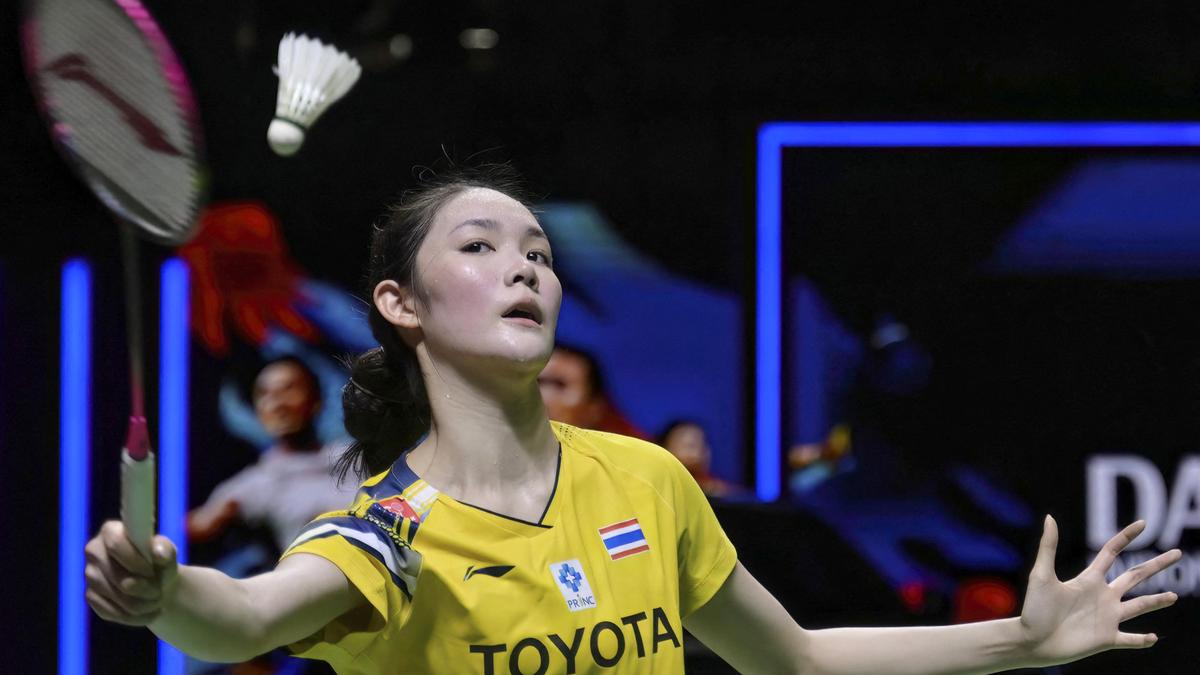
Thai badminton player Pitchamon Opatniputh has been given a three-month suspension after testing positive for the prohibited substance furosemide in a sample collected ahead of the Asian Games in Japan. The Badminton World Federation (BWF) confirmed that the anti-doping case has concluded, with the period of ineligibility backdated to the start of her provisional suspension.
The ban is scheduled to end on December 20, 2026. The ruling means the 19-year-old, a former world junior champion and one of Thailand’s promising singles players, will be unable to compete in sanctioned badminton events until her suspension expires.
BWF Confirms the Anti-Doping Decision
In a statement, the BWF said the case followed an adverse analytical finding for furosemide in a sample collected in September. The test took place in Nagoya, Japan, two days before the opening ceremony of the Asian Games.
Opatniputh was placed under a provisional suspension after the positive result. Under that restriction, she was not permitted to compete, train or otherwise participate in the continental event. The BWF said the final three-month period of ineligibility would run from the date the provisional suspension began, rather than starting anew with the announcement of the decision.
The federation’s statement confirms the outcome but does not provide further public details about how the substance entered the player’s system or whether she challenged the finding. The case is now closed under the terms announced by the BWF.
What Is Furosemide?
Furosemide is a diuretic, a medication that increases the body’s production of urine and can be prescribed to treat conditions such as fluid retention and high blood pressure. It appears on the World Anti-Doping Agency’s (WADA) prohibited list in sport.
Diuretics can raise anti-doping concerns for more than one reason. They may be used to reduce body weight rapidly, and they can also dilute urine, potentially affecting the detection of other substances. For that reason, their use is restricted under anti-doping rules unless an athlete has an approved therapeutic use exemption.
A positive test does not, by itself, explain whether a substance was taken intentionally, through medication or through contamination. Anti-doping cases are assessed according to the applicable rules and evidence. In Opatniputh’s case, the BWF’s announcement set out the substance detected and the length of the suspension but did not offer additional information about the circumstances.
A Rising Player’s Progress on the International Circuit
Opatniputh has built a reputation as one of Thailand’s emerging badminton talents. She won the world junior title in 2023, a milestone that placed her among the young players expected to make the transition to senior international competition.
Her results on the professional circuit have included runner-up finishes at two notable tournaments earlier this year: the Indonesia Masters, a Super 500 event, and the Orleans Masters, a Super 300 competition. She has also claimed two Super 100 titles, winning in Malaysia in 2023 and at the Baoji China Masters in 2025.
In addition, Opatniputh reached the final of the Taipei Open Super 300 last year. Those performances have helped establish her as a competitive presence in women’s singles, where players must manage demanding travel schedules, frequent matches and the physical strain of a crowded international calendar.
The suspension interrupts that progress at a significant point in her career. At 19, she is still developing the consistency and experience required to challenge established players, and time away from competition can affect ranking momentum, match sharpness and opportunities to gain points. Her eventual return will depend on the expiry of the ban and the usual eligibility requirements for international events.
Implications for Thailand Badminton
Thailand has developed a strong presence in international badminton, producing players who regularly compete for titles across the BWF World Tour. Opatniputh’s junior success and senior-level finals had made her an important prospect for the country’s women’s singles programme.
Her absence will therefore be felt not only in her individual schedule but also in the broader planning of the Thai team. Coaches and selectors will need to consider alternative line-ups for events during the suspension, while the player will have to prepare for a return after her ineligibility ends. The case also highlights the importance of medication checks and clear communication between athletes, support teams and medical professionals.
For players competing internationally, anti-doping compliance is a year-round responsibility. Testing may take place both in competition and outside it, and athletes are accountable for substances found in their samples under the sport’s rules. Checking medications against official guidance and seeking advice before taking any treatment can help reduce the risk of an inadvertent violation.
Focus Turns to the Return Date
With the BWF confirming that the proceedings have concluded, attention now turns to December 20, 2026, when Opatniputh’s period of ineligibility is due to expire. Until then, she will remain unavailable for sanctioned badminton competition under the ruling.
Her previous results suggest she has the ability to resume her career as a serious contender, but rebuilding competitive rhythm after a forced break will take time. For Thai badminton supporters, the key question will be how quickly the young shuttler can regain form and continue the progress that carried her from junior world champion to the finals of major international tournaments.