
Jamie Overton’s Five-Wicket Haul Powers England to T20I Win Over Australia
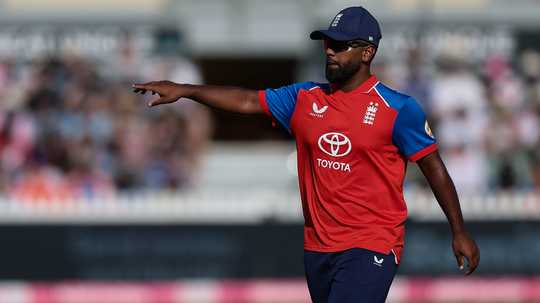
Jamie Overton delivered a career-best performance with the ball as England beat Australia by seven wickets in a rain-affected third T20I at the Gabba. The fast bowler took 5 for 12, helping dismiss the hosts for 108 before England chased a revised target of 93 in just 8.5 overs. The victory gives England a 2-1 lead in the five-match series and adds a compelling new chapter to the Ashes rivals’ T20 contest.
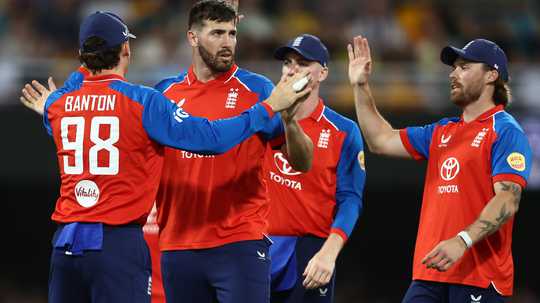
Overton’s figures were among the standout moments of the match. He became only the second England bowler to claim a five-wicket haul in men’s T20 internationals, combining accurate pace with sharp fielding to disrupt Australia’s innings. Liam Dawson also made a major contribution, taking 3 for 16 as England’s bowlers turned an initially lively Australian start into a rapid collapse.
Australia’s Bright Start Fades Under England’s Pressure
Australia chose to bat and began positively, with captain Mitchell Marsh and Sam Harper finding the boundary during the early overs. The pair looked set to give the home side a platform, but Dawson broke their partnership by dismissing Marsh for 11. England then tightened their grip through a combination of disciplined bowling and excellent work in the field.
Overton played a key role in Harper’s dismissal, taking a pair of impressive catches to help Dawson claim his second wicket. Harper had made 26 from 14 balls, striking the ball cleanly and appearing capable of pushing Australia towards a substantial total. His departure, however, left the hosts needing a new source of momentum.
Jake Fraser-McGurk briefly supplied it, launching two sixes off Sam Curran. But the aggressive approach came to an end when Overton removed him, leaving Australia at 65 for 3. That wicket shifted the match decisively: the hosts had lost a dangerous batter, and England’s attack could target the middle order with the fielding side firmly in control.
Overton Takes Charge as Australia Collapse
Overton’s most damaging spell came as Australia struggled to rebuild. He dismissed Tim David for six, then struck again to remove Joel Davies and Nikhil Chaudhary in quick succession. Chaudhary had scored 19 from 22 deliveries, including two boundaries, but could not turn his start into the innings Australia needed.
The wickets kept coming. Ben Dwarshuis was out for a duck, giving Overton his fifth wicket and leaving Australia at 92 for 7. The seamer finished with remarkable figures of 4-1-12-5—an exceptional return in a format where batters are expected to attack from the outset. His performance was not simply a matter of pace: he kept the ball difficult to score from and made the most of every opportunity.
Dawson returned to complete his three-wicket haul by dismissing Adam Zampa. Mitchell Owen was run out for 17, while Curran bowled Billy Stanlake to bring the innings to a close. Australia were all out for 108 in 16.5 overs, having lost their final seven wickets for a modest addition after their promising opening phase.
Rain Changes the Target, but England Chase with Intent
England’s reply was interrupted by rain, and the target was revised under the Duckworth-Lewis-Stern method to 93 from 16 overs. The adjustment reduced the required total, but the stop-start conditions still demanded quick decision-making from the visiting batters. England also lost Phil Salt early, with Riley Meredith claiming the first wicket.
Aneurin Donald responded with an explosive innings, scoring 32 from only 13 deliveries. His five fours and one six helped England seize control of the chase and ensured the revised target remained comfortably within reach. Harry Brook added a six, but Meredith struck twice in the same over to dismiss both Brook and Donald, leaving England at 49 for 3.
That brief cluster of wickets gave Australia a chance to make the chase more competitive. Instead, Jordan Cox took command. He attacked the bowlers with confidence, finding the boundary regularly and making sure England did not lose further momentum. Cox finished unbeaten on 33 from 14 balls, with five fours and a six, while Tom Banton contributed an unbeaten 10.
The pair added an unbroken 44-run partnership to settle the contest. Cox sealed the win with a boundary through the covers, completing the chase with 43 balls remaining. England’s seven-wicket victory was emphatic, even with the interruptions and three wickets lost along the way.
What the Result Means for the T20I Series
England’s win puts them ahead 2-1 in the five-match series and gives the visitors valuable momentum. Overton’s breakthrough performance offers England an important option in the pace attack, while Dawson’s control showed how effective spin can be when a batting side is trying to recover after losing early wickets. The match also highlighted the value of sharp fielding: Overton’s catches helped turn Australia’s early promise into a middle-order struggle.
For Australia, the main concern will be converting a brisk start into a competitive total. Harper and Fraser-McGurk showed that the Gabba surface offered opportunities for aggressive batting, but the rapid loss of wickets left the lower order with too much to do. The hosts will need greater stability through the middle overs if they are to level the series.
Any prediction for the next match should account for the series momentum, but one result does not settle the contest. Australia have the batting depth to respond, while England will be encouraged by the balance of their bowling attack and the confidence of Cox and Donald. With two matches remaining, the next T20I could prove pivotal in deciding whether England can close out the series or Australia can force a decider.
Brief scores: Australia 108 in 16.5 overs (Sam Harper 26; Jamie Overton 5-12, Liam Dawson 3-16) lost to England 93/3 in 8.5 overs (Jordan Cox 33 not out, Aneurin Donald 32; Riley Meredith 3-30) by seven wickets under the DLS method.