
West Indies’ Ranchi Run Chase: Records, Key Stats and What the India T20I Thriller Means
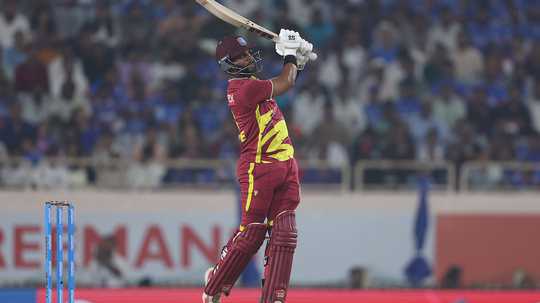
West Indies’ remarkable pursuit of India’s 250-run target in Ranchi turned a high-scoring cricket contest into a record-setting spectacle. Shai Hope led the chase with a rapid, unbeaten century, while Sherfane Rutherford supplied crucial support as the visitors reached a total few teams have managed to overhaul in Men’s T20 Internationals.
The match was notable not only for its result, but also for the extraordinary volume of boundaries, the performances of both wicketkeepers and a series of milestones across the format. Here is a closer look at the numbers behind the game, the players who shaped it and the wider context for fans following the latest cricket records and prediction discussions.
A 250-Run Chase Among the Greatest in T20I History
West Indies’ successful chase of 250 became the second-highest run chase in Men’s T20Is. Only South Africa’s pursuit of 259 against West Indies in Centurion in 2023 ranks higher. The Ranchi result also added to a growing list of extraordinary totals in the shortest international format: it was the seventh successful chase of at least 250 across all T20 cricket.
Three of those 250-plus chases have come in 2026, underlining how increasingly aggressive batting, deeper line-ups and improved boundary-hitting are reshaping expectations. For teams setting huge targets, the lesson is clear: even a total that once seemed virtually unassailable may not be enough when the opposition can sustain a high scoring rate through the middle and death overs.
The match produced a combined total of 501 runs, the second-highest aggregate in a Men’s T20I. The only game to feature more was the Centurion thriller in 2023, which produced 517 runs. India has appeared in four of the five highest-scoring matches in the format, including three in 2026—a striking measure of how often the team has been involved in modern T20I run-fests.
Sixes, Fours and a Boundary-Filled Contest
The two sides struck 79 boundaries: 46 fours and 33 sixes. That is the third-highest boundary count in a Men’s T20I. West Indies accounted for 20 of the sixes, matching their joint third-most in a T20I innings. It was also the second-highest number of sixes hit against India in the format, behind the 21 West Indies struck at Lauderhill in 2016.
Across Men’s T20Is between two full-member nations, there have now been 10 innings in which a team has cleared the boundary at least 20 times. West Indies and India have each achieved that four times, while Afghanistan and England have done so once apiece. The Ranchi game also yielded 382 runs from boundaries, the third-highest such total in a T20I.
West Indies now have four T20I totals of 250 or more, level with England for the second-most. India remains ahead with seven, despite finishing just one run short of the 250 mark in this match, at 249 for five. That narrow gap proved decisive: India’s imposing score was enough to set up a classic, but not enough to prevent Hope’s side from making history.
Shai Hope’s Extraordinary Week
Hope’s century in Ranchi extended an exceptional run of form across international formats. Only six days earlier, he had scored an unbeaten 162 in the third ODI in New Chandigarh, helping West Indies complete their highest successful chase in that format. The short interval between those performances is itself remarkable.
Six days is the shortest recorded gap between a 150-plus score in an ODI and a T20I century. Across Men’s internationals, it is also the third-shortest gap between an ODI hundred and a T20I hundred. Rohit Sharma holds the shortest interval in the cited records: four days separated his unbeaten 100 in a T20I at Bristol from his unbeaten 137 in the ODI series opener at Trent Bridge in 2018. Aaron Finch also achieved a rapid cross-format double in 2013, scoring 148 in an ODI after making 156 in a T20I.
Hope’s Ranchi hundred was his second in T20Is, putting him level with Chris Gayle and Evin Lewis for the most centuries by a West Indies batter in the format. He has now made 15 T20I scores of 50 or more, matching Lewis and moving within one of Gayle’s West Indies record of 16.
Hope reached three figures from just 45 balls, making it the second-fastest T20I century by a West Indies player. Johnson Charles remains quickest, having taken 39 balls against South Africa in Centurion in 2023. Hope’s effort was also the joint-fastest T20I hundred scored against India, matching Jacob Bethell’s 45-ball century in the 2026 T20 World Cup semi-final at Wankhede.
Wicketkeepers Take Centre Stage
The match offered a rare milestone for wicketkeeper-captains. Hope has now scored two T20I centuries in that role, and both ended on exactly 102 not out. His earlier unbeaten hundred came against Australia at Basseterre last year. The next-highest score by a wicketkeeper-captain in Men’s T20Is is Scott Edwards’ 99 for the Netherlands against Oman in 2024.
Hope’s recent success extends beyond T20 cricket. His unbeaten 162 in New Chandigarh was the highest ODI score by a wicketkeeper-captain, surpassing AB de Villiers’ 149 against West Indies in Johannesburg in 2015. Hope has scored 10 international centuries as a wicketkeeper-captain—eight in ODIs and two in T20Is. Only MS Dhoni, with 11, has more; no other player has recorded more than four.
India wicketkeeper Sanju Samson also made a major contribution in Ranchi, scoring 82. Together, Hope and Samson accumulated 184 runs, the second-highest combined score by the two wicketkeepers in a Men’s T20I. The record is 188, scored by Serbia’s Leslie Dunbar and Bulgaria’s Saim Hussain in Sofia in 2022.
Rutherford, Tilak Varma and Other Notable Records
Hope and Rutherford shared a 120-run partnership, the second-highest stand for the fourth wicket or lower in West Indies T20I history. Only Rutherford’s 139-run partnership with Andre Russell against Australia in Perth in 2024 is higher. Against India, it was West Indies’ second-best partnership for any wicket, behind the 126-run opening stand between Johnson Charles and Evin Lewis at Lauderhill in 2016.
Rutherford’s contribution also continued a strong personal sequence. He has now registered three consecutive T20I scores of 50 or more, matching the second-longest such run by a West Indies batter. Chris Gayle, Evin Lewis and Nicholas Pooran have each achieved the same streak. Gayle alone stands ahead, with four consecutive 50-plus scores in 2012.
There was a significant career milestone for India’s Tilak Varma as well. He and Rutherford became the latest players to pass 5,000 runs in Men’s T20 cricket. Among the 144 players to reach that mark, just 45 have maintained a strike rate of at least 140, and only five have averaged 40 or better. Tilak is the only player to combine all three benchmarks: 5,031 runs at an average of 41.57 and a strike rate of 145.36.
Tilak reached 5,000 runs in 166 innings, the fifth-fastest among Indian batters. KL Rahul, Ruturaj Gaikwad, Shubman Gill and Abhishek Sharma reached the milestone sooner. His combination of consistency and scoring speed makes him one of the most distinctive young batters in T20 cricket.
What the Ranchi Result Signals for Future T20I Predictions
India captain Shreyas Iyer’s 10-match winning streak ended with the defeat. It was the second-longest winning run by an Indian captain, behind Rohit Sharma’s 14 consecutive victories between November 2019 and July 2022. Rohit’s eight-match sequence at the 2024 T20 World Cup ranks third in the cited list.
For fans considering cricket prediction, the Ranchi match is a reminder that a large first-innings score should be assessed alongside conditions, batting depth and the presence of players capable of accelerating without losing wickets. Hope’s form across formats, Rutherford’s run of half-centuries and West Indies’ proven power-hitting all helped turn a daunting target into a successful chase.
The result does not make every 250-run target easy to overcome, but it does show how quickly a T20I can change when a set batter stays through the innings. With records falling and high totals becoming more common, the Ranchi thriller stands as both a landmark West Indies victory and a vivid example of the unpredictable appeal of modern T20 cricket.