
Senegal–Morocco AFCON Final Dispute: Unverified Claims Emerge Ahead of CAS Decision
Fresh claims have surfaced in the legal dispute between Senegal and Morocco over the Africa Cup of Nations final, with a Senegalese news website alleging that key arguments were challenged during a hearing at the Court of Arbitration for Sport (CAS). The report, however, is based on information said to have come from a closed session, and its account has not been independently confirmed.
The case has attracted considerable attention from football supporters because it concerns not only the outcome of a major international final but also the authority of referees, the reliability of match reports and the limits of post-match appeals. For now, the claims should be treated cautiously: they do not represent an official CAS finding, and the court has not announced its final decision.
What the Senegalese report alleges
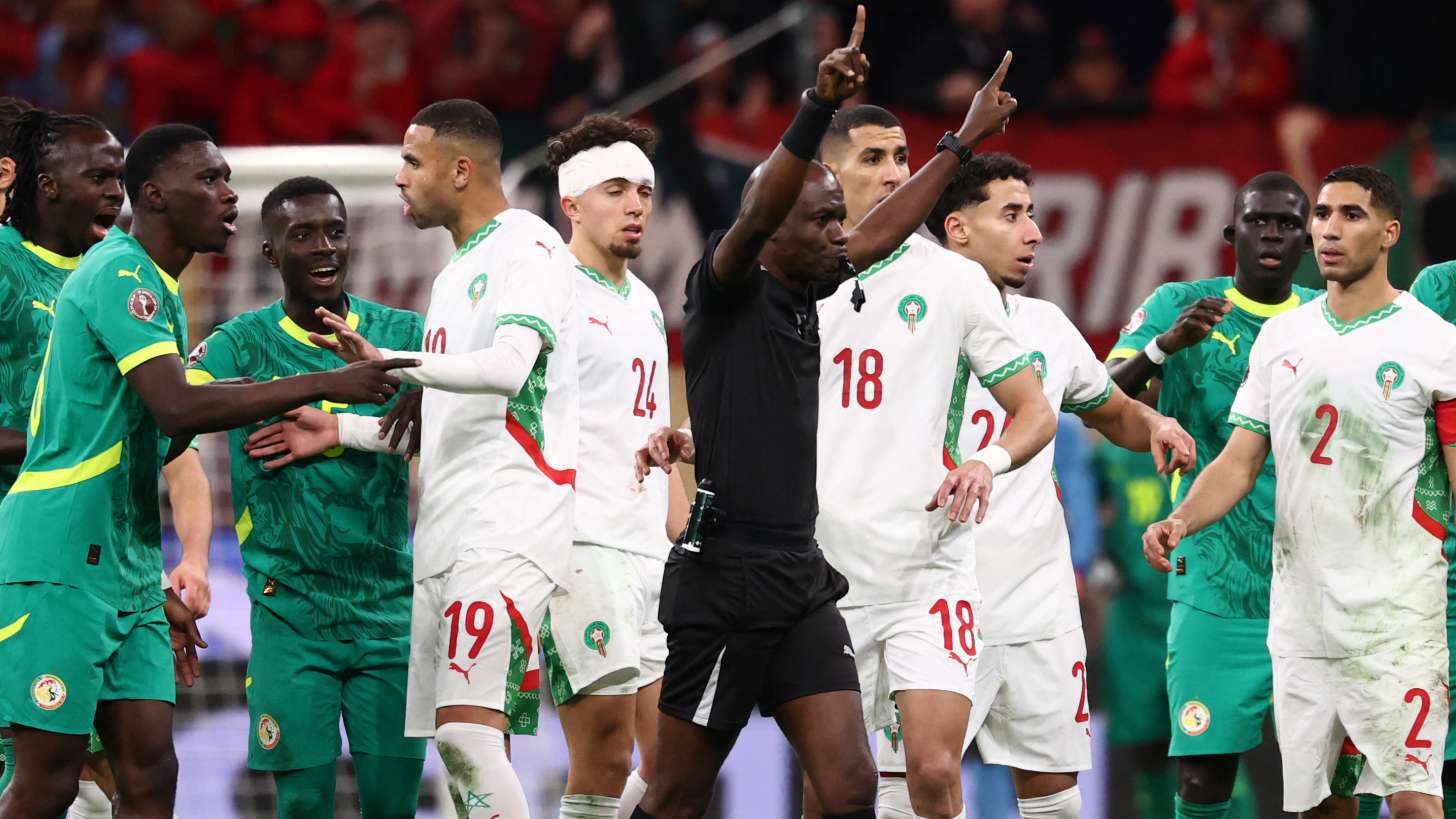
Senegalese outlet Seni News claims Morocco’s legal team sought to rely on a second report attributed to Congolese referee Jean Jacques Ndala during the Lausanne hearing. According to the website, the document was intended to offer an alternative account of the events surrounding the interruption of the final.
The report says the referee’s official account recorded that play stopped in the 97th minute and resumed approximately 12 minutes later. Seni News further alleges that this account did not state that Senegal had withdrawn from the match or that the team should be considered to have forfeited it.
The outlet claims that representatives of the Confederation of African Football (CAF) questioned whether the alleged second report existed. It says the issue was subsequently dropped after disagreement during the hearing. These details have not been verified by CAS or supported by publicly released hearing documents, so they remain allegations rather than established facts.
Questions about the referee and the evidence
Seni News also reports that Morocco’s defence raised the possibility that Ndala may have been influenced by Olivier Savary, a fellow Congolese official who heads CAF’s referees’ committee. The website did not provide public evidence to substantiate that suggestion. It is therefore important not to interpret the allegation as proof of pressure, misconduct or an improper relationship.
In a case involving a disputed football result, the distinction between an allegation and verified evidence is especially important. A claim made during legal proceedings does not automatically become a finding of fact. CAS will assess the material formally presented by both sides, along with the applicable regulations and the record of events, before reaching its conclusion.
Senegal’s reported “field of play” argument
According to the same account, Senegal’s legal team relied on the “field of play” principle. In sports law, this generally reflects the idea that referees’ decisions on matters occurring during a match should be respected, with courts and governing bodies reluctant to overturn them unless there is a recognised basis to do so.
That principle is not necessarily an absolute shield against every challenge. The precise rules, the nature of the disputed decision and the evidence presented can all matter. Appeals may raise questions about whether regulations were followed, whether a decision was within the referee’s authority, or whether there is credible evidence of serious wrongdoing. The CAS panel must determine how those considerations apply to this particular dispute.
The principle also highlights a broader tension in football governance. Fans often expect a clear, immediate outcome on the pitch, while legal proceedings may later examine whether competition rules were applied correctly. The challenge for an appeals body is to protect the integrity of the game without routinely replacing referees’ judgments with decisions made after the event.
Why the CAS ruling matters
The disagreement has implications beyond the two national teams. A final decision could clarify how match interruptions, official reports and claims about a team’s participation are handled in high-stakes competitions. It may also influence how CAF and other football authorities document unusual incidents and communicate decisions to players, teams and supporters.
For both Senegal and Morocco, the stakes are sporting as well as reputational. The outcome may affect how the final is officially recorded and how the episode is remembered by supporters. Yet until CAS issues a ruling, predictions about which side will prevail remain speculative. Neither leaked accounts nor commentary from interested parties can substitute for the court’s formal findings.
What supporters should keep in mind
At this stage, the central details described by Seni News—including the alleged second report, the exchange involving CAF representatives and the suggestion of possible influence—have not been officially confirmed. The hearing took place behind closed doors, limiting the public’s ability to assess the claims against a complete record.
That makes careful reporting essential. The safest summary is that Senegal and Morocco are contesting aspects of the AFCON final through the CAS process, while one Senegalese outlet has published an account it attributes to information from the hearing. The account may offer clues about the arguments being discussed, but it should not be presented as a verdict or as proof that either side’s position has been accepted.
Until CAS publishes its decision, the dispute remains unresolved. The court’s ruling—not unverified reports—will determine the legal outcome and provide the clearest account of how the relevant rules apply. For football fans following the case, the most reliable approach is to distinguish confirmed information from claims, avoid premature prediction, and wait for the official judgment.