
Sarri Questions Refereeing Consistency After Atalanta’s 3-2 Defeat to Milan
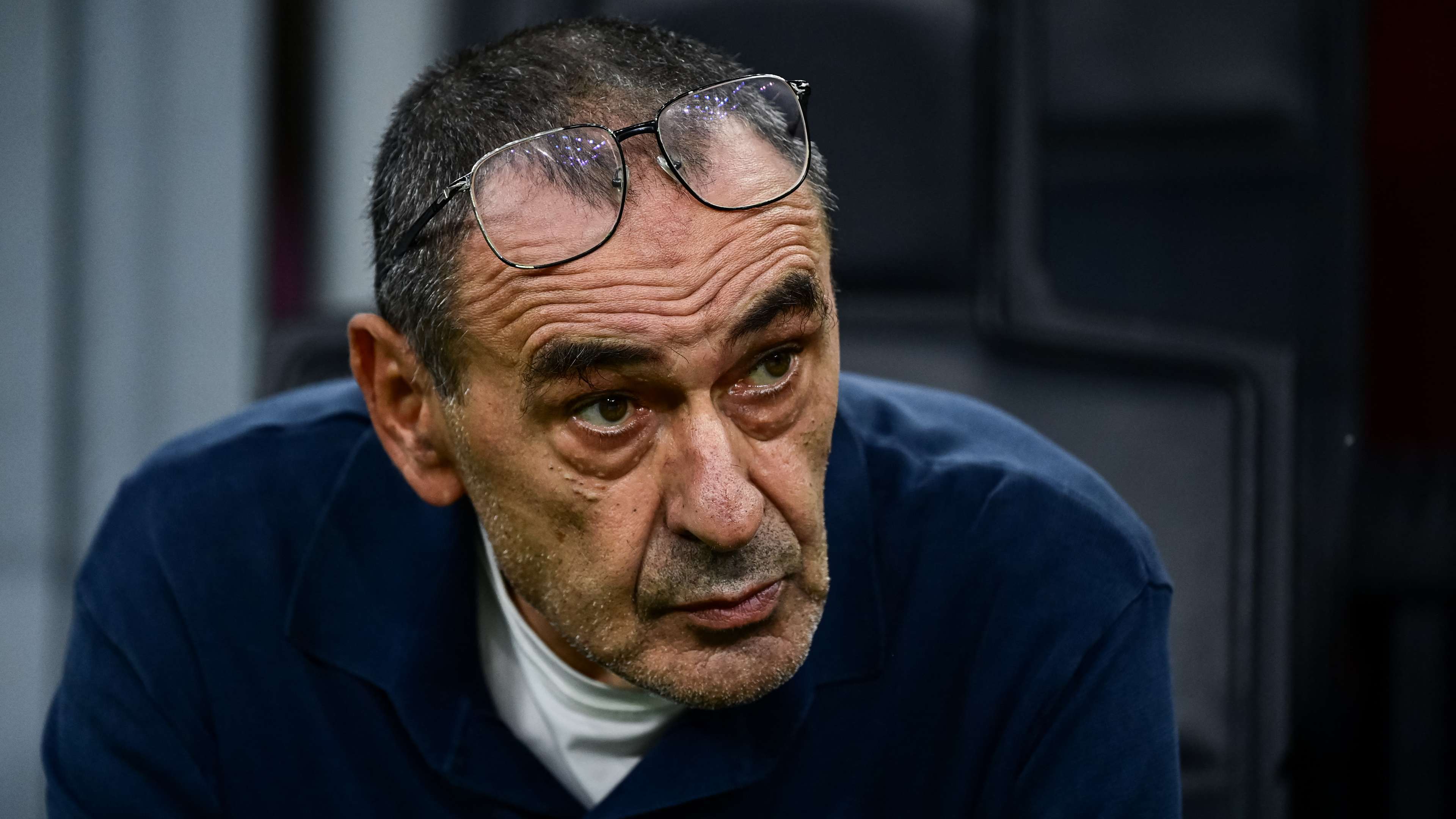
Atalanta coach Maurizio Sarri has accused referee Daniele Chiffi of applying inconsistent standards after his team’s dramatic 3-2 loss to AC Milan at San Siro. While Milan held on for victory after building a three-goal advantage, Sarri’s post-match comments focused on a disputed handball appeal and what he described as unequal treatment of players who use abusive language toward officials.
The Serie A match, played on Sunday in the seventh round, appeared to be heading toward a comfortable Milan win before Atalanta mounted a late comeback. The visitors came close to rescuing a point, but Milan survived the pressure to claim all three. The result moved the Rossoneri to 15 points and fourth place in the standings, while Atalanta remained on nine points in tenth.
Sarri raises a handball complaint
Sarri said Atalanta had made the first dangerous move of the contest through forward Nikola Krstovic, before he felt key decisions began to go against his side. Among his main complaints was an incident involving Milan defender Koni De Winter, whom Sarri believed handled the ball after a cross from Atalanta’s Jonathan Rui.
“I think Kevin De Winter, the Milan defender, handled the ball after a cross from Jonathan Rui,” Sarri said in comments reported by Sky Sport Italia. The coach’s frustration reflected a familiar tension in football: managers often judge controversial incidents through the immediate impact they may have had on the match, while referees must assess the action in real time and apply the laws consistently.
Handball decisions can be particularly contentious because they depend on several factors, including the player’s arm position, the distance from the ball and whether the movement appears deliberate. Sarri’s criticism was not limited to the specific appeal, however. He also questioned the overall management of the match and said his concerns about Chiffi were part of a broader pattern.
Rabiot incident fuels double-standards accusation
The most pointed part of Sarri’s reaction concerned Milan midfielder Adrien Rabiot. Sarri said he had raised the issue of players directing obscene language at referees and was told that Rabiot had received a yellow card for his words. The Atalanta manager then suggested that the same conduct might have brought a harsher punishment had he been responsible.
“The referee told me that Adrien Rabiot received a yellow card for what he said, but if I had been the one to say it, he would have sent me off,” Sarri said. His remarks amounted to an accusation of double standards, though they represented the coach’s view of the incident rather than an independent finding about the referee’s decision.
Disagreements over dissent and abusive language are a recurring feature of elite football. Coaches and players can face disciplinary action for confronting officials, but the outcome may depend on what the referee hears, the severity of the language and the circumstances in which it is used. Sarri’s comments are likely to renew discussion among supporters about whether those rules are applied evenly across teams and individuals.
Coach says frustration with Chiffi is not new
Sarri also criticised Chiffi’s handling of the match more broadly, saying he was unhappy with the referee’s management and that similar problems had arisen in previous encounters. He stressed that he did not want to turn the issue into a personal argument, but made clear that his dissatisfaction went beyond one isolated call.
“I didn’t like the referee’s management of the match in general,” Sarri said. “I’m not here to get into an argument, but this happens every time I deal with Daniele Chiffi.”
Such comments often become a major part of the conversation after close or dramatic matches, particularly when a late comeback changes the mood of the contest. Still, the result also carried sporting significance for both clubs. Milan gained valuable ground in the early Serie A standings, while Atalanta were left to consider how a match that seemed out of reach became so close.
Atalanta’s late response offers encouragement
Despite his anger over the officiating, Sarri praised Atalanta’s response after falling three goals behind. The visitors increased their intensity in the closing stages, found a route back into the game and created an opportunity to make it 3-3. Sarri said there was still enough time remaining for the match to change again, underlining how close Atalanta came to turning a heavy defeat into a point.
“We had the chance to make it 3-3, and there was still a relatively long time left before the end of the match,” he said. “Its course changed completely, and we were even capable of achieving a better result.”
The comeback was also evidence, in Sarri’s view, that the team is becoming more united. He credited the substitutes with helping shift the momentum and said their impact mattered in difficult circumstances. For Atalanta, that late energy may provide a positive takeaway, even as the final score leaves them without points.
What the result means for the next fixtures
Milan will take confidence from securing a win in a match that became unexpectedly tense, but the late collapse of control may also offer a warning. Protecting a sizeable lead requires concentration, clear defensive organisation and composure under pressure—qualities that will be tested again as the season develops.
Atalanta, meanwhile, can build on the character shown in the final minutes. Their ability to threaten a 3-3 equaliser suggests that the team’s attacking options and substitutions can influence a game even when the outlook appears bleak. The challenge will be to bring that urgency into the opening stages, rather than waiting until they are chasing a large deficit.
Both clubs are scheduled for European action on October 23, with Milan set to face Ajax in the Europa League and Atalanta due to meet a Conference League opponent. Any football prediction for those fixtures will depend on how each side responds to this demanding Serie A encounter. Milan must balance relief at the victory with the need to tighten up, while Atalanta will hope their late surge signals growing cohesion rather than simply a brief reaction.
For now, the 3-2 scoreline leaves Milan with the points and Atalanta with questions about the decisions that shaped the match. Sarri’s criticism has placed the referee’s performance under scrutiny, but the contest’s defining image may ultimately be Atalanta’s refusal to give up—and Milan’s narrow escape after appearing to have the game comfortably won.