Real Madrid fans protest refereeing standards with Tebas and Negreira chants
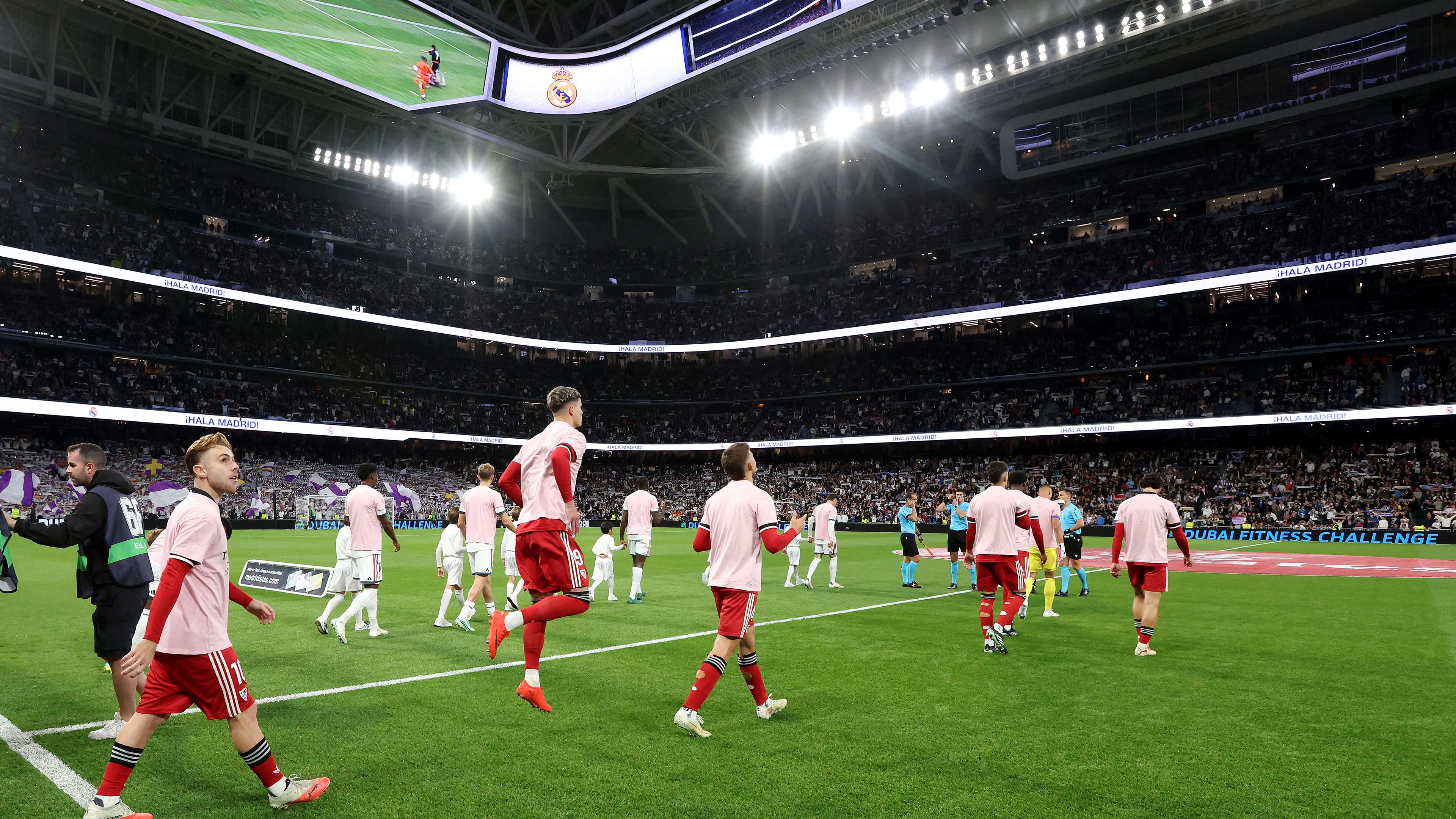
Real Madrid’s concerns about Spanish football’s refereeing and governing bodies moved from the boardroom to the stands during the club’s match against Sevilla. In the opening minutes at the Santiago Bernabéu, supporters staged a coordinated protest that reflected growing frustration over recent controversies, including Vinícius Júnior’s dismissal against Villarreal and comments from La Liga president Javier Tebas about videos published by Real Madrid TV.
According to Spanish newspaper Sport, the atmosphere shifted sharply before kick-off. A large banner appeared in the south stand, an area associated with organised supporter groups and located close to the presidential box where Florentino Pérez watches matches. Its message was direct: “This is not football, this is Tebas and Negreira.”
The display captured a wider mood of distrust among sections of the Madrid fanbase. Rather than focusing only on a single refereeing decision, the protest connected several issues that supporters believe have damaged confidence in the sport’s institutions. The chants that followed targeted the Spanish Football Federation, La Liga, Barcelona and figures linked to the Negreira case.
A protest shaped by recent controversies
Vinícius Júnior’s red card against Villarreal had become a fresh point of debate among Real Madrid supporters. The incident intensified discussion about disciplinary decisions and the consistency of refereeing in La Liga. For fans already concerned about how major matches are officiated, the dismissal became part of a broader argument about whether clubs are being treated fairly.
Tebas’s remarks about Real Madrid TV also added to the tension. The club’s channel has repeatedly aired footage and analysis questioning refereeing calls, while the league president has criticised the nature and impact of such coverage. That disagreement has become another front in the increasingly public dispute between Real Madrid and La Liga’s leadership.
These developments do not, by themselves, establish that referees have acted improperly. They do, however, help explain why supporters have turned to public protest to express their frustration. In modern football, disputes over officiating can quickly become symbolic: a controversial decision may be viewed not as an isolated mistake, but as evidence of a deeper problem with transparency, accountability or consistency.
What the banner’s colours signified
One detail that attracted attention was the way the names “Tebas” and “Negreira” were presented in Barcelona’s familiar blue and red colours. The choice appeared to be a deliberate visual reference to the Catalan club and to the Negreira case, which remains a major subject of debate in Spanish football.
The case concerns payments made by Barcelona to companies linked to José María Enríquez Negreira, a former senior figure in Spanish refereeing. The payments have prompted investigations and intense public scrutiny. Barcelona has said they were for technical reports and advice, while the controversy has led to questions about the relationship between clubs and influential figures connected to refereeing. Allegations and interpretations surrounding the matter remain contested, and the case should not be treated as proof that match results were manipulated.
For Real Madrid supporters, however, the issue has become a powerful rallying point. The banner’s wording and colours combined criticism of league leadership with a reference to a controversy they believe has not been adequately resolved. That message was designed for the stadium, but it also reached a much wider audience through photographs, broadcasts and social media.
Five minutes of chants at the Bernabéu
The banner was followed by a sustained burst of chanting during the first five minutes of the match. Supporters were reported to have shouted slogans including “Corruption in the federation,” “Tebas, leave now,” “Laporta keeps paying” and “Negreira keeps running the matches.” The chants expressed anger in forceful terms, though they represented the views of protesting fans rather than established findings about the individuals or organisations named.
The timing mattered. By making their voices heard at the start of the game, supporters ensured the protest became part of the match-day spectacle rather than a reaction confined to online discussion. The south stand’s organised role helped give the demonstration structure, while the involvement of fans beyond that section suggested that the frustration was not limited to a single group.
Even so, stadium protests rarely speak for every supporter. Some fans may share concerns about refereeing but prefer to keep attention on the team and the match. Others may disagree with the language used. The scene at the Bernabéu therefore illustrates both the intensity of the debate and the range of opinions within a large football community.
A growing confrontation between club and institutions
The protest highlighted an increasingly visible confrontation between Real Madrid and Spanish football’s governing structures. The club has used its media platform to scrutinise refereeing decisions, while league officials have challenged the tone and purpose of that coverage. Supporters have now added their own public pressure, turning institutional disagreements into a match-day issue.
That dynamic carries consequences beyond one fixture. When clubs, leagues and supporters openly question the credibility of officiating, the debate can affect how fans interpret future decisions. A close call in a title race or a knockout tie may be judged not only on its merits, but through the lens of existing mistrust. For La Liga, restoring confidence may require clear explanations, consistent disciplinary standards and communication that demonstrates how decisions are reviewed.
For Real Madrid, the challenge is to maintain focus on football while responding to a fanbase demanding answers. The club’s results, performances and title ambitions remain central, but controversies can dominate the conversation when supporters feel that institutional issues are unresolved.
What comes next for La Liga and Real Madrid?
The protest does not settle the arguments surrounding refereeing, Tebas or the Negreira case. Instead, it underlines how strongly those subjects resonate among Madrid fans. Any prediction about whether tensions will ease depends on what happens next: further disputed decisions, new developments in ongoing investigations, or more direct dialogue between the club and football authorities could all shape the mood.
For now, the message from the Bernabéu is unmistakable: a section of Real Madrid’s support believes trust in Spanish football has been weakened and wants the league’s institutions to address that concern. Whether the protest leads to meaningful change remains uncertain, but it has ensured that the debate over refereeing, accountability and football governance will continue well beyond the final whistle.