
Twente vs Utrecht briefly halted after Alarcón’s goal sparks crowd trouble
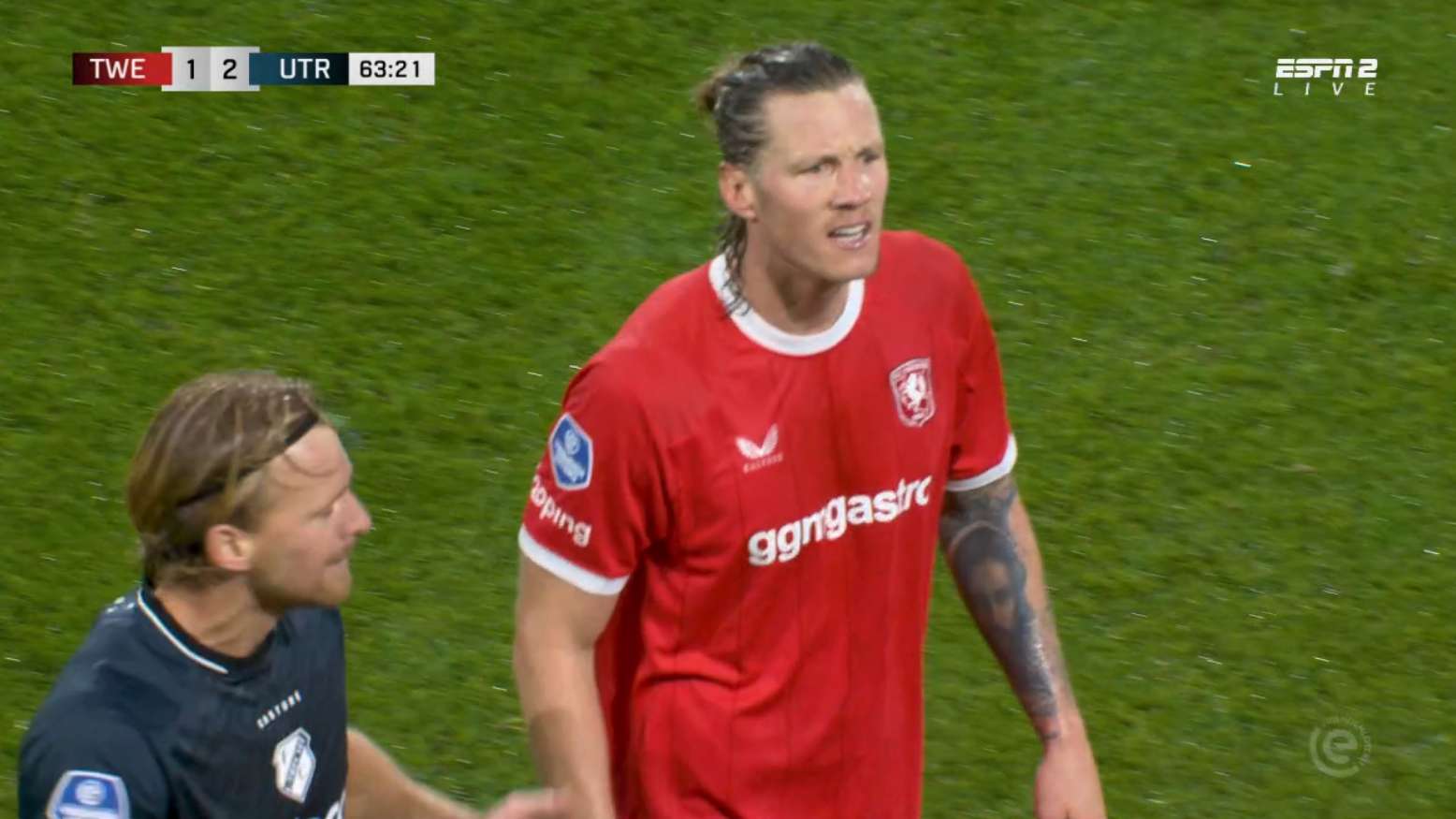
FC Twente’s Eredivisie meeting with FC Utrecht was briefly interrupted after Ángel Alarcón scored to put the visitors 2-1 ahead at De Grolsch Veste. The goal, registered in the 63rd minute, was followed by a heated celebration in front of Twente’s home supporters. Several cups were then thrown onto the pitch, prompting referee Lindhout to stop play.
Players from both sides initially left the field and made their way toward the tunnel as officials assessed the situation. The stoppage lasted only a few minutes, however. Lindhout later decided that the teams did not need to go inside, and the players waited near the touchline before the match resumed. With around 25 minutes still to play, Utrecht held a narrow lead.
Alarcón’s celebration becomes the flashpoint
Alarcón’s finish was a significant moment for Utrecht. The Spanish forward scored his second goal for the visitors with a composed piece of play, giving his side the advantage in an increasingly tense contest. But the celebration in front of the Twente crowd quickly shifted attention away from the football.
Utrecht striker Wout Weghorst was visibly angry during the interruption. He appeared to believe that Alarcón’s gestures had provoked the home supporters and contributed to the cups being thrown onto the playing surface. The incident highlighted how quickly emotions can escalate when a visiting player celebrates directly in front of a passionate home crowd, particularly in a close match with plenty at stake.
There was no immediate indication that anyone had been injured. Once the referee and match officials were satisfied that play could safely continue, the teams returned to action. The brief pause did not change the score, but it added another layer of tension to a match that was already finely balanced.
Referee’s decision allows the match to continue
Stopping play was a necessary response to objects landing on the pitch. Referees must consider player safety and the risk of further disruption before allowing a game to resume. In this case, Lindhout first directed both teams away from the field, then revised the response after assessing the situation. Rather than prolong the interruption, he had the players wait on the touchline before restarting the match.
Such incidents can affect the rhythm of a game. A stoppage may give the leading side a chance to regroup, while the team chasing the score can use the pause to reset and plan its next attack. For Twente, the interruption created an opportunity to refocus after conceding. For Utrecht, the challenge was to retain composure and protect its advantage amid a charged atmosphere.
The episode also underlined the responsibility shared by players and supporters in maintaining a safe environment. Celebrations are part of football, and away players are entitled to enjoy important goals. At the same time, gestures perceived as taunting can intensify a crowd’s reaction. Throwing objects onto the field is dangerous and can lead to further delays, disciplinary action or other consequences for a club.
Match prediction: Utrecht’s lead leaves Twente with work to do
With roughly 25 minutes remaining and Utrecht leading 2-1, the match remained open. Twente had time to search for an equaliser, particularly with the home crowd behind them, but the interruption and the visitors’ advantage made the closing stages difficult to predict. A single goal could change the result, while Utrecht’s priority was likely to be keeping its shape and limiting the space available to Twente’s attackers.
Any football prediction at that point would depend on how well each side handled the pressure. Twente needed to turn possession and home support into clear chances rather than rush forward and leave gaps at the back. Utrecht, meanwhile, had to balance defensive discipline with the possibility of exploiting counterattacks. Alarcón’s goal had placed the visitors in control, but the scoreline offered no guarantee that they would see the match out.
The brief stoppage could also influence momentum. Twente might return with renewed urgency, while Utrecht could benefit from the chance to settle after a chaotic few minutes. The key factors were likely to be decision-making in the final third, concentration during set pieces and whether the visitors could withstand sustained pressure.
What the incident means for the closing stages
The interruption became one of the defining moments of the contest, not simply because it followed the decisive-looking goal, but because it tested the composure of both teams. Weghorst’s reaction showed the strength of feeling on the Utrecht side, while the referee’s measured restart prevented the incident from causing a longer delay.
For Twente, the immediate focus was clear: respond on the pitch and make the most of the remaining time. For Utrecht, the task was to stay calm, avoid further confrontation and defend the lead. The match had entered a high-pressure phase in which discipline could be just as important as attacking quality.
Upcoming fixtures
Twente’s next listed fixture is a Conference League match on 23 October 2026 at 03:00, with Utrecht also shown in the schedule. Twente are then listed to face PEC Zwolle in the Eredivisie on 24 October 2026 at 22:30. These upcoming games will give both clubs another chance to build momentum, although their immediate attention remained on the tense closing stages at De Grolsch Veste.
As play resumed with Utrecht 2-1 in front, the central question was whether Twente could convert its home advantage into a late response—or whether the visitors would hold on for a valuable win. The brief disruption had added drama, but the result would ultimately be decided by what happened on the pitch.