
Akash Deep Ruled Out of Christchurch Test After Two Helmet Blows
India fast bowler Akash Deep has been ruled out of the remainder of the Christchurch Test against New Zealand after being struck on the helmet twice during the first session of Day 3. The seamer continued batting after the incidents, but was later withdrawn from the match as a precaution and replaced by Prasidh Krishna under the concussion-substitute rule.
The setback is significant for India. Akash had been one of the visitors’ standout performers, claiming five wickets for 99 runs in New Zealand’s first innings. His absence leaves India without a key pace option as they look to recover from a substantial first-innings deficit. For fans following the contest, his injury also adds an unexpected variable to any cricket prediction about how the Test may unfold.
Two blows during Jamieson’s over
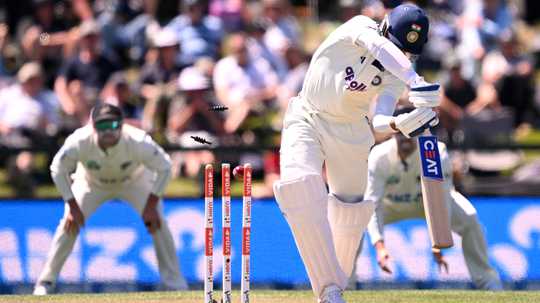
The incidents occurred in the 53rd over of India’s innings, bowled by New Zealand quick Kyle Jamieson. At 52.1, Jamieson delivered a short ball that Akash attempted to pull. He was late on the shot, and the ball took a top edge before striking his helmet grille. India’s medical staff came onto the field to conduct the required concussion assessment. Akash was cleared to continue.
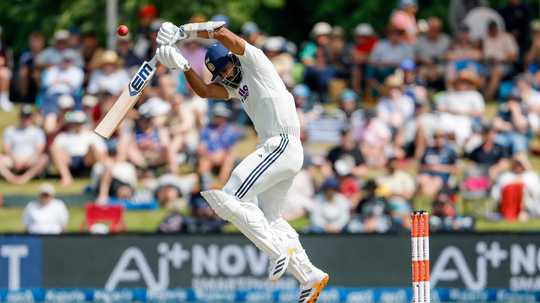
Four deliveries later, another short ball followed. This time, Akash appeared to take his eyes off the ball while trying to fend it away, leaving him in an awkward position. The delivery hit him hard on the helmet near the Indian flag, prompting the physio to return for a second examination. The ball travelled through the cover region, but the immediate concern was Akash’s condition rather than the outcome of the delivery.
A replacement helmet was brought out, and Akash remained at the crease. However, the second impact led to a longer assessment, and the team’s medical staff continued to monitor him. Although he was able to resume batting, the decision to rule him out of the rest of the match reflects the caution teams are expected to take after repeated blows to the head.
Akash contributes with the bat before withdrawal
Akash showed considerable resolve after the incidents, scoring 29 from 52 deliveries. His innings helped India add valuable runs late in the order, as he shared a 46-run eighth-wicket partnership with Dhruv Jurel. The stand offered some resistance after New Zealand had put India under pressure and gave the visitors a chance to reduce the deficit.
Jurel was India’s leading scorer, finishing with 88. His effort, supported by the tail, helped the tourists reach 246 before they were bowled out. India nevertheless conceded a 110-run first-innings lead, leaving the team with considerable work to do in the remainder of the match.
Akash did not take the field when India’s innings ended, a little over an hour into the second session. Prasidh was then brought into the contest as a concussion substitute. The Board of Control for Cricket in India confirmed that its medical team was monitoring Akash, though the immediate priority was to ensure his wellbeing rather than rush him back into action.
Why the concussion substitute matters
Concussion substitutions are designed to allow a team to replace a player who is unable to continue because of a head injury, while maintaining a fair balance between the sides. The replacement is generally expected to fulfil a similar role to the injured player, subject to match officials’ approval. In this case, Prasidh’s inclusion gives India another specialist fast bowler, but it cannot erase the loss of Akash’s first-innings contribution.
Akash’s five-wicket haul had made him one of India’s most effective bowlers in the match. He had helped restrict New Zealand before the hosts established their lead, and his ability to challenge batters with pace and movement had been an important part of India’s attack. Prasidh now has the opportunity to contribute in his place, but he enters the match with India already facing a difficult situation.
India’s challenge after conceding a lead
The 110-run deficit means India must respond carefully in the next phase of the Test. New Zealand have the advantage on the scoreboard, while India will need disciplined bowling, sharp fielding and a sustained batting effort to change the momentum. Losing a bowler who had already taken five wickets makes that task harder, particularly if the pitch continues to offer assistance to the seamers.
For supporters assessing the match, the substitution is an important development, but it is not the only factor shaping the likely outcome. The condition of the surface, the performance of India’s remaining bowlers and the ability of the batters to build partnerships will all influence the contest. Any cricket prediction should account for those variables, as well as the uncertainty that comes with a Test match in which one strong session can quickly shift the balance.
Akash’s courage in continuing to bat after two helmet impacts was evident, but his withdrawal underlines why head injuries are treated seriously in modern cricket. India will hope he makes a full recovery, while Prasidh is tasked with helping the team stay competitive in Christchurch. With the visitors trailing after the first innings and a key bowler unavailable, the pressure is now on the rest of the side to find a way back into the game.