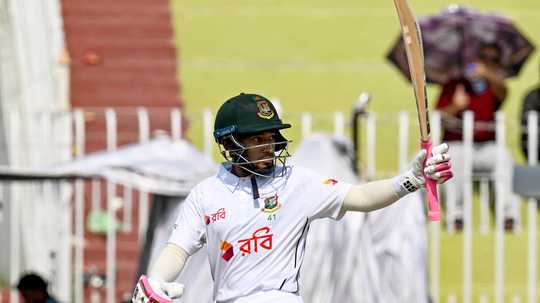

India Face Uphill Battle After Batting Collapse in Christchurch Test
India’s second Test against New Zealand has turned sharply against them in Christchurch. After the hosts reached 356 in their first innings, India ended Day 2 at 116 for 6, still 240 runs behind and with only Dhruv Jurel and the lower order remaining. The visitors now face a difficult task: first, avoid conceding a substantial lead, then find a way back into a match being played on a surface that has offered pace and movement to the bowlers.
The position is especially frustrating for India because their batting had looked more assured in the previous Test in Wellington. This time, several players made starts but none converted them into the kind of substantial innings needed to steady the team. Sairaj Bahutule, India’s spin bowling coach, described the day as disappointing and pointed to the absence of partnerships as a central problem.
“All the batters got starts, it’s just that we couldn’t convert it into big scores,” Bahutule said. On a pitch where the ball can challenge batters throughout an innings, brief contributions are rarely enough. Building partnerships can slow the opposition’s momentum, make the bowlers work longer and create opportunities to score once conditions ease.
New Zealand Extend Their First-Innings Advantage
New Zealand resumed Day 2 at 246 for 5, and India made progress by removing Glenn Phillips early. But the home side continued to add runs through a series of modest partnerships, carrying their total beyond 350 before the innings ended. Akash Deep claimed a five-wicket haul, an important achievement in testing conditions, but India had to work hard for every breakthrough.
The visitors’ missed chances made the task more difficult. Matt Henry was dropped three times, allowing New Zealand’s lower order to remain at the crease and contribute valuable runs. In a close Test, those reprieves can have an outsized effect: they extend an innings, tire the bowlers and give the batting side extra time to build a score.
Bahutule also acknowledged that India could have made better use of the movement available on the first morning. He felt the bowlers’ lines were too wide at times, giving New Zealand’s batters room to leave or play with less risk. As the match developed, India found better areas and created chances, but the dropped catches prevented that improvement from translating into greater control.
“The pitch had a lot of seam movement in terms of creating that doubt in the batter’s mind,” he said. “The lines were slightly wider.” He added that India bowled more effectively later and took five wickets during a period in which New Zealand added around 110 runs, but stressed that the team needed to hold on to its opportunities.
India’s Batting Must Recover Quickly
India’s reply began with the pressure of a sizeable first-innings deficit, and New Zealand’s seamers made full use of it. The visitors lost six wickets for 116, leaving Jurel with a major responsibility when play resumes. With the specialist batters dismissed and only the bowlers to come, India need a determined effort from the remaining pairings to reduce the gap and avoid handing New Zealand an even stronger position.
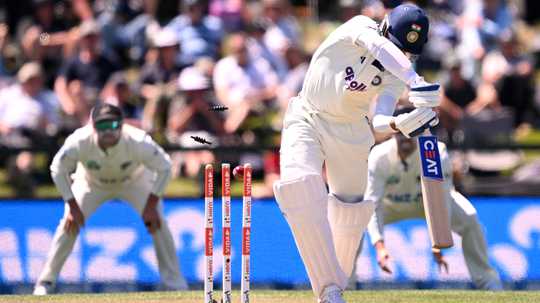
One of the most significant wickets was KL Rahul’s. Jacob Duffy delivered a full, wide ball, and Rahul chased it away from his body, edging to Devon Conway. It was not the kind of delivery that forced a batter into a mistake; rather, it invited a shot that Rahul may have preferred to leave. His dismissal underlined how quickly a promising position can unravel when the ball is moving and the scoreboard is demanding a response.
Rishabh Pant also fell to Duffy, four overs before Rahul. Pant advanced down the pitch, looking to disrupt the bowler’s length, but sliced a good-length delivery into the air. Kyle Jamieson took the catch at point. Duffy said the key against an attacking batter such as Pant is to remain composed and avoid changing plans simply because the batter is trying to dictate the contest. Short-pitched bowling, he added, can remain useful, provided the bowler does not allow the batter to pull him away from his intended lengths.
Duffy’s Response After a Difficult Wellington Test
Duffy’s performance in Christchurch marked a clear improvement from the previous match. In Wellington, he conceded 201 runs from 33 overs as India piled up 720. This time, he finished Day 2 with figures of 2 for 21 from eight overs, removing two major threats in quick succession.
The New Zealand seamer said he had worked on his rhythm and technique between the Tests, after a run of white-ball cricket had affected the consistency of his action. He also acknowledged that fortune played a part. Rahul’s dismissal came from a delivery Duffy did not consider his best, while Pant’s aggressive approach produced a catch rather than a boundary. In Test cricket, preparation matters, but the ability to capitalise when an opening appears is just as important.
For New Zealand, Duffy’s spell added to the pressure created by the pitch and the scoreboard. The hosts have already shown that they can score steadily in challenging conditions, while their bowlers have exposed India’s uncertainty outside off stump and their difficulty in building partnerships.
Pitch Conditions and the Match Prediction
Bahutule believes the Christchurch surface has offered more bounce and pace than the Wellington pitch, with the ground becoming quicker as it dries. He suggested that sunshine over the next couple of days could make batting somewhat easier, though the conditions will need to be assessed as the Test progresses. The surface has so far provided a balanced examination of batting and bowling skills, rather than a straightforward platform for either side.
That possibility gives India a reason to keep fighting, but the match prediction remains firmly in New Zealand’s favour after the hosts secured a 240-run lead while taking six wickets. India’s best route back is to make the first hour of Day 3 count: Jurel and the lower order must show patience, resist loose shots and turn small stands into meaningful partnerships. A substantial recovery could keep the contest alive, particularly if the pitch becomes easier to bat on.
However, New Zealand will sense an opportunity to press for a decisive advantage. If Duffy, Jamieson and the rest of the attack maintain their discipline, India could be forced to follow on or concede a commanding lead. Bahutule noted that three days remained and that “anything is possible,” but India will need far more than individual starts. In Christchurch, their immediate challenge is simple to describe and difficult to achieve: survive the movement, rebuild the innings and give themselves a chance to compete again.