
William O’Rourke Ruled Out of New Zealand’s India Tour as Australia Tests Become the Priority
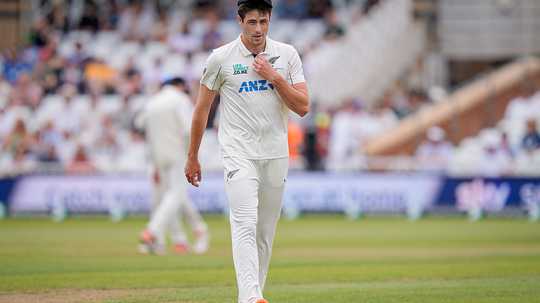
New Zealand fast bowler William O’Rourke will miss the full home series against India as he continues to recover from injuries to his left hamstring and calf. New Zealand Cricket confirmed that the 24-year-old has been withdrawn from consideration for both the one-day internationals and Tests, with the decision made to protect his long-term fitness rather than rush him back for a high-profile tour.
The call is a setback for O’Rourke, who had been expected to strengthen New Zealand’s pace attack against India. It also delays his return to international cricket at home: he has not played a home international since April 2025, having missed the previous summer with a stress fracture in his back. For supporters following the series and weighing up a cricket prediction, his absence is an important change to New Zealand’s bowling outlook.
A cautious approach after a demanding comeback
O’Rourke’s recent injury history explains why New Zealand are taking a conservative route. After spending seven months out with his back injury, he returned during the team’s tour of Bangladesh in April and played all three ODIs. He then featured in each of New Zealand’s three Tests against England in June, building valuable match experience after a lengthy period on the sidelines.
However, the workload came with a fresh setback. O’Rourke tore his hamstring on the final day of the third Test at Nottingham. After beginning his recovery, he strained his calf during training in late August. The combination of injuries has interrupted his progress and left the team unwilling to set a firm return date until he can safely increase his bowling loads.
New Zealand head coach Rob Walter said it was disappointing for O’Rourke to miss such a significant home series, particularly after he had been in line to play in both formats. But, following discussions with the player and medical staff, the team agreed that more rehabilitation was the sensible option.
Walter said New Zealand’s pace-bowling resources will be crucial over the coming months. The priority, he explained, is to ensure O’Rourke is fully fit before he returns to competition, rather than risk another injury by bringing him back too early.
Australia tour offers a major target
With the India series ruled out, attention turns to New Zealand’s four-Test tour of Australia, which begins in December. The opening Test is scheduled for Perth on December 9, giving O’Rourke a limited window to regain fitness, rebuild his bowling capacity and prove he is ready for the demands of international cricket.
Walter outlined a possible route back through domestic cricket, saying O’Rourke could ideally return for Canterbury in the Plunket Shield in late November. A successful appearance at that level would provide a useful opportunity to assess his match fitness before the Australia trip. It would also allow New Zealand’s selectors to judge how his body responds to sustained bowling, rather than relying only on training progress.
That pathway is significant because Test cricket places a heavy physical load on fast bowlers. Long spells, repeated days in the field and short recovery periods can expose any lingering weakness. For New Zealand, a fit O’Rourke could be a valuable asset in Australia, where pace and bounce are likely to shape the contest. Still, selection will depend on his recovery and workload, not simply the importance of the tour.
India series plans continue to evolve
O’Rourke was not selected for New Zealand’s T20I squad, so his withdrawal does not change the personnel for the five-match series in that format. The T20Is begin on October 22 and will be followed by five ODIs starting November 1. The tour concludes with two Tests, in Wellington and Christchurch, with the first scheduled to begin on November 19.
New Zealand have already had to adjust their T20I plans because of injuries to Mark Chapman and Zak Foulkes. Josh Clarkson and Blair Tickner have been named as replacements. Those changes, alongside O’Rourke’s absence from the longer-format squads, mean the team will need to manage its available players carefully across a packed international schedule.
The India tour presents a demanding challenge across three formats, and the fast-bowling balance will be closely watched. O’Rourke’s height, pace and ability to generate bounce had made him a compelling option for the ODI and Test legs. His absence gives other bowlers a chance to take on larger roles, while also reducing the risk of placing extra pressure on a player still recovering from consecutive injuries.
What O’Rourke’s absence means for cricket predictions
Any cricket prediction for the India series should account for the change, particularly when assessing New Zealand’s pace options in the ODIs and Tests. O’Rourke’s ability to extract bounce could have offered a different challenge for India’s batters, but his absence does not automatically determine the outcome. Conditions, team selection, workload management and the form of the remaining bowlers will all matter.
For New Zealand, the decision is ultimately a longer-term investment. Missing a marquee home series is difficult for both player and team, but a careful rehabilitation plan may give O’Rourke a better chance of contributing during the Australia Tests and beyond. His immediate goal is not simply to return quickly; it is to return ready for the physical demands of top-level cricket.
Until he proves his fitness in training and, ideally, domestic competition, his availability for Perth remains uncertain. New Zealand will hope the extra recovery time allows him to rebuild steadily. For now, the team’s message is clear: protecting O’Rourke’s health takes priority over rushing him into action against India.