
New Zealand Name Seven-Man Pace Attack for Four-Test Tour of Australia
New Zealand have selected a seven-man pace group for their four-Test cricket tour of Australia, with fast bowlers Will O’Rourke and Michael Rae returning to the squad for a demanding series that begins in Perth on December 9. The selection gives captain Tom Latham a range of options for conditions expected to vary between Australia’s lively pace-friendly surfaces and the different challenges of Adelaide, Melbourne and Sydney.
O’Rourke’s return is among the headline developments. The tall right-arm quick was rested from New Zealand’s recent multi-format series against India as part of a workload-management plan. He last played Test cricket against England and has already taken 49 wickets in 14 matches, including two five-wicket hauls. His ability to extract bounce and generate pace makes him a potentially important figure against Australia’s batters.
O’Rourke adds a different dimension
Latham welcomed the prospect of having O’Rourke back in the attack, pointing to the bowler’s height, speed and ability to angle the ball into right-handed batters. Those attributes could help New Zealand create pressure through both conventional swing and steep bounce, particularly on surfaces that reward fast bowlers who can hit a consistent length.
“Being able to bring Will back into what is already a high-quality pace unit is really exciting,” Latham said. “What he offers with his height and ability to bring that ball into the right-hander at pace creates another dimension to our attack and complements some of the other skillsets we have at our disposal.”
O’Rourke’s inclusion also gives New Zealand an option capable of changing the rhythm of a bowling spell. A quick who can produce extra bounce may be useful when conditions become flatter, while his angle into right-handers could challenge the outside edge or cramp batters for room. In a four-Test series, that variety may matter as much as raw pace, especially as the squad manages workloads across consecutive matches.
Rae returns after making his Test debut
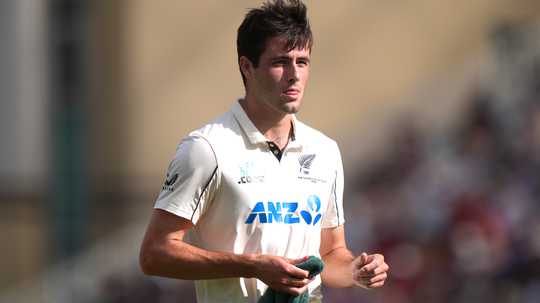
Michael Rae is another notable addition. The six-foot-six fast bowler made his Test debut against the West Indies in Wellington last summer and has collected 238 wickets in first-class cricket. His height offers the potential to create uncomfortable bounce, while his experience at domestic level gives New Zealand another specialist option to call on during the tour.
Rae’s selection reflects the depth New Zealand are seeking in their pace resources. A long overseas campaign can place heavy demands on fast bowlers, and the ability to rotate players or adjust the attack to a particular venue can be crucial. Rather than relying on a single fixed combination, the selectors have assembled a group that offers different physical profiles and skill sets.
Fisher earns another opportunity
Matt Fisher has also been included after featuring in New Zealand’s squads across all three formats against India. The 27-year-old made his Test debut against Zimbabwe in August 2025 and has taken 60 first-class wickets at an average of 22. He was brought into the group as a replacement for Blair Tickner before the second Test against India but did not feature in the playing XI.
Fisher’s selection gives him the chance to build on that recent exposure to the Test environment. His first-class record suggests he can be effective over long spells, and the Australia tour will provide a demanding test of his ability to maintain accuracy against a strong batting line-up. Whether he plays will depend on conditions, fitness and how the selectors balance the attack at each venue.
Injuries shape the squad picture
Several players remain on the road to recovery. Mitchell Santner and Blair Tickner, who were both ruled out of the Tests against India, will continue rehabilitation after sustaining a hand fracture and hamstring injury respectively. New Zealand hope they can join the squad in Australia once they are fit, although their availability will depend on their progress.
Zak Foulkes and Ben Sears are not available for selection at this stage as they recover from a hip-flexor problem and an ankle injury. Their absence removes two further pace options from consideration, making the depth provided by the selected quicks especially important over a four-match schedule.
Dean Foxcroft and Jacob Duffy, both members of the Test group for the India series, are the players omitted from this squad. The selection therefore signals a reshaped touring party, with the management placing particular emphasis on pace depth while retaining a broad range of batting and all-round options.
New Zealand Test squad for Australia
The 16-player squad is: Tom Latham (captain), Tom Blundell (wicketkeeper), Devon Conway, Jacob Duffy, Matt Fisher, Dean Foxcroft, Matt Henry, Kyle Jamieson, Daryl Mitchell, Henry Nicholls, Will O’Rourke, Glenn Phillips, Michael Rae, Rachin Ravindra, Nathan Smith and Will Young.
The group combines established Test performers with players seeking to strengthen their claims at the highest level. Latham will lead a batting unit featuring experienced contributors such as Conway, Mitchell and Nicholls, while the presence of all-rounders and multiple bowling options gives New Zealand flexibility when selecting a match-day XI.
Four venues, four different challenges
The series opens at Perth Stadium on December 9, where pace and bounce could make the new-ball contest especially significant. The second Test is scheduled for Adelaide from December 17 to 21, followed by the Boxing Day match in Melbourne from December 26 to 30. The tour concludes in Sydney from January 4 to 8, a venue that can present a different challenge as the surface wears and spin may become more influential.
That sequence makes squad management a central part of New Zealand’s planning. A fast bowler who thrives in Perth may not be the only answer in Sydney, and the selectors will need to judge how each surface develops before settling on their combinations. Fitness, recovery and the ability to adapt could shape the series almost as much as individual performances.
Any cricket prediction about the outcome remains uncertain before the first ball is bowled, but New Zealand’s seven-man pace contingent suggests they intend to compete aggressively with the ball. O’Rourke’s return, Rae’s height and experience, and Fisher’s opportunity add depth to an attack already featuring established names. If the quicks stay fit and make effective use of Australia’s conditions, New Zealand will have several ways to challenge the home side across a demanding four-Test campaign.