
Hardik Pandya Left Out of Baroda’s Syed Mushtaq Ali Trophy Squad
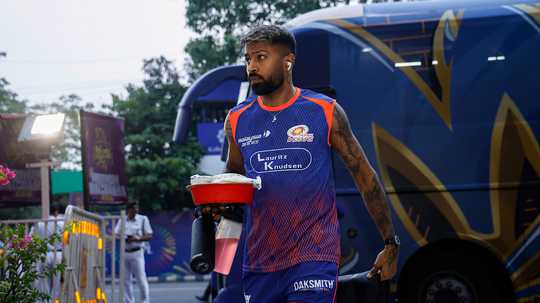
Hardik Pandya will miss Baroda’s upcoming Syed Mushtaq Ali Trophy campaign as he continues his recovery from a tibial bone stress injury. The India all-rounder was not included in the state side’s squad for the domestic T20 competition, with his rehabilitation taking priority over a return to competitive cricket.
Pandya has been sidelined since the 2026 Indian Premier League season and has not played international cricket since the T20 World Cup final on March 8. His latest setback is the latest in a series of fitness concerns that have disrupted his schedule and left his return date uncertain.
Rehabilitation takes priority over a comeback
There had been hope that Pandya might resume playing in India A’s one-day series against Australia A in Puducherry. He was named in the squad for the matches, which could have offered a useful opportunity to rebuild match fitness. However, the shin problem worsened, ending that prospect and raising further questions about when he will be ready to compete again.
According to a report by Cricbuzz, the Board of Control for Cricket in India (BCCI) advised the Baroda Cricket Association that Pandya should remain focused on his rehabilitation programme at the Centre of Excellence in Bengaluru. The decision reflects the importance of managing the injury carefully rather than rushing the all-rounder back into a demanding tournament schedule.
A tibial bone stress injury can require a gradual return to training and playing, particularly for an athlete whose game involves repeated sprinting, bowling and high-impact movements. For Pandya, a full recovery is important not only for his batting and bowling, but also for his ability to field and handle the physical workload of elite cricket. Any return plan is therefore likely to depend on his progress through rehabilitation and medical assessments.
Baroda turn to Krunal Pandya for leadership
While Hardik is unavailable, his brother Krunal Pandya will continue to captain Baroda in the Syed Mushtaq Ali Trophy. All-rounder Atit Sheth has been named vice-captain, giving the team an experienced leadership group as it prepares for a challenging campaign.
Krunal’s role will be central to Baroda’s plans. The left-handed batter and spin bowler brings experience in domestic cricket and the Indian Premier League, while Sheth offers a reliable seam-bowling option. Their combination could help Baroda balance the demands of a fast-paced T20 competition, where teams often need adaptable bowling plans and depth in the batting order.
The squad also includes experienced names such as Deepak Hooda and wicketkeeper-batter Jitesh Sharma. Their presence gives Baroda options across the middle order and could prove valuable in close matches, where a late acceleration or a composed chase can make the difference. The selected group also features several younger players who will have an opportunity to make an impact on a prominent domestic stage.
Baroda face a competitive Elite Group A
Baroda have been placed in Elite Group A alongside defending champions Jharkhand, as well as Bengal, Karnataka, Rajasthan, Uttar Pradesh, Chandigarh and Mizoram. The group brings together teams with varied strengths and strong domestic histories, making qualification a demanding task.
Facing the reigning champions will be an early test of Baroda’s depth and consistency. Karnataka and Bengal are also capable of putting pressure on opponents, while Rajasthan and Uttar Pradesh can provide difficult challenges with their mix of experienced players and emerging talent. In a T20 group stage, even a single poor performance can affect qualification prospects, so Baroda will need to maintain momentum throughout the competition.
For supporters following the tournament, pre-match cricket prediction will naturally focus on Baroda’s batting depth, the effectiveness of its bowling attack and how well the team adapts to different conditions. However, T20 results can turn quickly: a strong powerplay, a disciplined spell at the death or a timely contribution from a lower-order batter can shift the balance of a match. Baroda’s ability to share responsibility across the squad may be especially important in Pandya’s absence.
Baroda squad for the Syed Mushtaq Ali Trophy
Captain: Krunal Pandya
Vice-captain: Atit Sheth
Players: Deepak Hooda, Shivalik Sharma, Shashwat Rawat, Amit Passi (wicketkeeper), Jitesh Sharma (wicketkeeper), Bhanu Pania, Mahesh Pithiya, Parikshit Patidar, Hemant Punde, Raj Limbani, Rasik Dar, Dhruv B. Patel and Safvan Patel.
Standby players: Priyanshu Moliya and Chintal Gandhi.
What Pandya’s absence means for Baroda
Hardik’s omission is a significant loss because he can influence a match in several ways. His power hitting can change the pace of an innings, while his medium-fast bowling provides a flexible option for captains seeking to manage match-ups. His absence places greater responsibility on the rest of the squad to contribute with both bat and ball.
At the same time, the decision to keep him at the Centre of Excellence signals that his long-term fitness is being treated as a priority. Rather than setting a return date prematurely, the focus is on completing his recovery and building towards a safe return to competitive cricket. For Baroda, the immediate challenge is to make the most of the squad available; for Pandya, the key objective is to regain full fitness before stepping back onto the field.