
Real Madrid TV Renews Criticism of Javier Tebas Before Sevilla Clash
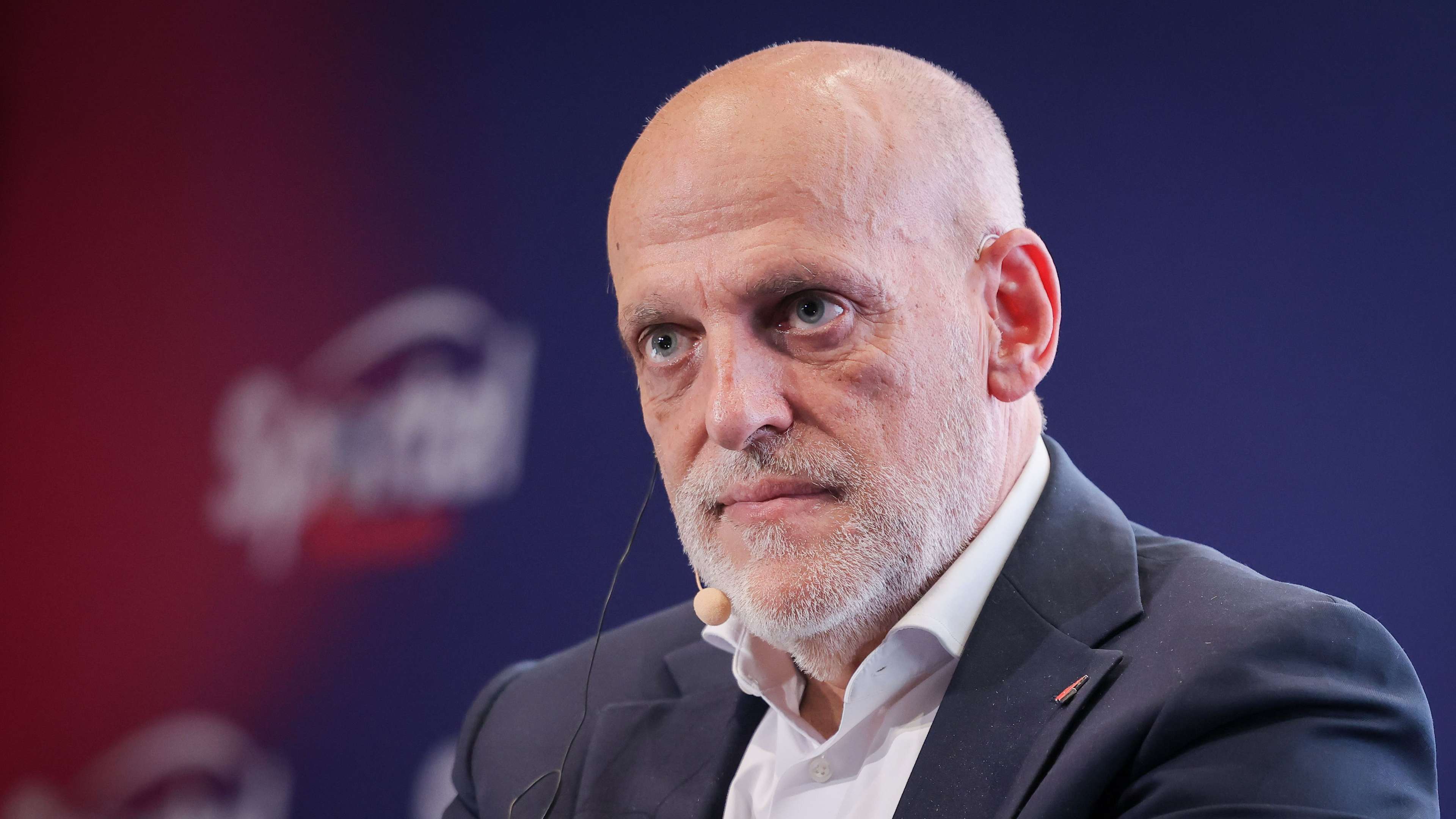
The dispute between Real Madrid and Spanish football’s governing authorities has flared up again, with the club’s official television channel directing fresh criticism at LaLiga president Javier Tebas ahead of Sevilla’s visit to the Santiago Bernabéu. In its latest broadcast, Real Madrid TV questioned Tebas’s influence within the sport, his relationship with the Spanish Football Federation and the way the domestic game is administered.
The comments were made on Hoy Jugamos, a programme that has repeatedly used its platform to challenge decisions and figures it believes affect Real Madrid. The timing gave the latest remarks added significance: with a high-profile league fixture approaching, the channel once again put the wider debate over football governance and refereeing under the spotlight.
A sarcastic opening aimed at the LaLiga president
The programme began with a pointed reference to an earlier controversy involving Tebas. Its presenter remarked sarcastically that he had still not resigned over “what happened the other day,” then suggested that a resignation was unlikely from someone who also holds a senior position within the Spanish Football Federation.
The opening line set the tone for a segment focused on the concentration of authority in Spanish football. Real Madrid TV’s argument was not simply that Tebas has a prominent role in LaLiga, but that his responsibilities and influence across different parts of the game deserve greater scrutiny. The channel presented this overlap as a potential governance concern, while offering no new evidence in the broadcast to establish that it had affected a specific match or appointment.
That distinction matters. Questions about how football institutions are organised are legitimate subjects for public debate, but claims about influence over refereeing or competition decisions require clear evidence. The programme’s comments should therefore be understood as Real Madrid TV’s criticism and interpretation, rather than as proof of wrongdoing.
Claims about influence inside Spanish football
Pundit Miguel Ángel expanded on the criticism, arguing that too much influence resting with one person could pose a risk to the sport. He portrayed Tebas as a powerful figure within the federation, including in matters involving bids and other decisions, and suggested that his reach extends beyond his role as LaLiga president.
The remarks reflect a long-running tension between Real Madrid and the leadership of Spanish football. The club has often challenged decisions and policies it considers unfair, while LaLiga and federation officials operate within distinct institutional structures and have their own responsibilities. Disagreements over governance, commercial strategy, scheduling and the distribution of authority have become a recurring feature of the sport’s public conversation.
For supporters, these disputes can be difficult to separate from the action on the pitch. Yet they influence how fans interpret major decisions, from disciplinary rulings to referee appointments. When a club’s media outlet raises doubts about the system before a match, the discussion can quickly move beyond the teams and tactics to the credibility of the competition itself.
The Negreira case returns to the debate
Real Madrid TV linked its latest attack to the Negreira case, the controversy surrounding payments made by FC Barcelona to companies connected to José María Enríquez Negreira, a former senior figure in Spanish refereeing. The case has prompted intense debate about transparency, accountability and the relationship between clubs and officials. Barcelona has denied buying refereeing decisions, and the legal and sporting questions surrounding the matter have continued to draw attention across Spanish football.
During the broadcast, the pundit invoked comments previously made by former Real Madrid manager José Mourinho. He recalled Mourinho asking, in effect, why Negreira was no longer in the picture while Tebas remained influential in both LaLiga and the federation. By bringing back that line, the programme connected a past managerial complaint to today’s arguments about who holds power in the sport.
The reference also illustrates how the Negreira controversy has become a wider symbol in Spanish football. For critics, it raises questions about institutional oversight and whether existing safeguards are strong enough. For others, it is important to distinguish allegations and investigations from established findings, and to avoid treating every debate over refereeing as evidence that matches have been manipulated.
Refereeing appointments and questions of trust
The segment then turned towards the officials who oversee matches. The presenter asked whether Tebas’s influence over appointments could shape how games involving Real Madrid and Barcelona are handled. That question was presented as a concern, but the broadcast did not identify a specific appointment or provide evidence that a referee had been selected to favour one club.
Referee appointments are particularly sensitive because they can shape the atmosphere around a fixture even before kick-off. A controversial decision, a perceived inconsistency or a lack of transparency can quickly become a major talking point among fans and commentators. In that environment, public criticism from clubs and their media outlets can intensify mistrust, especially when it is tied to a match involving a title contender.
For Spanish football, the challenge is to ensure that appointment processes are clear and credible, while also protecting officials from unsupported accusations. Greater transparency around how referees are assigned and assessed could help address concerns without turning every high-profile game into a referendum on the integrity of the competition.
What the controversy means ahead of Real Madrid vs Sevilla
Real Madrid’s meeting with Sevilla is first and foremost a football contest, but the build-up has been shaped by the renewed institutional row. Real Madrid will be expected to manage the pressure of a demanding league fixture, while Sevilla will arrive hoping to disrupt the hosts and take advantage of any weaknesses. The off-field debate may add extra attention to every close call, though it will not determine the result on its own.
Any match prediction should focus on factors such as form, fitness, tactical choices and the quality of the two squads—not on unverified claims about governance. Real Madrid’s home advantage and attacking depth may make them favourites on paper, but Sevilla have the experience and organisation to make the contest difficult. A strong start, control of midfield and discipline in both penalty areas could prove decisive.
Real Madrid TV’s latest comments show that the conflict between the club and Spanish football’s leadership remains unresolved. By revisiting the Negreira case, questioning the concentration of authority and raising concerns about refereeing appointments, the channel has once again placed governance at the centre of the conversation. Whether those criticisms lead to meaningful changes is uncertain. For now, attention will turn to the Bernabéu, where the teams’ performance—and the decisions made during the match—will provide the most immediate talking points.