
New Zealand vs India 1st T20I: Match Preview, Team News and Prediction
India begin their New Zealand tour in Christchurch on October 22, with the opening T20I arriving after a demanding month of travel and cricket. The Asian Games campaign in Japan ended on October 3, and the team was back in action in India just three days later for a five-match series that stretched from Lucknow to Bengaluru. Now, after the final match was affected by rain on October 17, India must quickly adjust to new surroundings, a different climate and a fresh opponent.
That tight schedule makes acclimatisation a central storyline ahead of the first match. New Zealand is a challenging destination for visiting teams, and India play there less frequently than they do in England or Australia. The short turnaround also leaves little time for players to recover from travel and settle into local conditions. For captain Shreyas Iyer, the task is familiar: he has previously spoken about how quickly teams must adapt when arriving in a new country.
Match Details: New Zealand vs India, 1st T20I
Match: New Zealand vs India, first T20I
Date: October 22
Venue: Hagley Oval, Christchurch
Start time: 12:30 PM IST; 8:00 PM local time
Conditions at Hagley Oval: Seam, Dew and the Toss
Christchurch could offer a different test from the batting-friendly surfaces India have recently encountered at home. While white-ball cricket has become increasingly consistent across international venues, early-season conditions in New Zealand can still give fast bowlers useful movement and bounce. The pitch may not be as settled as it is later in the summer, making the opening overs particularly important.
The evening forecast is expected to be mostly pleasant, although dew could influence the second innings. If the ball becomes slippery, defending a total may be harder, which could encourage the captain winning the toss to bowl first. Still, the decision will depend on how the surface looks on match day and whether there is visible assistance for seamers.
Hagley Oval has produced competitive T20 cricket. South Africa posted 187 there earlier this year, the highest score of that series, but that match came later in the summer. India’s players will need to judge conditions quickly rather than assume that recent high-scoring games are a reliable guide. A flexible batting approach, especially through the powerplay, could be vital.
India’s Selection Puzzle: Finding the Right Balance
India’s first challenge is not only adapting to the pitch but settling on a balanced XI. The team has several options across its batting and bowling groups, yet two major figures are unavailable. Jasprit Bumrah has been rested with the Test series in mind, while Hardik Pandya has not returned to international action since the T20 World Cup final in Ahmedabad in March.
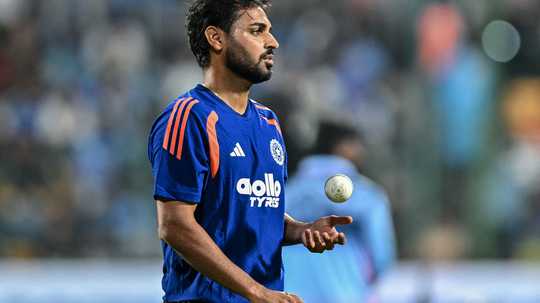
Those absences place extra responsibility on the remaining bowlers and all-rounders. Bhuvneshwar Kumar is back in the squad after strong IPL campaigns with Royal Challengers Bengaluru, bringing experience and the ability to swing the new ball. Arshdeep Singh adds another left-arm pace option, while India must decide whether the conditions justify selecting three specialist seamers.
Varun Chakaravarthy’s return gives the selectors a specialist spin option, but his place could depend on the final combination. If India prioritise pace and choose both Nitish Kumar Reddy and Shivam Dube as seam-bowling all-rounders, there may be limited room for an additional spinner. Naman Dhir, who impressed in the recent series against the West Indies, is another player whose inclusion could be affected by that balance.
India’s probable XI: Sanju Samson (wicketkeeper), Abhishek Sharma, Ishan Kishan, Shreyas Iyer (captain), Tilak Varma, Shivam Dube, Nitish Kumar Reddy, Axar Patel, Bhuvneshwar Kumar, Prince Yadav or Varun Chakaravarthy, Arshdeep Singh.
New Zealand Team News: Conway Returns to the Top Order
New Zealand are without Mark Chapman and Rachin Ravindra, creating an opportunity for Devon Conway to feature in the top three. His experience and ability to play both pace and spin could provide stability alongside attacking openers Finn Allen and Tim Seifert.
The hosts have a deep group of seamers to choose from, while Glenn Phillips and Michael Bracewell can offer useful part-time spin. That variety gives captain Mitchell Santner options if the pitch changes during the match. New Zealand will also look to make the most of home conditions, particularly in the first few overs when the ball may move in the air or off the surface.
New Zealand’s probable XI: Finn Allen, Tim Seifert (wicketkeeper), Devon Conway, Glenn Phillips, Daryl Mitchell, Michael Bracewell, Mitchell Santner (captain), Nathan Smith, Kyle Jamieson, Matt Henry, Lockie Ferguson.
Key Numbers Ahead of the First T20I
India have played 21 T20Is since winning the World Cup earlier this year—10 more than the next Full Member side over the same period. Those matches have been spread across seven series in five countries, underlining the workload and travel demands facing the squad.
India have also enjoyed a strong recent record against New Zealand. Since January 2020, they have won 16 of the 20 completed T20Is between the teams. Two of those victories came in Super Overs, while another match ended in a tie, suggesting that the rivalry has often been closely contested despite India’s overall advantage.
For New Zealand, Jacob Duffy is a bowler to watch. Since October 2024, he has been among the leading seam-wicket takers in T20Is, claiming 36 wickets in 19 home matches at an average of 12.72 and an economy rate of 7.19. India’s top order will need to handle his accuracy and movement carefully.
Ishan Kishan also has a personal milestone in reach. He needs seven runs to move past Suryakumar Yadav’s 1,164 T20I runs in 2022 and set a new record for the most runs by an Indian in the format during a calendar year.
Shreyas Iyer on Adapting to New Zealand Conditions
Iyer has stressed that India must learn from their practice sessions and respond to the pitch rather than make assumptions. He noted that fast bowling can be effective in New Zealand, while also pointing out that conditions vary from match to match. His message is practical: a useful training session should help each player understand how to plan their innings and approach the bowling.
New Zealand vs India Prediction
This opening T20I could hinge on the first innings. If the Christchurch surface offers early movement, New Zealand’s pace attack may test India’s top order before the visitors have fully adjusted to the conditions. India, however, have a deep batting group and a strong recent record against the hosts. Dew could also make a successful chase more attractive.
Prediction: India appear to have a slight edge on paper, but New Zealand’s home advantage and seam-bowling depth make this a close contest. The toss, the opening powerplay and India’s choice between an extra seamer and Varun Chakaravarthy could prove decisive. Expect a competitive start to the series, with the team that adapts fastest holding the clearest advantage.