
Bhuvneshwar Kumar’s India Return Offers Experience—and a Selection Challenge
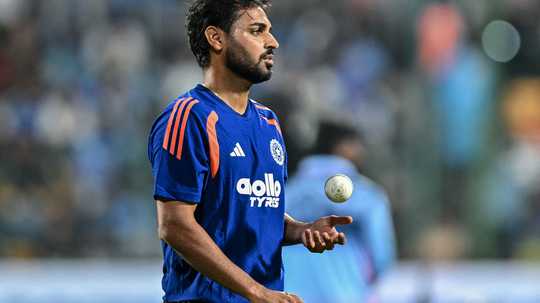
Bhuvneshwar Kumar’s late return to India’s T20I squad has revived an intriguing question for the national side: can one of its most experienced swing bowlers still play a meaningful role in the team’s future? The veteran pacer was called up for the deciding match against the West Indies in Bengaluru after an injury concern involving Arshdeep Singh. Rain ultimately washed out the contest, preventing Bhuvneshwar from taking the field, but his selection suggests he remains firmly in the conversation.
It has been nearly four years since Bhuvneshwar last represented India in a T20 international. Now, with a New Zealand series on the horizon, his return brings fresh competition to a pace attack that has changed considerably during his absence. For captain Shreyas Iyer, however, the value of Bhuvneshwar’s experience is clear. In a format where a few overs can reshape a match, knowledge of how to manage pressure and exploit conditions can be as important as raw pace.
Why India Has Turned to Bhuvneshwar Kumar
Iyer said Bhuvneshwar brings valuable insight to a group that has welcomed several newer fast bowlers. Since the seamer’s last T20I appearance in 2022, nine frontline pacers have made their international debut in the format. That turnover has expanded India’s options, but it has also made experience an important asset as the team continues to develop its bowling combinations.
“Bhuvi definitely brings a lot of experience to the team,” Iyer said before the opening T20I against New Zealand in Christchurch. He noted that the side had been short of that experience, particularly after the IPL, when several less-established bowlers had joined the group.
Bhuvneshwar’s recent franchise performances have also strengthened his case. Iyer pointed to the fast bowler’s success in the IPL over the past two seasons, saying it showed he understands how to control and dominate T20 cricket. That ability involves more than swinging the new ball: bowlers must also read batters, vary their pace, execute plans at the death and respond quickly when conditions change.
His possible return is therefore not simply a nostalgic selection. It gives India a specialist with a proven record of using movement and accuracy to create pressure. In a short-format match, that can help the captain build a bowling plan around specific batters and phases of the innings.
A Crowded Race for India’s Pace-Bowling Spots
Bhuvneshwar is returning to a far more competitive environment than the one he left. Jasprit Bumrah and Arshdeep Singh are established first-choice options when available, leaving the remaining place or places in a full-strength side open to a group of challengers. In the squad selected for the New Zealand series, which is not at full strength, Bhuvneshwar is still one of four frontline pace choices.
That depth gives India more flexibility, but it also makes every selection a balancing act. The team may need a bowler who can swing the ball early, a specialist for the closing overs, or a quick capable of handling a particular pitch. Bhuvneshwar’s accuracy and experience offer one kind of solution, while younger fast bowlers may bring extra speed or a different style of attack.
Iyer acknowledged that the competition could create a difficult choice, but described it as a “sweet headache.” He said selection pressure can encourage players to perform consistently, while stressing that the priority remains winning matches. The comment reflects a broader challenge for India’s T20 planning: a strong squad needs competition, but the captain and selectors must still identify the combination best suited to each opponent and venue.
New Zealand Conditions Could Suit Swing Bowlers
New Zealand is often associated with conditions that assist seam and swing, making Bhuvneshwar’s skill set particularly relevant. However, Iyer cautioned against assuming that every surface will behave in the same way. Pitch preparation, weather and local conditions can all influence how much assistance bowlers receive, and teams must be ready to adjust rather than rely on expectations.
Iyer said fast bowling generally suits the conditions, while noting that he has played in New Zealand before and is familiar with the environment. He also referenced his experience in England, where pitches had been prepared with the visiting team’s batting in mind. His broader point was that teams cannot know exactly what a surface will offer until they see it and begin playing on it.
For India, preparation will involve more than assessing the pitch. Bowlers will need to understand how the ball moves in the air and off the surface, while batters must judge bounce and timing. A productive practice session can help players develop an early plan, but the ability to adapt during a match remains central to any cricket prediction about how the series might unfold.
Vaibhav Sooryavanshi’s Development from the Sidelines
The series also places attention on 15-year-old Vaibhav Sooryavanshi, whose rapid rise followed an explosive IPL season. His selection for the national setup was a bold move, but opportunities in the playing XI have been limited. That has prompted discussion about whether a young player benefits more from travelling with the senior team or gaining regular match time elsewhere, including in domestic first-class cricket.
Iyer defended the decision to keep Sooryavanshi involved with the squad, saying that being part of the dressing room can itself be a learning experience. He also stressed that the teenager is still at the beginning of his career and should not be expected to walk straight into a settled batting order. India’s openers, he noted, have been scoring consistently and have contributed to the team’s success.
Exposure to overseas conditions could nevertheless prove valuable. By watching training sessions, observing how senior players prepare and becoming familiar with unfamiliar pitches, Sooryavanshi can build knowledge for future tours. Iyer suggested that the experience may help the youngster arrive better prepared the next time he plays in similar conditions—and could give him insight to share with other emerging players.
What Bhuvneshwar’s Recall Means for India
Bhuvneshwar’s return is not a guarantee of a regular place, especially with India’s pace-bowling competition growing stronger. Instead, it gives the team another experienced option at a time when conditions could reward movement, control and smart decision-making. His performances in training and any opportunities he receives will help determine whether he can turn a late call-up into a longer-term role.
For Iyer and the selectors, the challenge is to balance proven experience with the development of newer talent. The New Zealand series will offer a useful test of that approach, as India assess their bowling combinations, adapt to changing conditions and give young players a chance to learn. Bhuvneshwar’s recall adds depth to the discussion—and makes India’s T20 selection picture more competitive.