
PSG Face a Major Setback as Kvaratskhelia Suffers ACL Injury
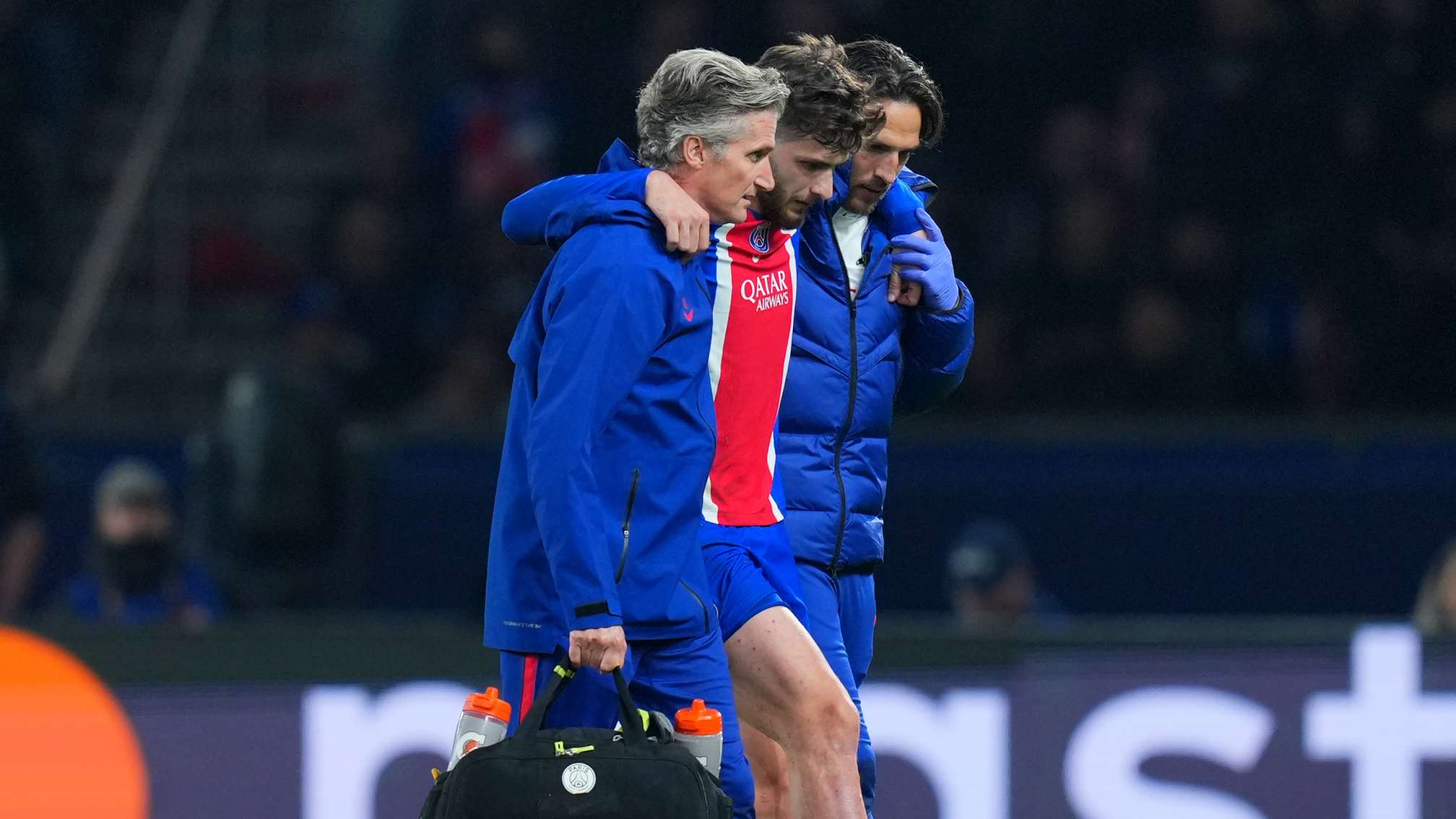
Paris Saint-Germain are preparing for an extended spell without Khvicha Kvaratskhelia after the forward suffered a serious injury during the club’s Champions League match against Barcelona. The Georgian international was forced off in the 59th minute following a challenge involving Barcelona player Xavi Espart, and medical examinations confirmed a rupture of the anterior cruciate ligament in his right knee.
The diagnosis is a significant blow for PSG, who will be without one of their most influential attacking players until next year. An ACL rupture typically requires surgery and a lengthy rehabilitation programme, although the exact recovery period can vary depending on the severity of the injury and how a player responds to treatment. The club is expected to provide further updates as Kvaratskhelia begins the next stage of his recovery.
How the Injury Happened Against Barcelona
Kvaratskhelia’s night ended shortly after the hour mark in a high-profile Champions League contest. He had been involved in the action before going down following contact with Espart. PSG’s medical staff attended to him on the pitch, but he was unable to continue and was substituted in the 59th minute.
At first, the full extent of the problem was unclear. The confirmation of a torn ligament, however, turns what appeared to be a painful in-game incident into a long-term concern for both the player and his club. Knee injuries can be particularly difficult for footballers because they affect the stability and movement needed for sprinting, turning, jumping and changing direction at speed.
For a forward whose game depends on sharp acceleration and close control, the rehabilitation process will need to be carefully managed. Returning to training is only one milestone: players generally have to rebuild strength, regain confidence in the injured knee and progress through football-specific exercises before they are ready for competitive action.
Why Kvaratskhelia’s Absence Matters for PSG
Kvaratskhelia’s injury leaves PSG without a major option in attack for a substantial part of the campaign. His ability to carry the ball, take on defenders and create opportunities gives the team a different dimension, particularly when opponents defend in compact blocks. Losing that combination of direct running and creativity may force the coaching staff to reconsider how PSG build attacks and stretch opposition defences.
The impact is not limited to goals and assists. An aggressive wide forward can draw defenders out of position, create room for teammates and help a team move quickly from defence into attack. PSG may now need other players to share those responsibilities, rather than expecting one replacement to reproduce Kvaratskhelia’s contribution in exactly the same way.
His absence could also affect the balance of the squad across competitions. The Champions League demands a high level of depth, while domestic fixtures can arrive in quick succession. Managing workloads will become increasingly important, especially if PSG remain involved in multiple competitions deep into the season.
PSG’s Options as They Adjust Their Attack
With Kvaratskhelia unavailable, PSG’s coaching staff will have to assess the players already in the squad and decide how best to distribute his minutes. One possibility is to use a natural winger in his position. Another is to adjust the formation, adding a midfielder or striker and asking the remaining wide players to take on more responsibility in one-on-one situations.
That decision may depend on the opponent. Against teams that press high, PSG could favour pace and direct running to exploit space behind the defence. Against sides that sit deeper, the team may need more combination play, movement between the lines and overlapping runs from full-backs. The loss of a player who can change a game through individual skill makes tactical flexibility especially valuable.
PSG could also look to spread the creative workload across the forward line. Rather than relying on a like-for-like replacement, the team may use several players to provide width, progression and final-third invention. This approach could help limit the disruption, but it will require strong coordination and consistent performances from the wider squad.
Recovery, Rehabilitation and the Road Back
An ACL rupture usually brings a long period away from competitive football. Treatment plans are tailored to each player, but recovery commonly involves medical assessment, possible surgery, gradual strength work and a carefully staged return to running and ball training. The process is designed not only to heal the knee but also to reduce the risk of further injury when the player resumes high-intensity competition.
For supporters, the announcement that Kvaratskhelia will be out until next year provides a broad indication of the timeline, but it does not guarantee a precise return date. Rehabilitation can progress at different speeds, and clubs typically avoid setting firm deadlines before a player has completed the necessary physical and medical tests.
The mental side of recovery also matters. Being separated from match action for months can be challenging, particularly for a player accustomed to influencing major games. Support from PSG’s medical team, coaches, teammates and family will be important as he works through each stage and gradually rebuilds his match fitness.
What the Injury Could Mean for PSG’s Season
Kvaratskhelia’s absence introduces uncertainty into PSG’s plans, but it does not determine the outcome of the club’s season. The team’s response will depend on how effectively it adapts, whether other attackers can provide consistent production and how well the squad manages the increased demands on its remaining options.
Any football prediction about PSG’s prospects must now account for the change in their attacking resources. The injury could make certain fixtures more difficult, particularly matches in which individual dribbling and quick transitions are crucial. At the same time, a strong squad may be able to compensate through tactical adjustments, improved contributions from other forwards and greater involvement from midfielders.
For now, the priority is Kvaratskhelia’s health and a complete recovery. PSG will need to navigate the weeks ahead without a player who can bring unpredictability to the final third, while the forward begins the demanding work of returning from a serious knee injury. His eventual comeback will be closely watched—not only by the club’s supporters, but also by football fans following PSG’s Champions League and domestic campaigns.