
PSG vs Barcelona: Did VAR Get the Fermín López Challenge Right?
A flashpoint involving Fermín López and Willian Pacho became one of the most debated moments of Paris Saint-Germain’s UEFA Champions League meeting with Barcelona. The incident, which took place shortly before half-time, left PSG players demanding a foul and disciplinary action. However, a specialist refereeing account argued that the officials were right to let play continue.
The decision has renewed discussion about how football’s laws apply when a player’s boot makes contact with an opponent’s head. It also raises a familiar question for supporters: should video assistant referees intervene whenever a challenge looks dangerous, or only when the on-field decision is clearly wrong?
How the incident unfolded
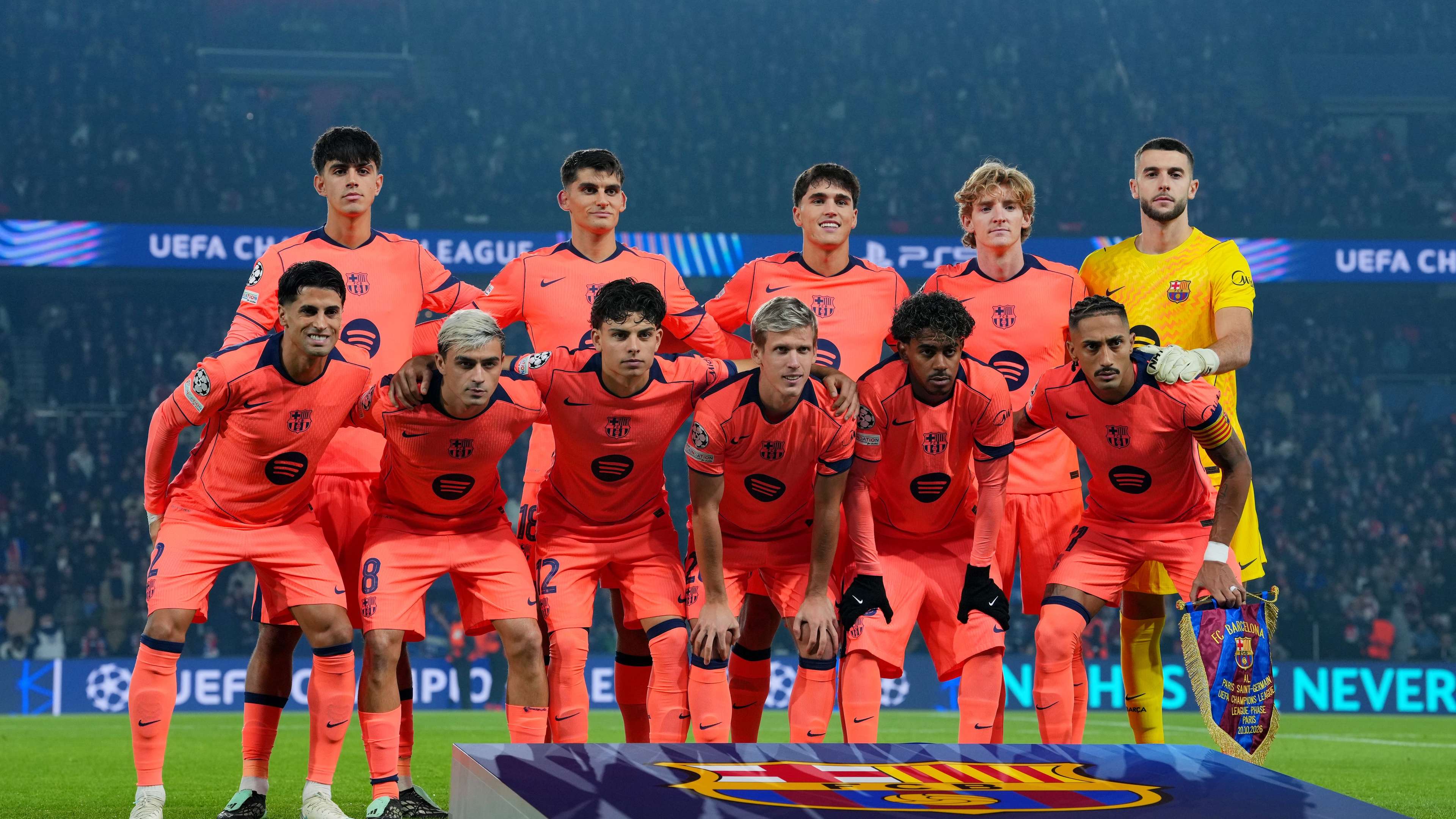
Barcelona travelled to Paris for the third round of the Champions League league phase and were trailing after Désiré Doué had put PSG ahead. In the 40th minute, the visitors produced a promising attack that briefly threatened to change the momentum before the interval.
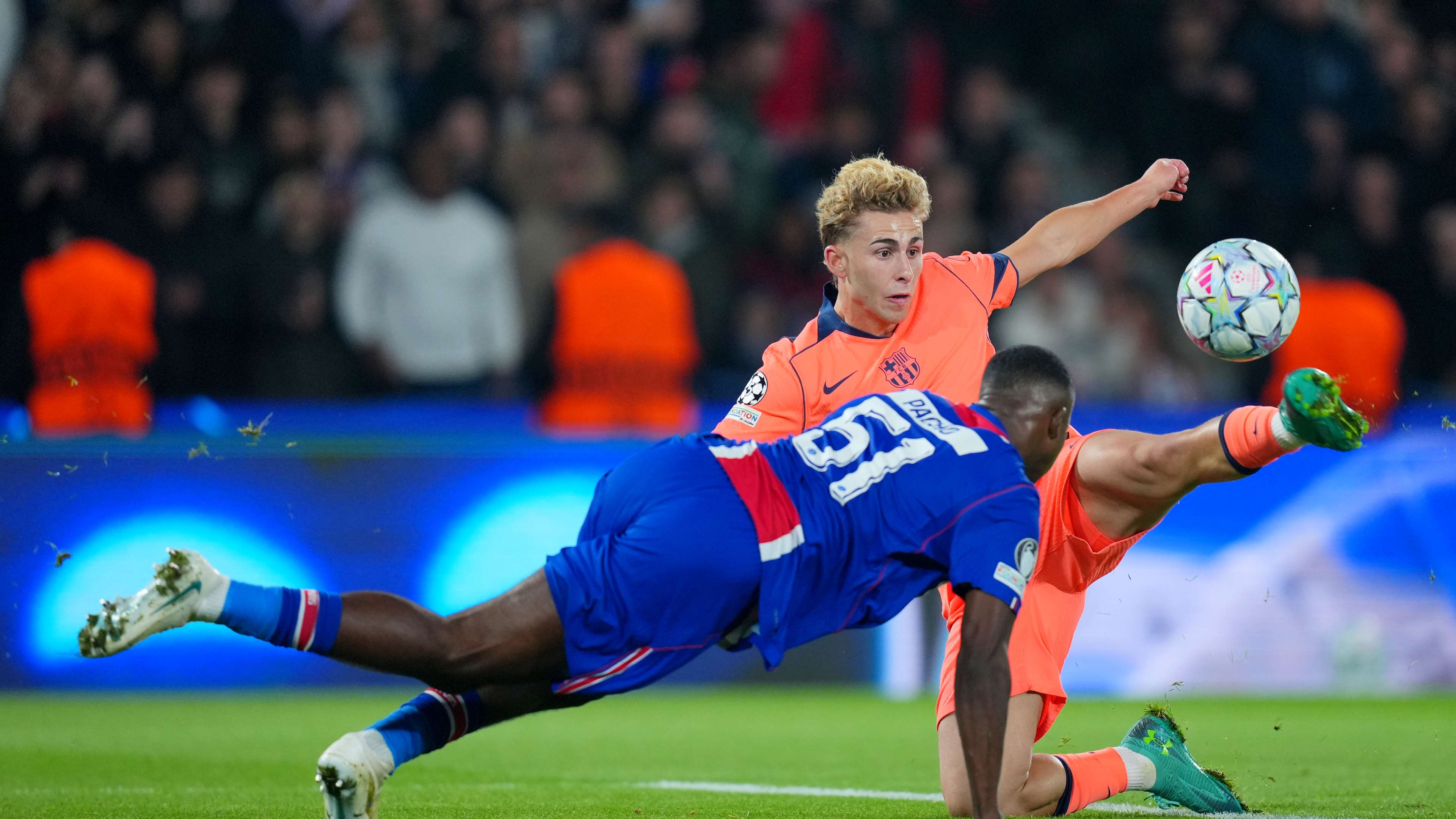
Pedri threaded an excellent pass through the PSG defence, sending Fermín López into a one-on-one situation with goalkeeper Matvey Safonov. López attempted to lift the ball over the advancing goalkeeper, but Safonov managed to block the effort. The rebound then fell into a contested area, with López and Pacho both moving to reach it.
As the two players challenged, López’s boot caught Pacho in the face. Pacho had bent down to meet the loose ball with his head, while López was attempting to play it with his foot. The referee stopped the match so the PSG defender could receive attention, and several PSG players immediately surrounded the officials to protest.
Barcelona’s attack had created a clear scoring opportunity, but the focus quickly shifted from the missed chance to the nature of the contact. PSG’s players appeared to believe that López should have been penalised, while the referee’s decision to take no further action left the incident open to interpretation.
Why the refereeing decision divided opinion
At first glance, contact between a boot and an opponent’s face can look like an obvious offence. The potential danger is clear, and supporters often expect a yellow or red card when a player’s studs or foot make high contact. But refereeing decisions are not based on the point of contact alone. Officials must also consider how both players moved, whether the challenge was careless or reckless, and which player created the conditions for the collision.
That distinction was central to the analysis published by Archivo VAR, a network that focuses on refereeing incidents. The account asked whether video technology should have intervened in the challenge between Pacho and López, then concluded that VAR involvement was not warranted.
Its reasoning was that Pacho lowered his head to around waist height while attempting to play the ball. According to the account, this movement placed the defender in a vulnerable position and contributed to the contact. It cited the International Football Association Board’s approach to dangerous play, arguing that the action could be considered dangerous play by the player who lowered his head into the area of an opponent’s foot.
This interpretation does not mean that a player can never be penalised for striking an opponent who is low to the ground. The surrounding circumstances matter. A referee may still judge that a player acted recklessly, used excessive force, or made a challenge that endangered an opponent. The key question is whether the contact resulted from a legitimate attempt to play the ball or from an avoidable and dangerous action.
What VAR can—and cannot—do
VAR is not designed to review every disputed foul or every instance of contact. In the Champions League, video officials generally intervene in specific match-changing situations, including possible red cards, penalties, goals and cases of mistaken identity. Even in those categories, the threshold is a clear and obvious error or a serious missed incident.
That high threshold helps explain why a controversial challenge may not lead to a review. If the referee has seen the incident and judged that no offence occurred, VAR is unlikely to recommend an on-field review unless the available footage strongly indicates that the decision was plainly incorrect. A close call, even one that provokes strong reactions, does not automatically require intervention.
In this case, Archivo VAR’s view was that the referee’s decision fell within the laws’ interpretation of the play. Its assessment focused on Pacho’s low position and the sequence of movements, rather than treating the boot-to-face contact as decisive on its own. The account’s conclusion was emphatic: VAR should not have intervened.
Why the moment matters beyond one match
Incidents like this highlight the difficulty of applying a single rule to fast-moving football. Players often react in fractions of a second, and both may have a reasonable expectation of reaching the ball. A forward trying to finish a chance may raise a leg, while a defender may lower his head to block or clear. When those actions meet, the referee must judge responsibility, risk and intent in real time.
The episode also shows why fans can reach different conclusions from the same replay. Slow-motion footage can make contact appear more deliberate or severe than it looked at full speed, while multiple camera angles may reveal movements that were difficult for the referee to see. Even with technology, the laws still require interpretation rather than a simple yes-or-no measurement.
For PSG, the challenge was especially frustrating because it came during a dangerous Barcelona attack and involved a defender who needed treatment. For Barcelona, the non-call preserved the possibility of continuing their move without a free kick or a potential card. The contrasting reactions were a reminder that high-stakes European matches can turn on decisions that remain debatable long after the whistle.
Match prediction and the wider Champions League picture
While the incident became a major talking point, it was only one moment in a contest between two clubs with the attacking quality to create chances quickly. PSG’s pace and pressure can trouble opponents in transition, while Barcelona’s midfielders are capable of opening compact defences with incisive passing. Those strengths make any prediction involving the sides difficult, particularly when one decisive moment can alter the rhythm of a match.
For supporters following the Champions League, the Fermín-Pacho challenge offers a useful reminder that a football prediction should account for more than form and star players. Tactical matchups, defensive discipline, the referee’s interpretation and the possible influence of VAR can all shape the outcome. In this instance, the specialist analysis backed the officials’ choice not to intervene—but the debate over who was responsible for the contact is likely to continue.
So, do you agree with the decision? Archivo VAR’s verdict was that Pacho’s low head position made the contact dangerous and that the referee was justified in allowing play to continue. Others may argue that López had a responsibility to control his raised boot. The final call rested with the match officials, and the incident remains a reminder that even with VAR, football’s most contentious decisions are rarely straightforward.