
Mourinho backs Vinicius after substitution anger in Real Madrid’s Champions League comeback
Jose Mourinho has defended Vinicius Junior after the Real Madrid forward reacted angrily to being substituted during a dramatic Champions League victory over Roma. The Brazilian’s frustration was visible as he approached the Portuguese coach to question the decision, but Mourinho said the response was understandable and praised the player for regaining his composure after the match.
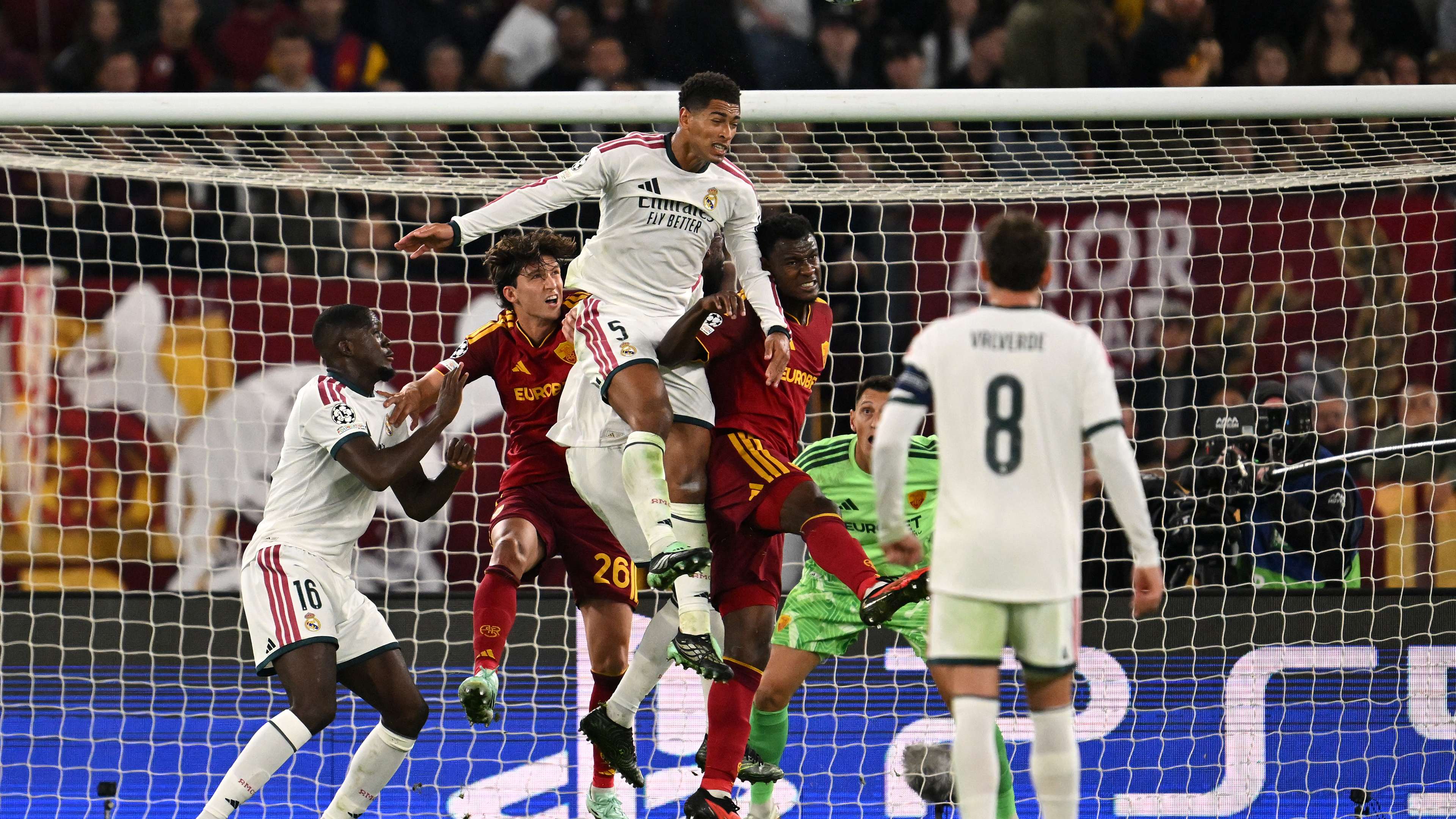
Real Madrid claimed a valuable 4-3 win in Italy on Wednesday, overturning a two-goal deficit in the closing stages. The result gave Madrid six points from their opening two matches in the competition, offering a timely boost after a difficult spell in the domestic league. Yet the comeback also brought a tense moment into focus: Vinicius was taken off in the 59th minute after an error contributed to Roma’s second goal.
Roma’s tactics made life difficult for Vinicius
Mourinho was careful not to place the blame for Vinicius’s challenging first half solely on the winger. He pointed instead to Roma coach Gian Piero Gasperini’s tactical setup, which created repeated two-against-one situations down Madrid’s flank and limited the Brazilian’s ability to influence the game.
“In the first half, the mistake was mine, or Gasperini’s,” Mourinho said, according to AS. He explained that Roma’s positioning, including the role of Matías Soulé, allowed Wesley to make life difficult for Madrid. “It was difficult for Vini,” the coach added, arguing that the opposition’s plan had played a major part in the winger’s struggles.
Mourinho changed Vinicius’s position after the break, giving him more freedom on the opposite side of the pitch. He said Roma’s Wesley had already spent considerable energy dealing with Madrid’s Diomande, creating a different opportunity for the Brazilian. Vinicius did lose possession in the build-up to Roma’s second goal, however, and Mourinho acknowledged that the mistake should not have happened.
“Vini lost a ball he should not have lost, but it’s over. I make mistakes too,” Mourinho said. The comment reflected a broader message of support: a costly moment, in his view, should be considered within the context of the match rather than treated as a complete measure of the player’s performance.
Why Vinicius was upset—and why Mourinho accepted it
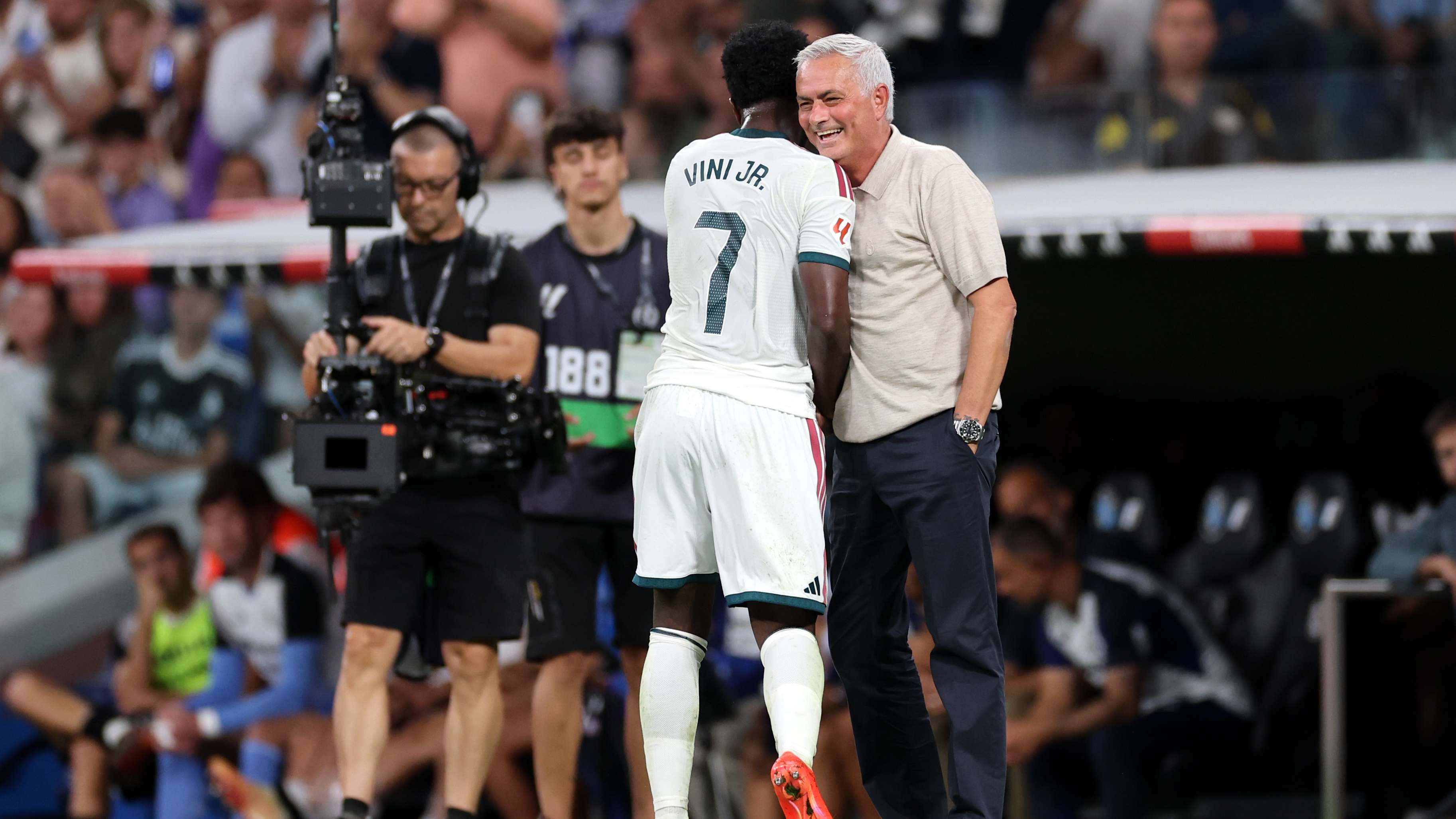
Vinicius did not hide his disappointment when his number appeared on the substitution board. He walked towards Mourinho and appeared to ask why he was being taken off, drawing attention from supporters and television cameras. The exchange quickly became one of the match’s most discussed incidents, particularly because the forward is a central figure in Madrid’s attack.
Mourinho said he understood the reaction. Players who are competitive and want to remain on the pitch may naturally feel frustrated when substituted, especially during a high-pressure European match. The coach distinguished that emotion from behaviour he would consider unacceptable, such as throwing a water bottle or directing anger at teammates.
“It’s normal for him not to be happy,” Mourinho said. He added that Vinicius was pleased with the result after the final whistle and had handled the situation well overall. The manager also noted that controlling emotions can be difficult when a player is performing in a charged environment, just as it can be difficult for a coach facing personal and professional pressure.
That measured response may help prevent the substitution from becoming a larger dispute. In elite football, visible disagreement between a star player and manager can quickly dominate the discussion after a match. Mourinho’s comments instead framed the moment as a normal expression of ambition, while making clear that the team’s success remained the priority.
Suspension arrives as Vinicius looks to rebuild form
Mourinho also expressed disappointment that Vinicius is due to serve a four-match suspension in the Spanish league just as he had begun to recover his form and confidence. The coach suggested that the timing was particularly unfortunate, with the Brazilian starting to feel happier and more like himself on the pitch.
The absence could affect Madrid’s options in upcoming domestic fixtures, especially if the team is trying to maintain momentum across several competitions. For Vinicius, the break from league action may also intensify attention on his Champions League performances, where his pace, dribbling and ability to unsettle defenders remain important weapons.
Madrid’s challenge will be to manage his return carefully and ensure that frustration does not overshadow his contribution. Mourinho’s public backing indicates that he wants the forward to feel trusted, even when tactical decisions or individual mistakes become part of the post-match conversation.
Six Champions League points bring relief, not certainty
The comeback victory was significant, but Mourinho resisted suggestions that it erased Madrid’s domestic difficulties. He stressed that the Spanish league and the Champions League are separate competitions, each bringing different demands and pressures.
Six points from two European matches gives Madrid a strong early position, but the coach warned that qualification is far from secured. Six fixtures remain, and he noted that the team has already faced high-level opposition. The result in Rome provides encouragement, but consistency will be essential if Madrid are to progress without relying on late comebacks.
For supporters assessing the team’s prospects, the win offers a positive signal rather than a definitive prediction of what comes next. Madrid showed resilience and attacking threat, but conceding four goals in a match also underlined defensive issues that opponents may look to exploit. Their ability to balance those strengths and weaknesses will shape the rest of their European campaign.
Mourinho highlights Espi’s development amid Mbappe’s presence
Mourinho also praised forward Carlos Espi, describing him as a player who continues to develop. He recalled that Espi had been among the names considered when Madrid discussed possible options following the prospect of Gonzalo leaving, and said the club had done good work in identifying talent.
Breaking into the starting lineup is a particular challenge for any forward competing alongside Kylian Mbappe. Mourinho acknowledged that rotating a player of Mbappe’s quality is not straightforward, meaning opportunities for other attackers may depend on form, fitness, tactical needs and the demands of a crowded schedule.
Espi’s development could therefore become relevant as Madrid navigate the season’s workload. While established stars are likely to command major roles, emerging players can provide valuable depth and give the coach alternatives when injuries, suspensions or fixture congestion force changes.
For now, the headline from Rome is Madrid’s comeback and Mourinho’s defence of Vinicius. The winger made a costly mistake and reacted emotionally to being substituted, but his coach placed both moments in context. As the team turns to its next fixtures, the key test will be whether Madrid can carry the spirit of their Champions League recovery into a more consistent run of results.