
Could Arsène Wenger Challenge Gianni Infantino for the FIFA Presidency?
Arsène Wenger has yet to reveal whether he would consider running for FIFA president, but influential figures in world football are increasingly discussing the former Arsenal manager as a possible challenger to Gianni Infantino. With Infantino appearing well placed to secure another term, the question is whether Wenger could become the surprise candidate capable of reshaping the race.
The speculation comes amid growing criticism of FIFA’s leadership following the collapse of a controversial proposal known as FIFA Forward Enterprise (FFE). The plan reportedly explored selling commercial stakes in the World Cup to private investors, prompting concerns about governance and the direction of football’s global governing body. Infantino has faced calls to step aside from figures across Europe, North America and Asia, but no widely backed rival has yet emerged.
A tense FIFA Council meeting
FIFA’s Council is meeting in Zurich for the first time since the FFE controversy erupted. The gathering is expected to put Infantino face to face with some of his strongest critics, while also bringing several major issues into focus. They include a proposed increase of $3.4 billion in football development funding, questions about governance, and the relationship between FIFA and the English Football Association.
Other matters likely to draw attention include the inaugural FIFA Peace Prize, awarded last year to US President Donald Trump, and disciplinary proceedings connected to the case involving United States striker Folarin Balogun. The meeting may also underline a central problem for Infantino’s opponents: despite their dissatisfaction, they have not yet united behind a candidate with enough international reach to mount a serious challenge.
Several potential contenders have ruled themselves out, including CONCACAF president Victor Montagliani and UEFA president Aleksander Ceferin. Infantino, meanwhile, has travelled internationally to reinforce support for his leadership. He is believed to retain a strong base among member associations in Africa, South America and Oceania, even as opposition remains visible in parts of Europe.
Only one person has formally indicated an intention to run so far: former Tottenham Hotspur defender Ramon Vega. His prospects are generally considered limited, leaving football officials and observers to wonder whether Wenger might offer a more credible alternative.
Wenger has not confirmed his intentions
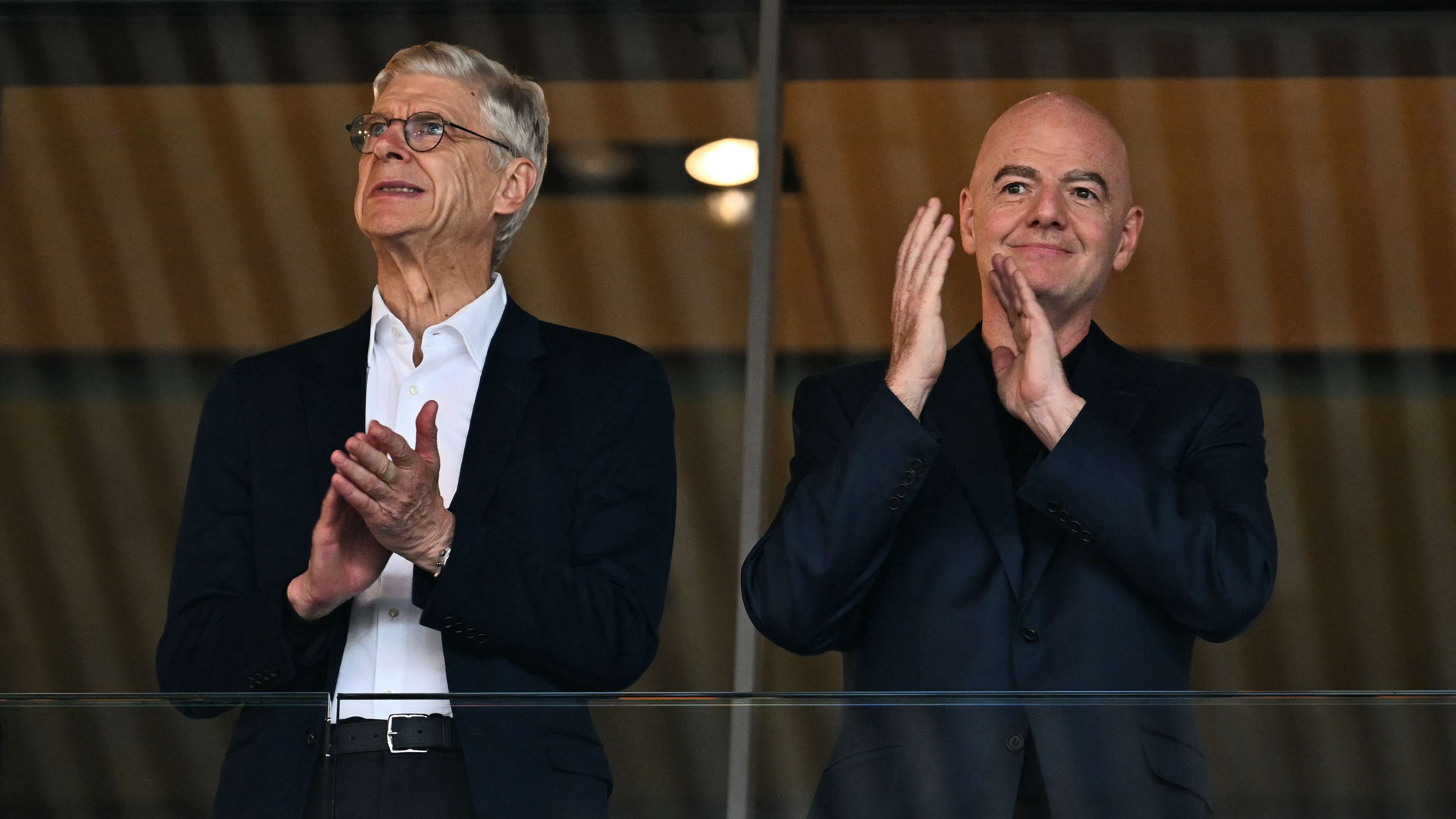
There is no public sign that Wenger is preparing a campaign. He attended a dinner in Zurich with Infantino and other FIFA Council members and is expected to be present at the Council meeting. Asked about the possibility of standing, he declined to comment through FIFA. People close to the 76-year-old have also avoided saying whether he is interested.
One person familiar with the discussion described Wenger as “a perfect candidate”, while stressing that the decision would be his alone. A senior FIFA figure said they did not know whether Wenger had seriously considered entering the race.
Wenger’s appeal, supporters say, lies in his reputation as a football thinker rather than a conventional political operator. He spent 22 years at Arsenal, leaving in 2018 as the club’s most successful manager. His work transformed the team and helped influence English football through his tactical ideas, emphasis on fitness and nutrition, and willingness to recruit players from across the world.
Since 2019, he has served as FIFA’s chief of global football development. The role has given him direct experience of the organisation’s programmes and relationships across its member associations. He oversees initiatives supporting young players and academies in around 60 countries, works on youth competitions, and serves as a technical adviser to the International Football Association Board, which determines the laws of the game.
International standing could be an advantage
European officials backing Wenger argue that his reputation extends well beyond Europe. His time coaching in Japan, before his Arsenal years, helped build his standing in Asia. Supporters also point to his record of giving opportunities to African players at Arsenal and his longstanding interest in widening access to elite football.
That international profile could matter in any FIFA election. A candidate backed mainly by European associations would face a difficult task against Infantino, whose support has been strengthened by promises of increased funding. African football has been particularly important to the president’s political position: all 54 African national associations have reportedly backed him after commitments to expand development resources.
Wenger recently attended the Confederation of African Football congress in Cape Verde, where he told delegates that an African team could win the World Cup, pointing to the numbers as evidence that it was possible. His support for the expanded 48-team World Cup has also been welcomed by those who see a larger tournament as a way to give more countries access to football’s biggest stage.
For Wenger’s supporters, that combination of technical knowledge, global recognition and development experience could help restore confidence in FIFA. Some staff within the organisation are also said to believe he could improve its public image and bring a stronger focus to the game itself.
Questions over politics and loyalty
There are, however, significant doubts about whether Wenger would want to challenge the man who appointed him. During the FFE fallout, he said he had not been involved in the plan and had first learned about it through media reports. He also described the decision to withdraw it as necessary, adding that he believed FIFA should serve football independently, transparently and with integrity.
His statement was widely read as a clear distancing from the proposal, but Wenger did not resign. He continued in his development role, a decision that may reflect his commitment to the programmes he oversees—or a reluctance to enter a direct confrontation with Infantino.
Critics also question whether a distinguished football career translates into the political skills required to lead FIFA. The presidency involves managing relationships among 211 national associations, navigating regional interests and building coalitions. One influential figure in FIFA circles said Wenger’s unconventional ideas were valuable but questioned whether he would be comfortable exercising power in football’s political arena.
Other observers believe he could serve as a transitional figure, perhaps using a single term to introduce reforms. Yet even those who admire his record are unsure whether he would break with Infantino or seek the presidency at all.
What happens next?
If Wenger decides to run, he has until 18 November to declare his candidacy and would need nominations from at least five national associations. Any campaign would require more than a respected name: he would need a clear reform programme and support across regions where Infantino has built a strong base.
For now, Wenger remains a possibility rather than a confirmed candidate. The FIFA presidency prediction therefore still favours Infantino, given the lack of a unified challenger and his established international backing. But the Zurich discussions may reveal whether discontent can turn into a credible alternative—and whether the former Arsenal manager is willing to move from football development into the most powerful political role in the sport.
Wenger once changed the way many people thought about managing a football club. Whether he is prepared to attempt a comparable transformation at FIFA remains the unanswered question.