
Erik ten Hag Criticizes Cristiano Ronaldo’s Work Rate During Manchester United Spell
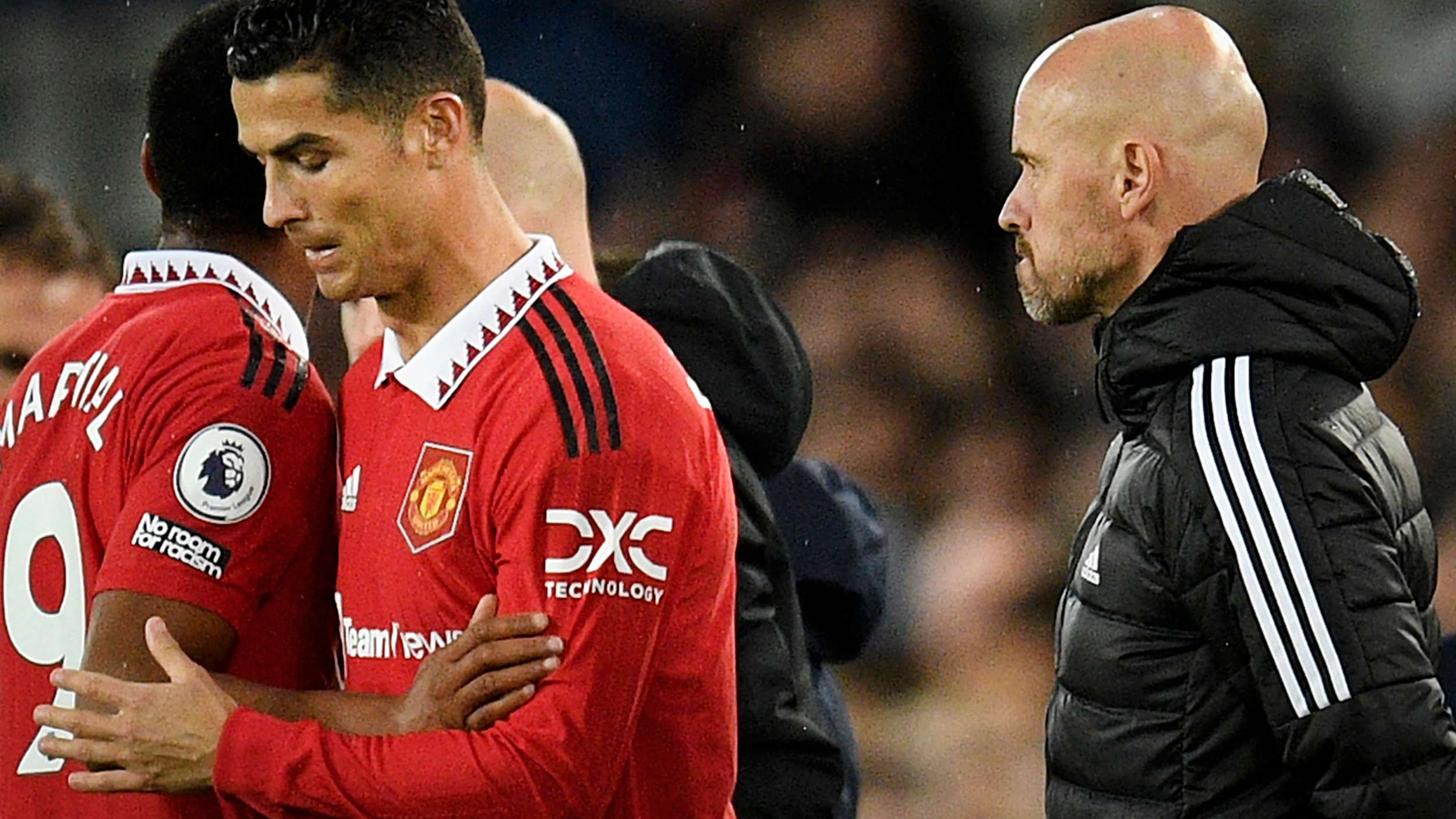
Erik ten Hag has offered a sharply critical account of his brief time working with Cristiano Ronaldo at Manchester United, saying the forward failed to meet the team’s expectations and did not consistently contribute without the ball. The Dutch manager’s comments add another chapter to the turbulent story of Ronaldo’s second spell at Old Trafford—and raise familiar questions about how elite clubs balance their biggest stars with collective demands.
Speaking to The Athletic, ten Hag said United had planned around Ronaldo but felt let down by the player’s approach. “He let the team down, and he disappointed me because we had planned with him,” the former manager said, describing a relationship that deteriorated during his time in charge of the Red Devils from 2022 to 2024.
Ten Hag’s concerns about Ronaldo’s movement
Ten Hag’s most pointed criticism focused on Ronaldo’s movement and preparation, particularly when United did not have possession. He said he repeatedly urged the Portuguese forward to make the runs needed to reach scoring positions, arguing that teammates could create opportunities only if Ronaldo moved into the penalty area.
“Everyone wants to work for you to get you into the right position, but if you can’t get yourself into the penalty area, you can’t score a goal,” ten Hag recalled telling him. The manager added that Ronaldo was not making the required runs either in possession or while pressing opponents, and suggested that a lack of preparation was behind the problem.
The remarks are striking because Ronaldo has long cultivated a reputation for exceptional discipline, fitness and additional training. Across his career, his physical preparation and relentless focus on scoring have been central to his success. Ten Hag’s account, however, reflects the demands of a particular tactical system and a manager who expected every player—including the team’s most famous forward—to contribute to the work away from the ball.
“Every top team has to accommodate its best player, but the best player has to work for the team,” ten Hag said. He also suggested that, at United, the club was not always the top priority for some people. His comments underline a broader debate in modern football: individual brilliance can decide matches, but coaches increasingly expect forwards to press, track back and help shape the team’s defensive structure.
Why Cristiano Ronaldo left Manchester United
Ronaldo’s departure followed a public breakdown in relations with the club. After losing his regular starting place under ten Hag, he gave an explosive interview in which he criticized the manager and Manchester United’s leadership. The club subsequently terminated his contract early, ending his second spell at Old Trafford in late 2022.
Ronaldo had first become a global football star at United, where he played from 2003 to 2009 before moving to Real Madrid. He returned to the English club in 2021, bringing enormous expectations and a record of success at the highest level. Across both spells, he scored 145 goals in 346 appearances for United, a substantial return that remains part of his legacy at the club despite the acrimonious finish.
After leaving England, Ronaldo joined Saudi Arabian side Al-Nassr. He remains under contract there until the summer of 2027, continuing a career that has spanned multiple leagues and made him one of the most recognizable athletes in the world. The contrast between his historic achievements at United and the strained end to his second spell illustrates how quickly a football partnership can unravel when a player’s role, a manager’s tactics and expectations no longer align.
A short working relationship, a lasting dispute
Although ten Hag and Ronaldo’s working relationship lasted only around four months before the forward’s departure, their disagreement became one of the defining stories of the manager’s early period at United. It was not simply a dispute over selection. The conflict reflected different views of what the team needed: Ronaldo’s experience and goal threat on one side, and ten Hag’s insistence on collective pressing and consistent effort across the pitch on the other.
The Athletic reported that it put ten Hag’s latest comments to Ronaldo but did not receive a response. The absence of a reply leaves the manager’s account as the latest public contribution to a dispute that has already been discussed extensively by fans and football commentators.
Ronaldo also faces a Portugal disciplinary decision
Ronaldo’s relationship with authority has also drawn attention at international level. During the most recent international break described in the report, he left Portugal’s training camp early after believing that coach Jorge Jesus had not kept promises concerning his playing time. The incident prompted disciplinary action from the Portuguese Football Federation (FPF).
The federation’s disciplinary council handed the 41-year-old a €255 fine and a 30-day suspension. Despite the suspension, the reported timing means Ronaldo would be eligible to return for Portugal’s upcoming Nations League fixtures against Denmark on 14 November and Wales on 17 November.
The punishment was widely characterized as lenient, particularly given Ronaldo’s status as Portugal’s record international. Still, the episode reinforces the attention that follows every decision involving the forward, from his club role to his place in the national team. For Portugal, the challenge is to manage a legendary player’s expectations while maintaining clarity and fairness across the squad.
What the latest comments mean for Ronaldo’s legacy
Ten Hag’s criticism is unlikely to erase Ronaldo’s achievements, but it adds nuance to the story of his final Manchester United chapter. His goal record, trophies and influence on generations of players remain significant. At the same time, the episode shows that reputation alone cannot settle questions about tactical fit, effort or leadership inside a team.
For supporters assessing the former coach’s comments, the key distinction is between Ronaldo’s career-long work ethic and ten Hag’s specific judgment of his contribution during a difficult period at United. Both can be true: Ronaldo can be renowned for extraordinary dedication over many years, while a manager can still believe that his performances and preparation did not satisfy the demands of a particular team.
That tension is central to the wider football conversation around stars and systems. A successful team must find ways to use exceptional talent, but its strongest players also have to serve the collective plan. Ten Hag’s latest remarks make clear that, in his view, the partnership between Ronaldo and Manchester United broke down because those expectations could no longer be reconciled.