
Marc Guéhi Calls for Stronger Action Against Racism as Manchester City Face Injury Concerns
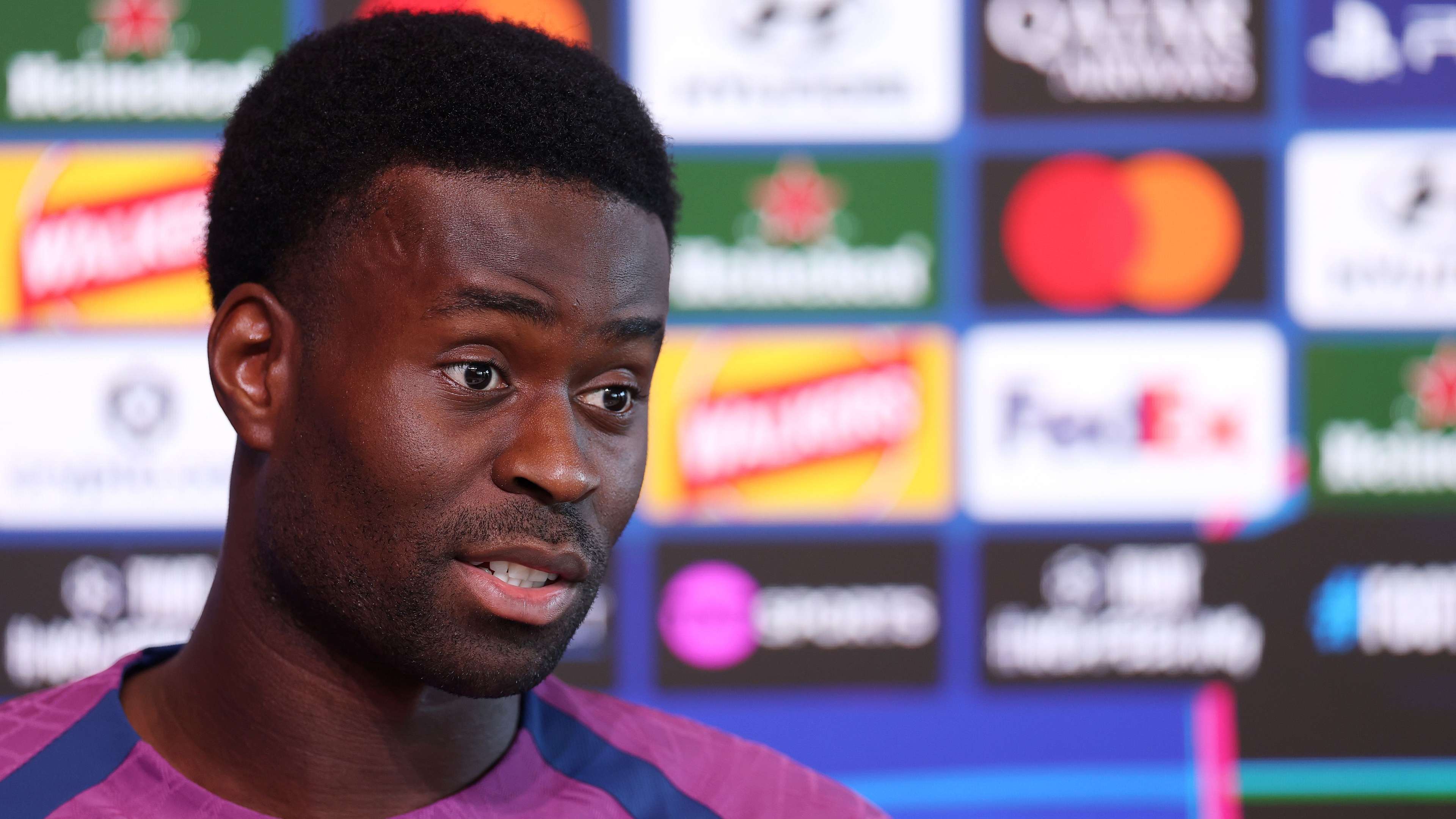
Manchester City defender Marc Guéhi has explained why he no longer takes the knee before matches, arguing that the fight against racism needs to be supported by meaningful action beyond symbolic gestures. The centre-back also discussed the unity within City’s squad as the club faces scrutiny over off-field financial matters, while confirming that injuries have affected key forwards ahead of a major Champions League fixture.
Guéhi’s comments bring together several issues attracting attention around City: football’s continuing efforts to tackle discrimination, the pressure surrounding the club’s public image, and the practical challenge of preparing for a crucial European match without every attacking option available. His remarks also underline how players are increasingly expected to speak not only about performances, but about the wider responsibilities of the sport.
Why Guéhi Has Stopped Taking the Knee
Taking the knee became a prominent gesture in football as players and teams sought to show opposition to racism and support for equality. Guéhi has now chosen not to continue the action, explaining that he believes the message must be matched by more substantial and sustained efforts to confront discrimination in society.
His position is not a rejection of the cause. Rather, it reflects a belief that gestures can lose their impact if they are not accompanied by practical measures. For Guéhi, progress depends on addressing the conditions that allow racism to persist, including prejudice in everyday life and the barriers that can prevent people from being treated fairly.
That distinction is important in a sport where symbolic actions are highly visible but can be difficult to translate into lasting change. A pre-match gesture can communicate solidarity, yet it cannot, on its own, improve reporting systems, strengthen education, or ensure that discriminatory behaviour is properly challenged. Guéhi’s comments invite clubs, governing bodies and supporters to consider what follows the moment on the pitch.
Turning awareness into action
Football has a powerful platform because its players and matches attract audiences around the world. That visibility can help draw attention to racism, but it also creates an expectation that the sport will respond consistently. Measures such as clear disciplinary procedures, support for players who experience abuse, education programmes and stronger accountability can help turn public statements into practical progress.
Guéhi’s stance also reflects a wider debate among players about how best to communicate social messages. Some may see a familiar gesture as a useful reminder; others may feel that its meaning has weakened over time. The challenge for football is not simply to decide which gestures should continue, but to make sure that anti-racism work remains visible, credible and connected to measurable outcomes.
City’s Squad Unity Amid Financial Scrutiny
Guéhi also spoke about the togetherness within Manchester City’s dressing room as the club continues to face attention over financial controversies away from the pitch. Such scrutiny can create a difficult atmosphere around a team, particularly when questions about a club’s affairs dominate headlines alongside its sporting ambitions.
The defender’s comments suggest that the players are focused on maintaining their relationships and concentrating on their responsibilities on the field. In a high-pressure environment, squad unity can be essential. Players must prepare for demanding fixtures, respond to changing tactics and support one another through periods of criticism or uncertainty.
That does not mean off-field issues disappear from public discussion. Financial questions can affect how a club is viewed by supporters, rivals and the wider football community. But players are generally required to separate those debates from the immediate demands of training and competition. Guéhi’s emphasis on togetherness points to the importance of a stable dressing room when outside attention intensifies.
For City, the coming weeks will test that focus. Champions League matches bring heightened expectations, and every result can shape the narrative around a club. A united squad may help the team manage that pressure, although performances and results will ultimately remain the clearest measure of its progress.
Injuries Complicate Champions League Preparation
City’s preparations for their highly anticipated Champions League fixture have also been affected by setbacks to key forwards. The absence or reduced availability of important attackers can influence how the team approaches a European match, where a single moment of quality may decide the outcome.
Without a full complement of forwards, the coaching staff may need to adjust the starting line-up, redistribute attacking responsibilities or make greater use of players capable of filling more than one role. City’s style often depends on movement, combinations and pressure in the final third, so changes to the forward line can affect the rhythm of the whole team—not just its finishing options.
Injuries also make squad depth especially significant. A club competing on several fronts must be able to call on substitutes who can maintain intensity and provide a different attacking threat. Young players or less frequently used options may have an opportunity to make an impression, while established players could be asked to take on additional creative or goal-scoring duties.
What the injury situation could mean for the match
The exact impact will depend on which players are available and how quickly they recover. If City are missing key forwards, they may prioritise patient possession, use midfield runners to attack the penalty area, or rely more heavily on wide players to create chances. Their opponents, meanwhile, could look to exploit any changes in City’s attacking balance by defending compactly and counterattacking when space opens up.
Even with injury concerns, City’s experience in major European fixtures gives them reasons for confidence. Their ability to control possession and adapt during a match can be valuable when the preferred line-up is unavailable. However, the Champions League leaves little room for complacency, and the team will need to turn its tactical depth into clear chances.
Football’s Wider Story: Values, Pressure and Performance
Guéhi’s comments highlight how modern footballers operate across several arenas at once. They are expected to perform under intense competition, respond to public scrutiny and consider how their choices communicate broader values. His decision regarding taking the knee, his remarks about squad unity and the injury news all connect to a larger question: how can a club stay focused on results while responding thoughtfully to issues beyond the pitch?
For supporters searching for a football prediction ahead of City’s Champions League match, the key factors are likely to include the availability of the injured forwards, the strength of the team selected and the opponent’s ability to withstand City’s possession. Any prediction should remain cautious until the final team news is confirmed. European fixtures can turn on small details, and injury-related changes may alter both the tactical plan and the balance of the contest.
For now, City must manage their fitness concerns, preserve the unity Guéhi has described and prepare for a demanding test. Beyond the result, the defender’s message on racism adds a reminder that football’s influence extends far beyond the final whistle—and that meaningful change requires more than a gesture alone.