
Hansi Flick Calls PSG Clash a Major Test for Barcelona
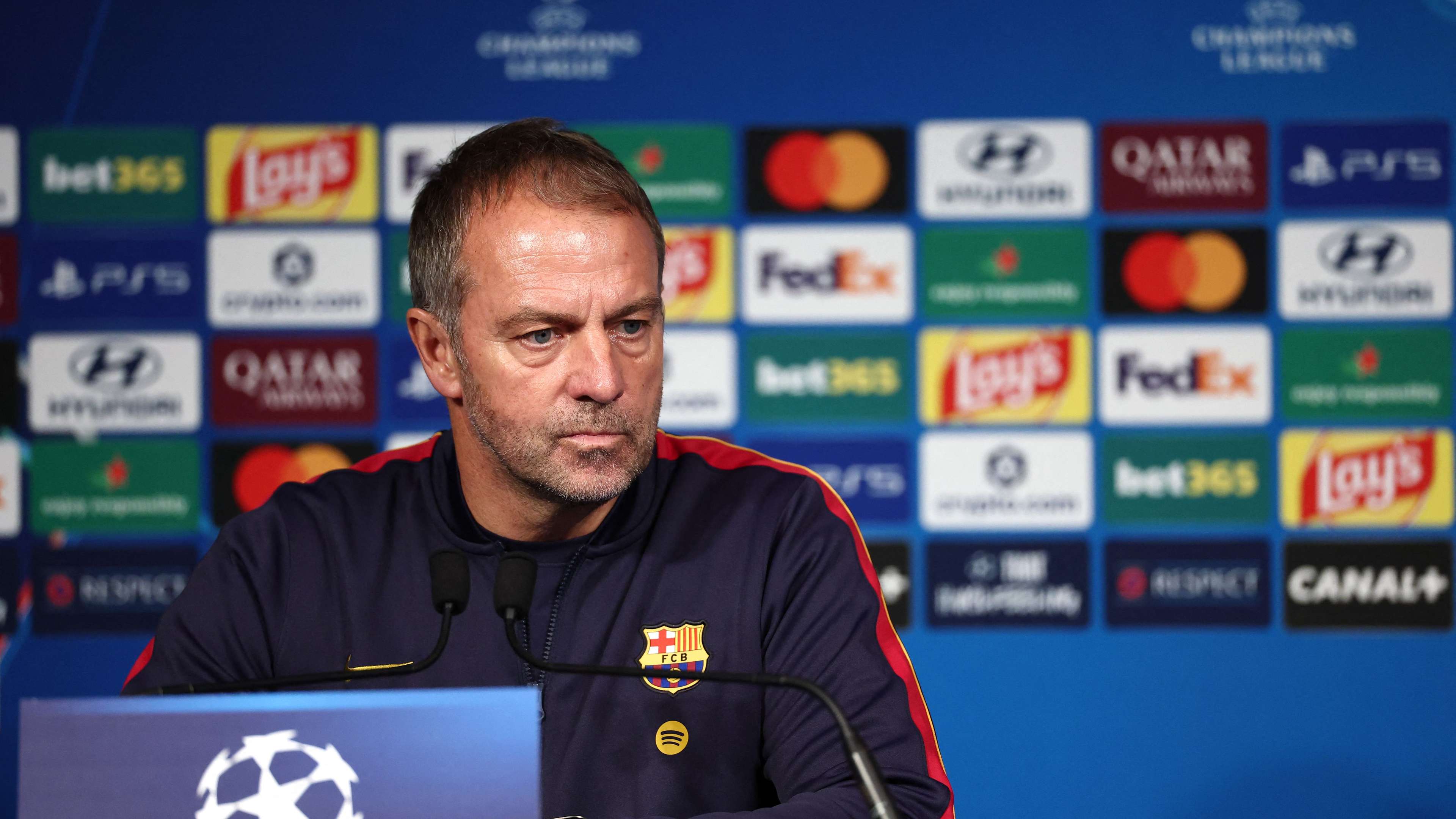
Barcelona coach Hansi Flick has described his team’s Champions League meeting with Paris Saint-Germain as an ideal opportunity to demonstrate their progress, confidence and ability to compete with Europe’s strongest sides. Speaking before Tuesday’s match, the German coach praised PSG’s quality but insisted Barcelona were ready for the challenge.
Flick’s comments set the tone for a high-stakes contest between two teams known for their attacking ambition and technical football. Barcelona arrive on an impressive run of 11 consecutive victories, while PSG bring the experience, depth and tactical flexibility that have made them one of the continent’s most formidable opponents. For supporters considering a match prediction, the contrast between Barcelona’s current momentum and PSG’s proven quality makes this a particularly compelling fixture.
Flick praises PSG and Luis Enrique
Flick was generous in his assessment of PSG, calling them the best team in the world over the past two years and describing their football as outstanding. He also paid tribute to coach Luis Enrique, whom he regards as one of the finest managers in the game.
“I really like the intensity in their performance,” Flick said, highlighting PSG’s pressing, positional rotations and tactical flexibility. Those qualities can make the French side difficult to contain: players regularly exchange positions, forcing opponents to adjust quickly, while an aggressive press can turn a misplaced pass into an immediate scoring opportunity.
His praise did not suggest Barcelona would approach the match cautiously. Instead, Flick presented the occasion as a valuable test of his team’s identity. Barcelona, he said, must play with the confidence expected of a side that has won its last 11 games and trust the style they have been developing.
Barcelona’s defensive options and Raphinha’s role
Questions about Barcelona’s defensive choices were also raised at the press conference, including the role of Gerard Martín and the options available to Flick. The coach indicated that Frenkie de Jong could be used if required and confirmed that Alex Campos was also with the squad. He expressed confidence that the team could manage its available resources, while acknowledging that Barcelona may not be at their best physically or in terms of squad availability.
Flick added that the club hoped Jules Koundé would be ready by the end of the week. His status could be significant as Barcelona prepare to deal with PSG’s pace, movement and ability to attack through different areas. Against a side that can quickly exploit space, defensive coordination will be just as important as individual talent.
There was more certainty over Raphinha. Flick confirmed that the Brazilian winger would start, giving Barcelona a direct attacking threat and an important source of energy in the press. Raphinha’s work rate can help the team defend from the front, while his speed and ability to attack the space behind the opposition defence could be valuable when Barcelona win possession.
Learning from last season’s defeat
Barcelona’s previous meeting with PSG at Montjuïc remains part of the build-up. Flick called that match difficult but stressed that his team have approached the current campaign with a clearer commitment to the football they want to play from the opening whistle.
He described Barcelona as a confident team capable of controlling possession and said the players were happy to face such a strong opponent. That confidence will be tested against PSG’s pressure. Barcelona will need to keep the ball under control without becoming predictable, and they must be alert to the danger of losing possession in areas where PSG can launch a fast attack.
Flick was also asked whether the PSG fixture or the Clásico mattered more. His response was straightforward: the next match is always the most important. That focus keeps attention on the immediate challenge rather than allowing the squad to become distracted by the wider calendar.
Real Madrid question draws a firm response
The Barcelona coach was also asked about controversy involving Arda Güler during Real Madrid’s match against Sevilla. Flick declined to comment, saying the question was not directed at him. His brief response avoided turning the press conference into a discussion about a rival club and kept the focus on Barcelona’s Champions League preparation.
When comparing the current teams, however, Flick did identify what he sees as a key difference: maturity. He said PSG have developed as a unit over several years and pointed to their ability to recover quickly when a match turns against them. Their recent comeback, he noted, showed both their quality and their resilience. The strength of PSG’s substitutes is another factor Barcelona cannot ignore, particularly if the match remains close late on.
Flick reflects on his Barcelona journey
The match could also bring Flick closer to his 100th victory as Barcelona coach. Reflecting on his time at the club, he spoke warmly about the support he has received from fans and expressed pride in the work being done by the players.
Flick said the team had been ready from the beginning of their journey together, while acknowledging the demands placed on players returning from a long World Cup period. He was impressed by their condition in training and by the atmosphere in the dressing room, describing both as encouraging signs for the team’s readiness.
That unity may matter as much as tactics in a match where concentration and composure are likely to be tested. Barcelona’s recent results have strengthened belief around the club, but Flick knows a strong run alone will not decide a European contest against an opponent of PSG’s calibre.
Possession and pressing could shape the outcome
Barcelona have conceded only one goal during their recent run, and Flick explained that their high defensive line is supported by an immediate response when possession is lost. The approach carries risk: a poorly timed press or a slow recovery can leave space behind the defence. But when the team reacts quickly, presses together and wins the ball back, it can limit the opponent’s time to build attacks.
Flick expects the midfield battle to be especially important, with both sides boasting high-level players in that area. Barcelona will want to control the ball and dictate the rhythm, while PSG will look for opportunities to disrupt that control and attack with precision. Flick’s message was clear: possession can help protect Barcelona, but careless mistakes could be costly.
For fans weighing up a football prediction, the decisive factors may be Barcelona’s ability to play through PSG’s press, the effectiveness of Raphinha’s starting role, and whether Flick’s high line can remain organised under pressure. PSG’s depth and experience make them dangerous throughout the match, but Barcelona’s winning momentum and confidence give them a strong platform. Flick’s challenge is to turn that belief into a disciplined performance when the pressure is at its highest.