
Treesa Jolly and Gayatri Gopichand Reach Denmark Open 2026 Quarterfinals
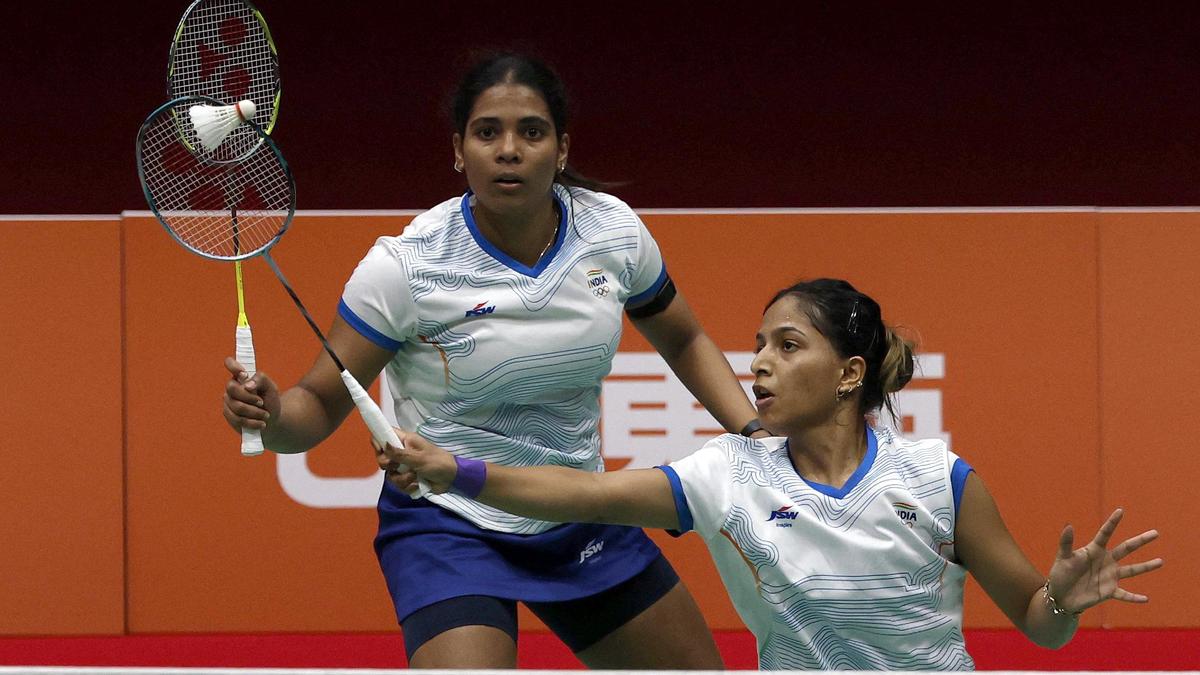
India’s Treesa Jolly and Gayatri Gopichand booked their place in the women’s doubles quarterfinals at the Denmark Open 2026 with a straight-games victory over Indonesia’s fifth-seeded pair, Rachel Allessya Rose and Febi Setianingrum. The Indian duo won 21-16, 21-17 in the round of 16, delivering a composed performance against opponents ranked among the tournament’s leading contenders.
The result gives Treesa and Gayatri a valuable opportunity to progress deeper into one of badminton’s prominent international events. Their win was built on disciplined defence, well-timed attacking play and an effective partnership that kept the Indonesians under pressure through the closing stages of both games.
India’s Pair Take Control After a Close Opening
The first game began competitively, with both pairs looking to establish control of the rallies. Rose and Setianingrum tried to use their pace and attacking intent to unsettle the Indians, but Treesa and Gayatri stayed patient rather than forcing low-percentage shots. As the game developed, the Indian pair began to find better positions and made it harder for their opponents to finish points quickly.
Treesa brought much of the attacking threat from the backcourt, using her power and placement to push the Indonesians away from the net. Gayatri complemented that approach by remaining alert at the front, where her quick reactions and steady touch helped close off angles and turn defensive exchanges into opportunities. The combination gave the Indian duo a clear tactical structure: build pressure from the rear court, then use the net to limit the opposition’s options.
After the early exchanges, the Indians sharpened their defence and reduced unforced errors. That improvement proved important against a seeded pair capable of capitalising on loose returns. Treesa and Gayatri gradually created separation on the scoreboard, then maintained their composure to take the opening game 21-16.
Composure Seals the Second-Game Win
The Indonesians responded with greater urgency in the second game, seeking to disrupt the rhythm that had served the Indian pair so well. Rose and Setianingrum attempted to raise the pace and apply pressure, but Treesa and Gayatri did not allow the match to become a series of rushed exchanges. They continued to vary their shots, defend firmly and wait for the right moment to attack.
The second game tested the Indians’ ability to manage momentum. Rather than retreating into a purely defensive approach, they stayed active in the rallies and looked for openings to move forward. Gayatri’s presence at the net helped prevent the Indonesians from dictating the front-court exchanges, while Treesa’s rear-court attack remained a consistent source of pressure.
When the Indonesian pair tried to mount a late fightback, the Indians held their nerve. Their shot selection remained measured, and they avoided giving away easy points at a crucial stage. The 21-17 finish completed a convincing win in straight games and confirmed their place in the last eight.
Strong Start to the Denmark Open Campaign
Treesa and Gayatri had already shown their ability to handle a close contest in the opening round. They defeated Chinese Taipei’s Chen Yan Fei and Hsieh Pei Shan 22-20, 21-14 in the round of 32. The first game of that match went beyond the usual 21-point mark before the Indians edged it, demonstrating their composure in a tight finish. They then carried that momentum into the second game to secure progression.
Winning two different types of matches can be important in a tournament campaign. Their opening-round success required patience in a closely contested game, while the round-of-16 victory showed how effectively they can impose a clear tactical plan against a seeded opposition. Together, the performances offer encouraging signs as they prepare for a more demanding quarterfinal challenge.
Their partnership is built around complementary strengths. In women’s doubles, success often depends on how effectively players divide responsibilities, communicate during fast exchanges and adjust their positions as rallies change direction. Treesa’s attacking presence from the back and Gayatri’s work at the net give the Indian pair a useful balance, particularly when they can maintain defensive discipline and avoid unforced mistakes.
Quarterfinal Opponents to Be Confirmed
The Indian duo will face the winners of the round-of-16 match between Malaysia’s Pearly Tan and Thinaah Muralitharan and Hong Kong’s Nga Ting Yeung and Pui Lam Yeung. Tan and Muralitharan, Asian Games bronze medallists, are an experienced combination and could present a demanding test if they advance. The Hong Kong pair will also be looking to make the most of their opportunity, making the outcome of that contest an important one for the quarterfinal draw.
Regardless of who emerges, Treesa and Gayatri are likely to need the same qualities that carried them past the Indonesian seeds: disciplined defence, sharp movement and a willingness to take control of the net. Their ability to maintain attacking pressure without sacrificing accuracy could be decisive against another high-level pairing.
The Denmark Open quarterfinal offers the Indians a chance to build on a promising start and strengthen their position in the women’s doubles draw. Their victory over Rose and Setianingrum is a notable result, but the tournament’s knockout stages leave little room for a drop in concentration. For badminton followers, the next round will provide a further measure of the Indian pair’s form, tactical flexibility and ability to compete against established international opposition.