
Kidambi Srikanth Exits Denmark Open 2026 After Three-Game Battle With Alex Lanier
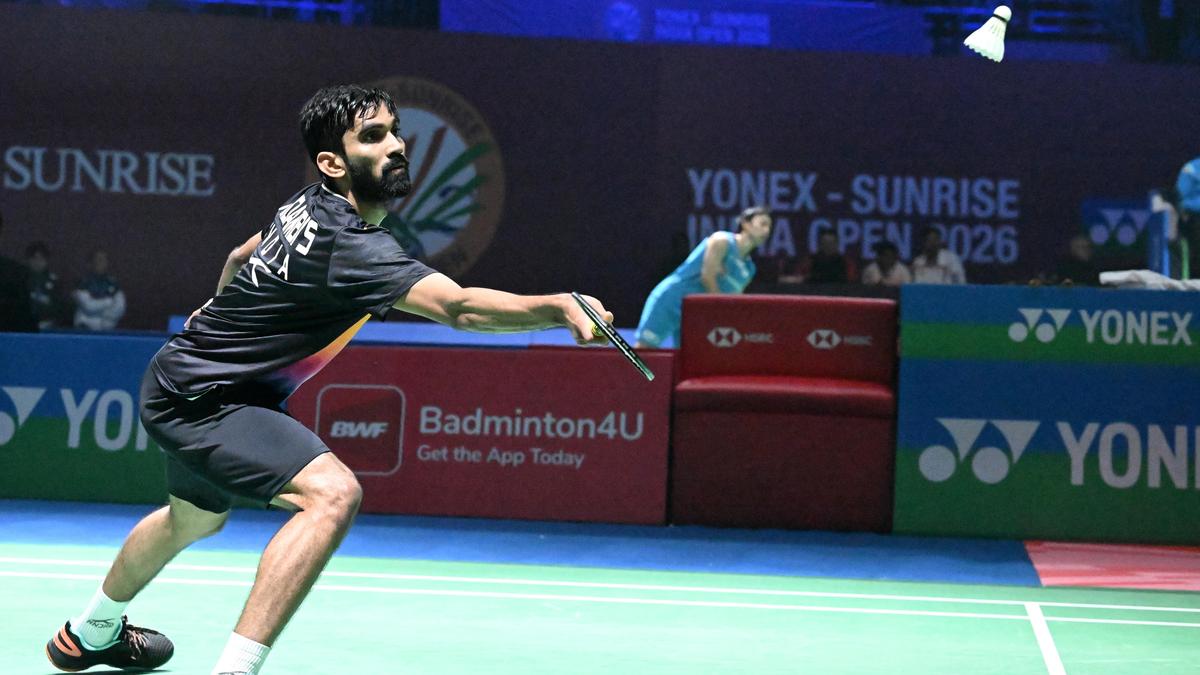
India’s Kidambi Srikanth bowed out of the Denmark Open 2026 in the men’s singles round of 16, losing to reigning world champion Alex Lanier in a hard-fought contest at the SJF Bank Arena on Sunday. Srikanth took the opening game but could not sustain his momentum, eventually falling 21-11, 15-21, 15-21 after one hour and six minutes of badminton.
The result gave seventh-seeded Lanier a place in the quarterfinals and marked a successful return to competition for the Frenchman. The 2026 world champion was playing his first tournament since his title-winning performance in New Delhi, and his response to an early setback showed why he remains one of the most formidable players on the circuit.
Srikanth makes a strong start before Lanier turns the match around
Srikanth, currently ranked No. 31 in the world, began with purpose and took control of the first game. He pressured Lanier with sharp attacking play and effective placement, building a lead before closing out the opener 21-11. For a time, the Indian looked capable of producing one of the tournament’s notable upsets.
Lanier, however, adjusted quickly. The Frenchman raised the pace of his rallies, made better use of the full court and began forcing Srikanth to defend from uncomfortable positions. He took the second game 21-15, levelling the match and shifting the pressure onto the Indian.
The deciding game followed a similar pattern. Lanier maintained his intensity and limited the opportunities for Srikanth to attack on his terms. Although Srikanth continued to compete, the seventh seed held his advantage and secured the match with another 21-15 win. The three-game scoreline reflected both Srikanth’s promising opening and Lanier’s ability to recover and take control.
For Lanier, the victory was an encouraging first test after his world championship success. Returning to competition after a major title can bring added expectations, but he showed patience after losing the first game and avoided allowing the momentum to remain with Srikanth. His composure in the longer exchanges proved important as the match progressed.
Recent results underline the challenge facing Srikanth
The Denmark Open exit extends a difficult stretch for Srikanth, who has now missed the quarterfinals at his last two competitions. He was eliminated in the round of 32 in Finland before reaching the last 16 at the Asian Games. While the latest defeat came against a highly accomplished opponent, the sequence highlights the challenge of turning competitive performances into deeper tournament runs.
Srikanth’s best result of the season came at the US Open in June, where he finished runner-up to Chinese Taipei’s Su Li Yang. That performance demonstrated that the Indian remains capable of reaching the final stages of a major event. The task now will be to build consistency, particularly against top-ranked players who can change the rhythm of a match after an opponent’s fast start.
Against Lanier, the opening game offered a reminder of Srikanth’s attacking strengths. The next step is sustaining that level across an entire match, especially when an opponent adapts. At the highest level of badminton, small changes in court position, shot selection and rally length can quickly alter a contest. Lanier’s recovery illustrated how quickly a match can turn once a player finds a more effective pattern.
Ashmita Chaliha falls to Akane Yamaguchi
India also lost a women’s singles contender in the round of 16, as Ashmita Chaliha was defeated by third seed Akane Yamaguchi. The world No. 40 started brightly against the Japanese star, racing to a 12-7 lead in the opening game. But Yamaguchi responded with six consecutive points, reversing the momentum and eventually taking the game 21-18.
That run proved decisive. Yamaguchi’s ability to turn defence into attack disrupted Chaliha’s early rhythm and prevented the Indian from controlling the rallies as she had at the start. Once the Japanese player gained the advantage, she carried her confidence into the second game.
Yamaguchi opened up a commanding 13-3 lead in the second, leaving Chaliha with too much ground to make up. The Indian tried to stay in the contest, but the third seed maintained her pressure and closed out the match 21-10. The contest lasted 30 minutes.
Chaliha’s early lead showed that she could challenge a top opponent, but Yamaguchi’s response highlighted the importance of converting promising starts into sustained control. Against an experienced player, a short scoring burst can change the complexion of a game, particularly when it is followed by consistent pressure and fewer unforced errors.
What the Denmark Open results mean for India
The round-of-16 defeats for Srikanth and Chaliha ended their campaigns at the Denmark Open, but both matches offered useful lessons. Srikanth showed his capacity to start aggressively against the reigning world champion, while Chaliha demonstrated that she could trouble a top-three seed before Yamaguchi took charge.
For Indian badminton, the results also underline the depth of competition on the international circuit. Reaching the last 16 is a meaningful achievement, but progressing further often depends on maintaining tactical discipline when momentum shifts. Players must be ready to adjust their pace, protect leads and respond quickly when opponents change their approach.
Srikanth will look to use the experience of facing Lanier as he seeks to regain consistency in upcoming tournaments. Chaliha, meanwhile, can take confidence from her strong opening against Yamaguchi while working to sustain that level for longer. Their Denmark Open campaigns ended before the quarterfinals, but the performances provided clear reference points for the next stage of their seasons.