
An Se-young rallies past P.V. Sindhu to claim another French Open badminton title
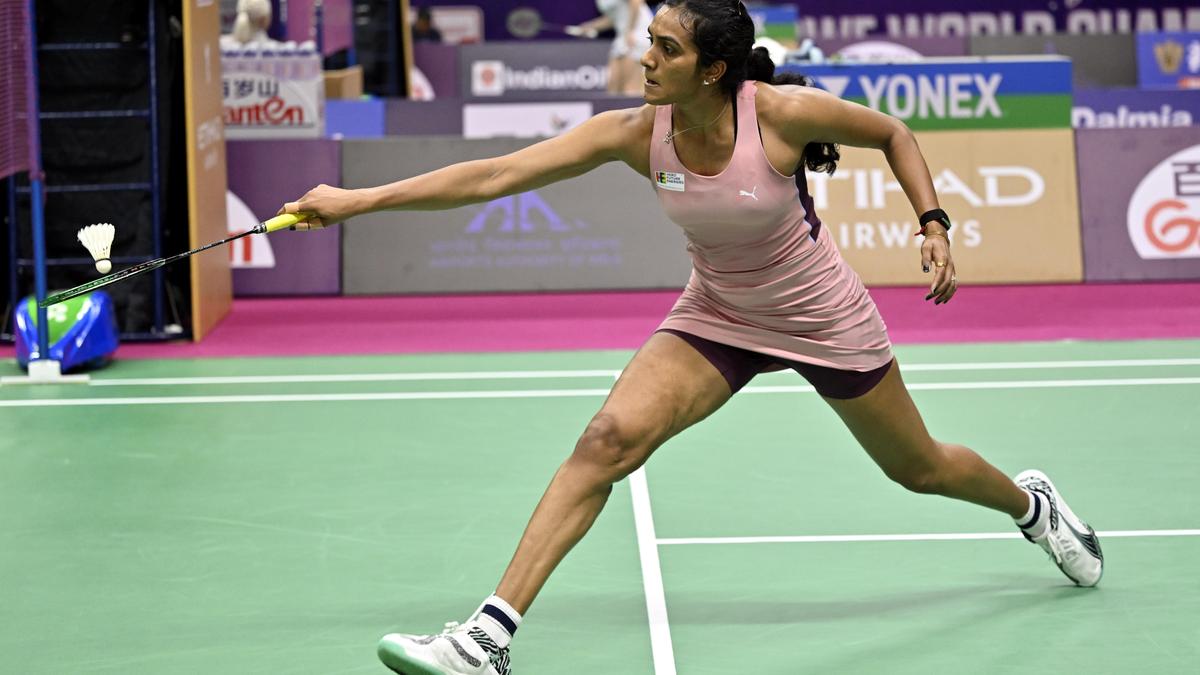
An Se-young’s latest badminton triumph did not begin as smoothly as many expected. The reigning world champion arrived at Sunday’s French Open final as the clear favourite, but P.V. Sindhu briefly disrupted the script with a confident opening game. The Indian star attacked the corners with cross-court smashes while An struggled to find her range, sending several shots beyond the lines.
Sindhu led at the first mid-game interval and took the opening game 21-16, raising the possibility of a rare shift in their rivalry. But An has built her reputation on adjusting under pressure. She responded with greater aggression, sharper mid-court play and the rapid reflexes that make her so difficult to unsettle. As Sindhu’s returns began drifting long, An took control of the second game and won it 21-11.
In the decider, the South Korean returned to a familiar blueprint: move her opponent from corner to corner, vary the pace with swift drops and wait for the right moment to attack. The plan worked. An closed out a 16-21, 21-11, 21-12 victory to lift the French Open 2026 title and add another major honour to an already remarkable collection.
A difficult matchup for Sindhu—and a reminder of An’s resilience
The result extended An’s winning record against Sindhu to 11 matches, with the Indian having taken only two games across those meetings. That record underlines the challenge facing even the most accomplished players when they meet An at her best. Yet the opening game offered a useful reminder: dominance does not make a champion invulnerable. Sindhu’s early pressure exposed the importance of starting well and showed that An, too, can be pushed out of her preferred rhythm.
The difference was An’s response. Rather than forcing low-percentage winners, she adjusted her positioning and began taking the rally to Sindhu. She used the middle of the court to limit Sindhu’s attacking angles, then expanded the rally towards the sidelines. Once she had regained control, her patience and precision made the court feel increasingly small for her opponent.
That ability to recover is central to An’s success. Scotland’s Kirsty Gilmour has previously described her as “a machine” who finds a way to win. The comparison captures An’s relentless consistency, but it can obscure the intelligence behind it. Her badminton is not simply based on speed or stamina: it is a carefully constructed effort to control space, tempo and decision-making.
How An Se-young turns movement into a weapon
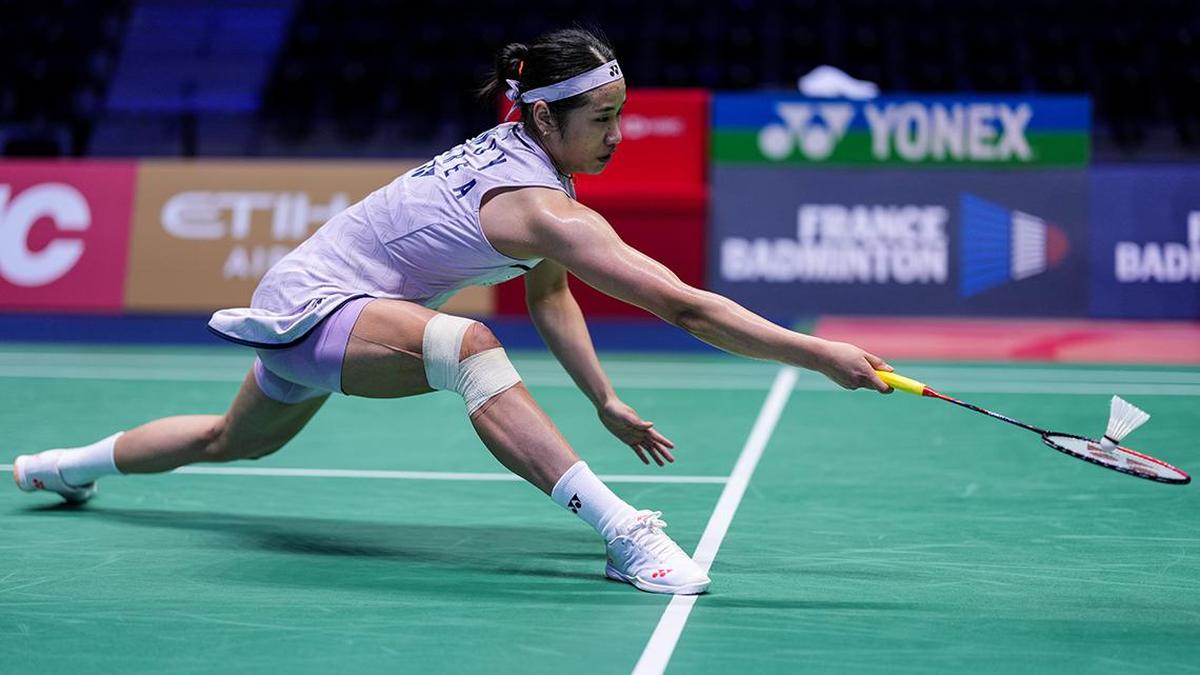
An’s most effective rallies often begin without a spectacular smash. She may first push an opponent deep into one corner, then make them cover the same area again before changing direction with a disguised drop. At other times, she draws a player forward with a delicate shot and sends the next one beyond their reach. The deception works because she makes opponents commit before revealing where the shuttle is really going.
Her court coverage allows her to sustain those patterns. An anticipates the likely reply, recovers quickly towards the centre and is ready to redirect the next shot. That combination of movement and tactical discipline forces opponents to play extra strokes, often from uncomfortable positions. When a short return finally appears, she can finish with a smash or a precise placement.
Patience is just as important as power. An is willing to extend a rally, test a weakness and wait for an opening rather than attack too early. Her 169 weeks at the top of the BWF women’s singles rankings reflect not only her physical ability but also her capacity to repeat that approach against different opponents and under pressure.
From junior prospect to world champion
An’s rise began early. She won her first international title at the Under-15 Korea Junior Open in 2015, only five months after making her international debut. In 2018, aged 16, she claimed her first senior international title at the Irish Open. A year later, she announced herself on the BWF World Tour by winning the New Zealand Open, beating 2012 Olympic champion Li Xuerui in the final.
The breakthrough helped An enter the world’s top 10 in November 2019, and she was named the BWF Most Promising Player of the Year. Her progress was not simply a matter of collecting early trophies. She also learned to adapt to rivals who had initially found ways to beat her. Against China’s Chen Yu Fei, An trailed 0-7 in their meetings between 2019 and 2021. She has since reversed the rivalry and now leads 18-14—a striking example of her development as a tactician.
In 2023, An became the first South Korean woman to win the world singles championship, defeating Spain’s Carolina Marín in the final. She also captured Asian Games gold, South Korea’s first in women’s singles in nearly three decades, and rose to No. 1 in the world rankings that August. Olympic gold followed at Paris 2024, further establishing her as one of the defining players of her generation.
A record-setting season and a new test for badminton
An’s 2026 campaign has raised the bar again. She has won 66 of 67 matches, a win rate of 98.51 per cent, and collected 10 titles, taking her career total to 48. That tally surpassed the previous record for international women’s singles titles held by Indonesian great Susi Susanti, excluding regional games. Her achievements build on an earlier season in which she won 11 international titles and became the first badminton player to earn more than US$1 million in prize money in a calendar year.
Her French Open victory also arrives as the sport prepares for a significant change: the move from 21-point games to a 15-point format. Shorter games could make fast starts more important and leave players with fewer opportunities to recover from a poor spell. An’s opening-game errors against Sindhu offer a timely example of how a slow start can create pressure—even for a player with her ability.
But the change may not necessarily disadvantage her. An’s anticipation, consistency and knack for forcing errors could be especially valuable in shorter contests. The key question will be whether she chooses to attack earlier, take more risks or continue building rallies patiently. Her recent results suggest she has the range to adapt, though the new scoring system may reward those who establish control from the first few points.
For now, the French Open final offered a familiar conclusion: an opponent found an opening, An assessed the problem, and the match turned. Her badminton is compelling not only because of the points she wins, but because of the process behind them—the measured exchanges, the subtle changes of direction and the sudden acceleration when the opportunity arrives. A shorter format may leave less time for that careful construction. An Se-young’s next challenge is to prove that even with fewer points to play, she can still make every rally count.