
Endgame Drama Defines Round Four of the 2026 U.S. Chess Championships
Endgame technique took center stage in round four of the 2026 U.S. Chess Championship and U.S. Women’s Chess Championship in St. Louis. Long, demanding battles produced several instructive finishes, with players converting small advantages through patience, precise piece coordination, and determined defense.
In the Open, GM Fabiano Caruana earned a grinding victory over GM Ray Robson to reach three points and join GM Levon Aronian at the top of the standings. Other notable endgame wins came from GMs Jeffery Xiong and Grigoriy Oparin. In the Women’s Championship, IM Alice Lee defeated overnight co-leader FM Rose Atwell to claim the sole lead with 3.5 points. WGM Tatev Abrahamyan remained close behind on three points after drawing with IM Anna Zatonskih in a complicated, unbalanced endgame.
The round’s marathon games made it a memorable showcase for chess fans who enjoy technical play. Four Open games passed the 50-move mark, as did five in the Women’s section. Caruana’s game alone progressed from a double-rook ending to a rook-versus-rook position before he finally secured the full point on move 77.
Open Championship: Caruana’s Rook-Endgame Masterclass
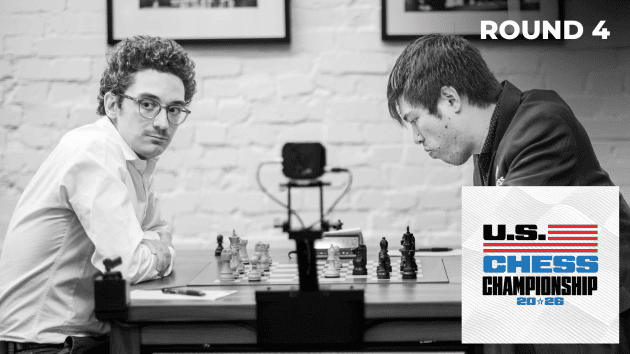
Caruana’s win over Robson was the clearest example of how a seemingly modest advantage can be nurtured into a decisive result. The players reached a double-rook endgame by move 23, a phase in which active rooks, king placement, and pawn weaknesses often matter more than material. Caruana maintained pressure without rushing, repeatedly improving his position and limiting Robson’s opportunities to simplify on favorable terms.
By move 68, the game had been reduced to a rook-versus-rook endgame. Such positions are frequently drawn with accurate defense, but they can remain difficult to handle over the board: one misplaced rook or passive king can allow the stronger side to create a passed pawn or force the defender into a vulnerable position. Caruana kept his pieces active and his opponent under sustained pressure, eventually converting the advantage on move 77.
The win was a lesson in practical endgame chess as much as calculation. Caruana did not rely on a single tactical blow. Instead, he preserved his grip, avoided unnecessary risks, and continued asking Robson difficult questions. That combination of patience and precision made the game a standout performance of the day.
Xiong Builds a “Spiderweb”
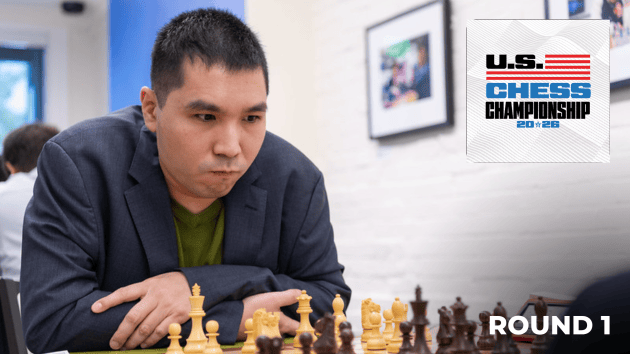
Jeffery Xiong’s victory over GM Awonder Liang offered a different kind of endgame spectacle. On move 29, Xiong gave up one of his two minor pieces, steering the game toward a position that was objectively balanced but exceptionally uncomfortable to defend. The decision created a long strategic struggle in which Xiong’s pieces and pawns worked together to restrict Liang’s options.
These positions illustrate an important truth about chess: an engine evaluation does not always capture the practical difficulty of defending. A player may have enough resources to hold a position in theory, yet face a series of precise decisions with little room for error. Xiong applied persistent pressure, while Liang’s defensive inaccuracies gave the winner chances to make progress. Xiong also missed some opportunities during the conversion, but the back-and-forth only added to the drama.
The game was a reminder that endgame technique is not simply about memorizing theoretical positions. It also involves recognizing which positions are hardest for an opponent to play and creating problems that must be solved move after move.
Oparin’s Queen-and-Minor-Piece Squeeze
Grigoriy Oparin also scored a notable endgame win, using a queen and knight against a queen and bishop to apply a sustained squeeze. In this type of position, the knight’s ability to influence squares of both colors can be valuable, while a bishop is restricted to one color complex. That difference is not automatically decisive, but it can become important when combined with a passed pawn and an active king.
Oparin followed sound endgame principles: he improved his king, coordinated his pieces, and supported his passed pawn while limiting counterplay. His patient approach turned a difficult position into a full point, demonstrating how small positional advantages can accumulate when the stronger side keeps the initiative.
Women’s Championship: Alice Lee Takes the Sole Lead
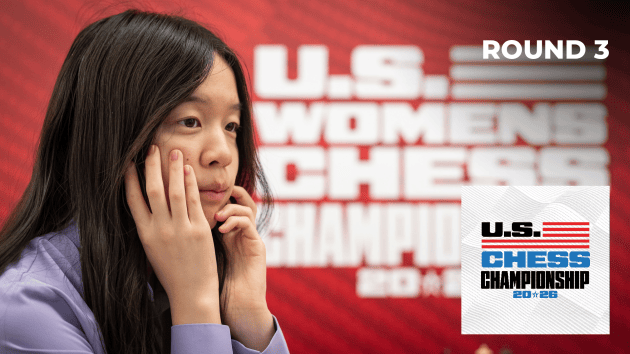
In the Women’s event, Alice Lee produced a technically impressive win over overnight joint leader Rose Atwell. The game reached a complex rook-and-pawn-versus-bishop endgame, a position that may look simple at first glance but demands accurate coordination. The rook and king must work together, while the defender relies on the bishop’s control of key squares and the possibility of stopping or blockading the pawns.
Lee handled the position with confidence, using her king and rook to improve her chances and gradually increase the pressure. These endings are considered fundamental knowledge for elite players, but knowing the general ideas is only the starting point. The stronger side must identify the right plan, avoid allowing the bishop to establish an effective blockade, and make progress without giving the defender a chance to escape into a drawn position.
Her victory lifted Lee to 3.5 points and sole possession of first place. WGM Tatev Abrahamyan sits half a point behind after drawing with IM Anna Zatonskih in a complex endgame where neither player could fully impose her plan.
Standings, Schedule, and How to Follow
After four rounds, the Open lead is shared by Caruana and Aronian on three points. Lee leads the Women’s Championship with 3.5 points, followed by Abrahamyan on three. With eight rounds still to play, the standings remain open, and every half-point could matter in the race for the titles.
The players take a rest day on Tuesday before round five begins on Wednesday, October 14, at 1 p.m. ET (19:00 CEST; 10:30 p.m. IST). Fans can follow the games through the tournament’s official coverage and review completed encounters on the event pages. The live broadcast features grandmasters, a woman grandmaster, and an international master offering commentary and analysis.
Both championships are 12-player single round-robin tournaments running from October 9 to 22 in St. Louis. The time control is 90 minutes for the first 40 moves, followed by 30 minutes for the remainder of the game, with a 30-second increment from move one. The Open Championship offers a $250,000 prize fund, including $55,000 for first place. The Women’s Championship has a $152,000 prize fund, with $35,000 awarded to the winner.
Round four showed why endgames remain among the most compelling phases of chess. Whether through Caruana’s careful rook play, Xiong’s creative piece sacrifice, Oparin’s positional squeeze, or Lee’s command of a classic rook-and-pawn ending, the day rewarded patience and precision—and gave fans plenty to study before the next round.