
Manchester United’s Late Escape in Madrid: Revisiting a Tense Champions League Night
Some football matches are remembered for a commanding victory. Others endure because a team survives a difficult evening and finds a way to change the story before the final whistle. Manchester United’s February 2022 visit to Atlético Madrid belonged to the second category: a tense Champions League knockout encounter shaped by a hostile stadium, disciplined defending and a late moment of relief for the visitors.
The first leg of the round of 16 took place at the Wanda Metropolitano, where United faced Diego Simeone’s famously organised side. The setting seemed built for Atlético’s strengths. Their supporters generated a relentless wall of noise, while the home team pressed aggressively, defended compactly and looked to punish mistakes. For United, this was more than an away fixture. It was a test of patience, composure and tactical adaptability.
A difficult setting for Manchester United
European nights in Madrid can feel especially intense when Atlético are involved. The crowd’s rhythmic chanting and the close, imposing atmosphere give the home side an emotional lift, while visiting players have little time to settle into a comfortable rhythm. Atlético’s approach under Simeone added to the pressure: deny opponents space, contest every loose ball and make each attack feel hard-earned.
United arrived with attacking talent capable of deciding a match, but individual quality alone was unlikely to be enough. Atlético’s defensive structure demanded quick decisions and accurate movement. If United circulated the ball too slowly, the hosts could reset their shape. If the visitors forced passes through crowded areas, they risked turning possession into an opportunity for Atlético to counter.
That tactical challenge made the contest compelling. United had to balance the need to create chances with the danger of leaving gaps behind. Atlético, meanwhile, were comfortable making the game uncomfortable. Their aim was not simply to defend their penalty area, but to disrupt United’s flow and draw the visitors into a contest defined by duels, second balls and sudden transitions.
Atlético strike first and set the tone
The home side made an early impact, taking the lead through João Félix. The goal captured the threat Atlético could pose when they moved forward with purpose: a sharp attack, a well-timed finish and an immediate reward for their energetic start. It also placed United in a difficult position. Trailing away from home in a knockout tie, they needed to respond without allowing the match to become even more open.
For much of the evening, Atlético’s intensity and compact defending made clear chances difficult to find. United had to work through a crowded midfield and contend with opponents who were quick to close down space. The hosts’ willingness to challenge for every ball kept the pressure high, while the home crowd reacted to each tackle and interception as if it were another attacking opportunity.
United’s challenge was therefore as much mental as technical. A side can begin to rush when it falls behind in a hostile stadium, forcing passes or taking low-percentage shots in search of an immediate answer. The visitors needed to remain organised, keep their shape and wait for the right opening. That patience would eventually prove important.
Rangnick’s changes alter the momentum
Ralf Rangnick responded by adjusting his team, introducing fresh options as United searched for greater energy and a more direct route toward goal. Substitutions can be decisive in a high-pressure tie, not only because they add new players but because they change the rhythm of the match. United’s task was to increase their attacking threat while continuing to guard against Atlético’s counterattacks.
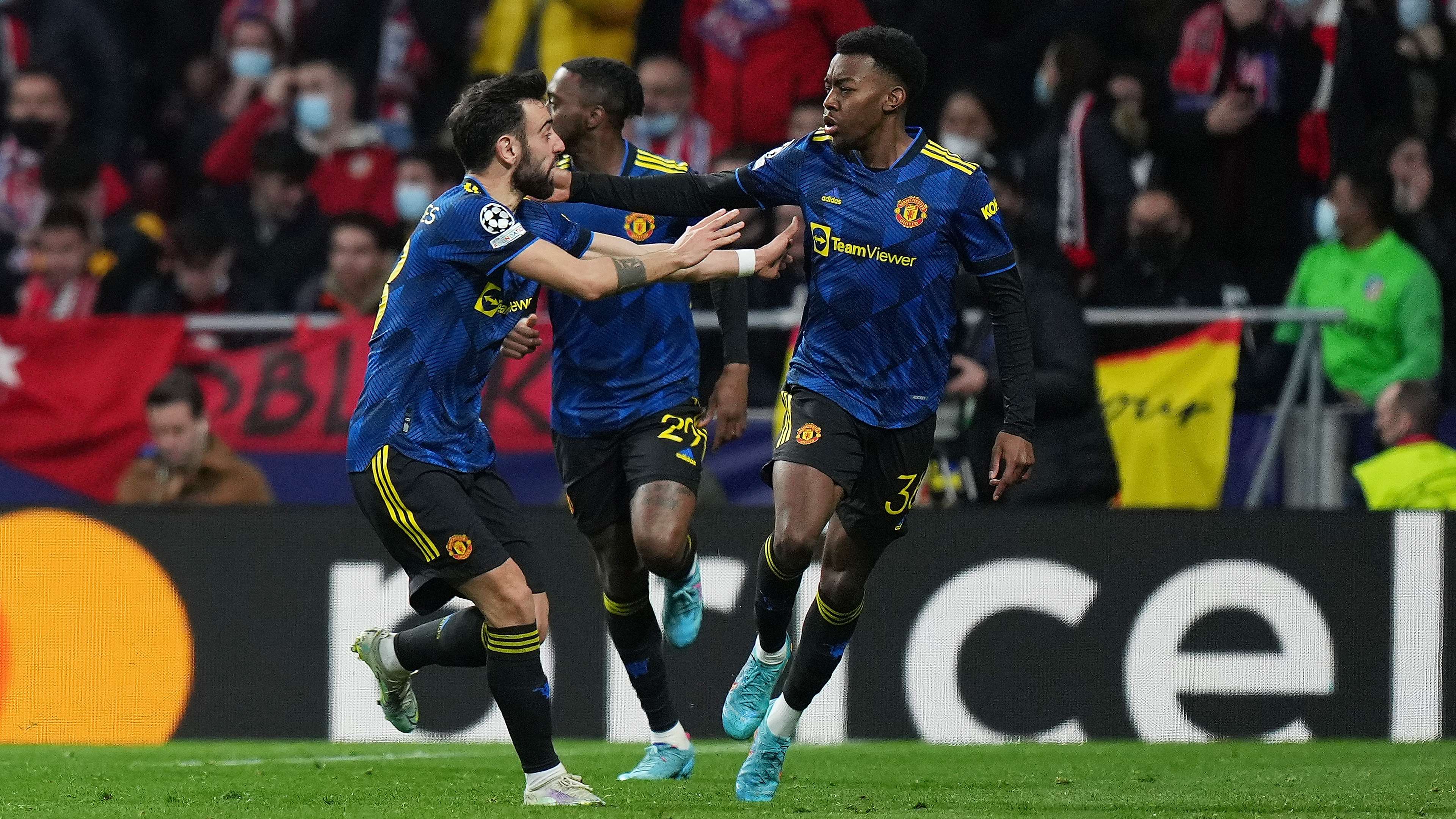
The equaliser arrived late, when substitute Anthony Elanga found space and finished to make it 1–1. The goal transformed the mood of the contest. After spending much of the match under pressure, United had secured a valuable away draw and prevented Atlético from taking a first-leg lead into the return fixture. Elanga’s contribution also underlined how important the bench can be in European football, particularly when a match becomes physically and emotionally demanding.
It was not a dominant performance from United, nor did the result settle the tie. Instead, the late goal changed the balance of the two-leg contest. Atlético had begun the evening with the advantage and appeared to have controlled much of the game, but United’s persistence left both teams facing an unresolved second leg.
What the result meant for the Champions League tie
A 1–1 draw gave United a measure of relief, but it also highlighted the narrow margins that define Champions League knockout football. Atlético had shown how effectively they could use their home advantage and tactical discipline. United, in turn, demonstrated that a team can remain in contention even when its performance is far from comfortable.
At the time, the away-goals rule had already been abolished in UEFA competitions, so United’s goal did not provide the traditional away-goal advantage. The tie remained level on aggregate, meaning the second leg would begin with both sides needing to create a fresh advantage. That context made Elanga’s late strike valuable for its psychological impact and for the scoreline, rather than because away goals counted as a separate tiebreaker.
From a football prediction perspective, the first leg offered plenty to consider ahead of the return match. Atlético’s defensive organisation suggested they could make life difficult again, while United’s late response showed they had the attacking tools to exploit a moment of space. Any prediction for the second leg needed to account for both sides’ strengths: Atlético’s ability to control the tempo and United’s capacity to produce a decisive moment from a substitute or a quick attacking move.
A night defined by resilience, not control
The Madrid encounter remains a useful reminder that knockout football is rarely decided by possession or reputation alone. Atmosphere, tactical discipline, substitutions and composure all shaped the outcome. Atlético set the tone with an early goal and made the match a test of endurance. United absorbed the pressure, adapted and found a late equaliser when the opportunity arrived.
For supporters, it was a night of tension rather than spectacle: a reminder of how difficult it can be to play in Simeone’s stadium and how quickly a football match can turn. United left Madrid without a win, but with the tie still alive. In a competition where one late finish can reshape the narrative, Elanga’s goal supplied a moment of salvation—and ensured that the Champions League story would continue in Manchester.