
Magnus Carlsen Targets a Third Esports World Cup Chess Title in 2027
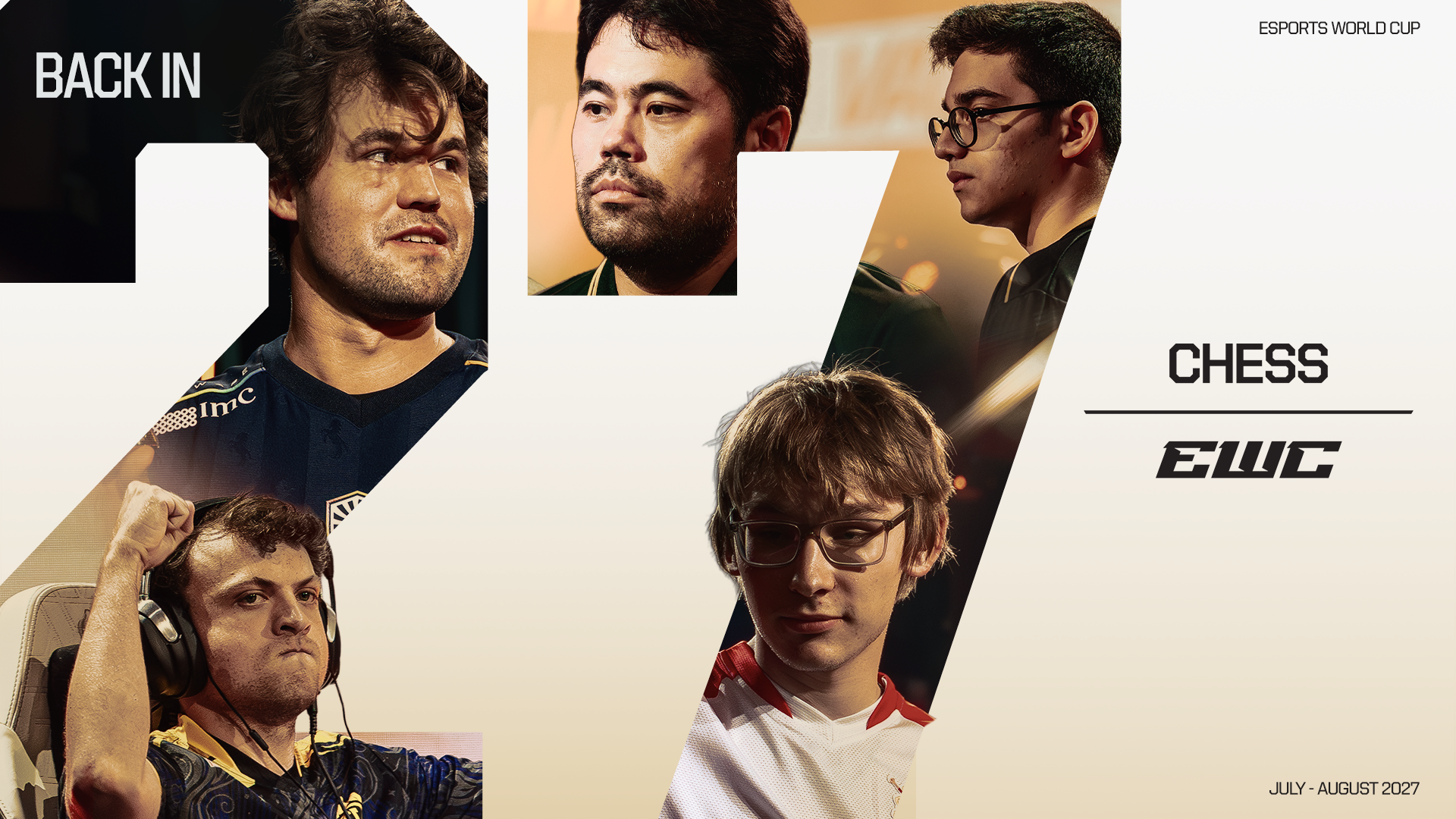
Magnus Carlsen could make history at the 2027 Esports World Cup (EWC), where the Norwegian grandmaster will have a chance to win his third chess title in as many appearances. The tournament is scheduled to return to Riyadh, Saudi Arabia, next summer, while qualification is already underway through a redesigned Champions Chess Tour (CCT).
Carlsen is the only player assured of a place in the 2027 field, thanks to his status as defending champion. Everyone else must earn a spot through the qualification system, which draws on results across several major online chess competitions. The approach promises a season-long contest in which consistency, speed-chess skill, and performance under pressure could all shape the final lineup.
Carlsen’s Record-Breaking Opportunity
The world number one claimed his second EWC chess crown in Paris this August, defeating grandmaster Denis Lazavik in the final. Carlsen won both sets by a 3-1 score, completing a dominant run through the knockout bracket. His victory brought a $250,000 prize and made him the first player to win the EWC chess tournament twice.
Carlsen also won the inaugural edition in Riyadh in 2025, overcoming Hikaru Nakamura in the final. A third title in 2027 would extend his record and strengthen his reputation as one of the most successful competitors in elite speed chess. While the defending champion has secured his return, the challenge for the rest of the field is to navigate a longer and more varied qualification campaign.
The EWC’s official announcement captured the nature of the contest: “Patience, precision, and pressure in every move. The battle of minds returns with Chess at EWC27.” That description reflects the distinctive demands of fast online chess, where players must calculate quickly, manage the clock, and make accurate decisions with little time to recover from an error.
Champions Chess Tour Leads the Qualification Race
The main route to Riyadh runs through the Champions Chess Tour, which began on September 1 and is set to conclude on May 25. Twelve qualification places will be awarded through a combined points system featuring Titled Tuesday, the Champions Chess Tour, and the Chess.com Open.
Rather than relying on a single event, the system gives players multiple opportunities to build their standings. That could benefit competitors who perform consistently across different formats, while also keeping the race open to players who deliver a standout result in one of the major tournaments. For fans, the extended schedule offers a continuing storyline: every result may influence who joins Carlsen in Saudi Arabia.
One notable change is the removal of automatic qualification for the top three finishers in the Speed Chess Championship and the Chess.com Open. Those events will still matter, but their results will contribute points to the overall standings instead of guaranteeing direct entry. Winners of the relevant competitions will receive 150 points, adding significant value to a tournament victory without making it the only path to qualification.
More Routes Through Satellite Events
Organizers have also announced a separate pathway involving approved satellite tournaments. Winners of those events will earn entry into an EWC Last Chance Qualifier, where they can compete for remaining places in the main chess tournament.
The satellite route could broaden access beyond the leading names already competing on the Champions Chess Tour. It may give emerging players and regional tournament winners a chance to challenge established grandmasters, although the organizers have yet to publish the full list of qualifying events or the number of places available through this route.
Lazavik’s Breakthrough Made a Major Impact
Carlsen’s latest championship was not the only story of the 2026 tournament. Lazavik, a 19-year-old representing All Gamers (AG), produced a remarkable run to reach the final. He eliminated grandmasters including Hikaru Nakamura and Alireza Firouzja, demonstrating why he is increasingly regarded as one of the world’s strongest speed-chess specialists.
Although Lazavik fell to Carlsen in the final, his runner-up finish earned him $190,000 and helped deliver 750 points to AG in the EWC’s wider Club Championship. The chess tournament therefore carried consequences beyond individual prizes and prestige: players also competed for points that contributed to their esports organizations’ overall standings.
That team dimension became especially important during the knockout rounds. Lazavik’s semifinal victory denied points to Team Falcons, Nakamura’s organization, while his strong finish helped AG build momentum. AG ultimately won the Club Championship and its $7 million prize, illustrating how a chess result can influence a much larger esports competition.
What to Expect From Chess at EWC 2027
Specific dates, the prize fund, and the complete format for the 2027 chess tournament have not yet been announced. More details are also expected on the Last Chance Qualifier and the satellite events that will feed into it. Until then, the Champions Chess Tour standings will be the clearest indicator of which players are positioning themselves for a place in Riyadh.
For chess fans, the revised qualification structure brings added depth to the road to the EWC. Instead of focusing only on a handful of direct-entry events, spectators can follow a season-long race across online tournaments, with established stars and rising talents competing for points. Carlsen may already have his ticket, but the battle to join him is just beginning.
If he returns to the form that carried him through the 2025 and 2026 finals, Carlsen will again be the player everyone is chasing. Yet Lazavik’s breakthrough shows that the next generation is ready to challenge the established order. At EWC 2027, the combination of elite chess, fast time controls, and team-based esports stakes could make every move matter long before the final is played.