
Brazil’s Football Future: Ancelotti’s Vision and the Absence of Neymar in the Next Generation
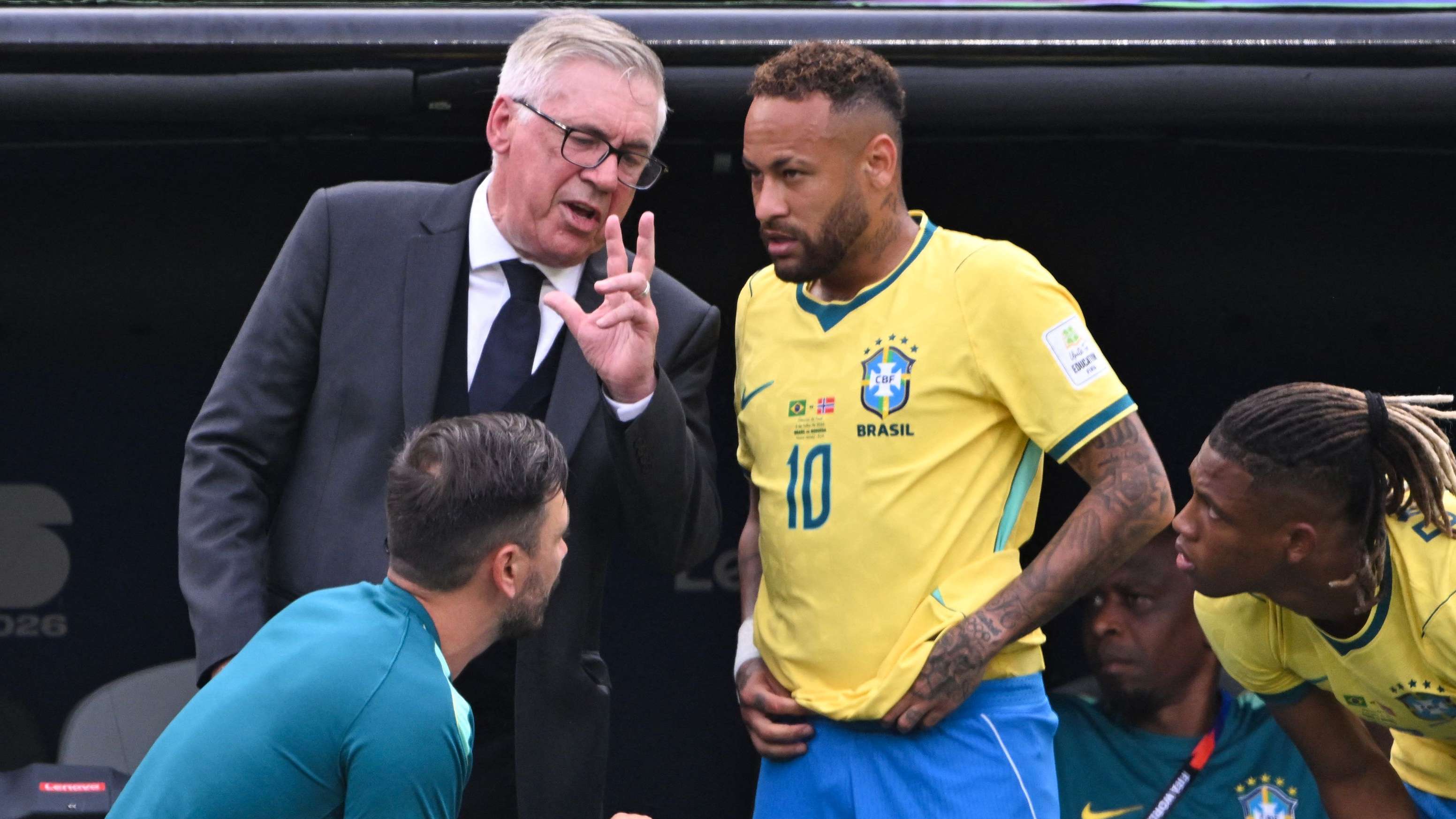
Brazil’s football scene is undergoing a significant transformation as the legendary Neymar steps away from international duty, prompting a strategic shift in how the national team is being built and prepared for future tournaments, including the highly anticipated 2030 FIFA World Cup. Renowned coach Carlo Ancelotti has publicly confirmed that Neymar, despite his immense talent and contributions, will not be part of Brazil’s plans moving forward. This decision marks a pivotal moment in Brazil’s football prediction, emphasizing the importance of nurturing young talent and fostering a cohesive team dynamic.
Carlo Ancelotti’s Stance on Neymar’s International Career
In a recent interview with CNN Brasil, as reported by Tribuna, Ancelotti articulated a clear perspective: “Neymar deserved to be part of Brazil’s squad for the 2026 World Cup, thanks to his unique abilities,” he said. However, the Italian tactician revealed that Neymar himself has decided against returning to the international stage, prioritizing his focus on club commitments and personal goals.
He further emphasized Neymar’s exceptional qualities: “He cannot be replaced; he is a one-of-a-kind player thanks to his abilities.” This acknowledgment underscores Neymar’s status as one of the most talented footballers of his generation, whose creative genius and prolific scoring have often been decisive for Brazil. Yet, Ancelotti also highlighted the importance of looking ahead, steering Brazil’s football prediction towards developing a new generation that can carry the nation’s legacy into the future.
Building a New Generation: Focus on Youth Talent
With Neymar stepping aside, the focus shifts to identifying and nurturing young players born in 2004, 2005, and 2006. Ancelotti made it clear that now is the time to invest heavily in these emerging talents, many of whom are yet to make their mark at the senior level but possess immense potential. He also pointed out players born in 2008, who are still in the early stages of their development but demonstrate promising qualities.
In an insightful statement, Ancelotti said: “We have young players born in 2008 who possess a lot of quality, and they are not playing yet, but they are capable of playing at the highest level.” He stressed that monitoring these players during friendly matches and youth competitions is critical to their growth. This approach aligns with Brazil’s broader football prediction—building a cohesive, talented squad capable of competing at the highest levels in upcoming tournaments.
Strategic Development and Collaboration Across Age Groups
Ancelotti’s strategy involves close collaboration between the senior team’s coaching staff and those managing the youth squads, including the under-20 and under-17 national teams. This integrated approach aims to create a seamless pathway for young players, ensuring their development aligns with the national team’s tactical and technical standards.
He highlighted the importance of major international tournaments such as the Olympic Games and Copa América. These competitions serve as vital stages for young talents to gain experience and showcase their abilities on the international stage. “We must follow these players throughout their development stages because club objectives often differ from national team goals,” he explained. This holistic view emphasizes that collective strength—rather than reliance on individual brilliance—is paramount for Brazil’s future success in football prediction and performance.
The Role of Collective Play in Modern Football
In today’s football landscape, Ancelotti stresses the necessity of a cohesive team effort. While individual talent remains invaluable, modern football demands a balanced combination of skill, strategy, and collective coordination. “If you have great individual talent, your chances of winning increase, but you cannot win consistently without a solid team structure,” he asserted.
This philosophy underscores the importance of cultivating players who excel not only in technical ability but also in understanding team dynamics, tactical discipline, and shared responsibilities on the pitch. Ancelotti’s vision for Brazil’s football prediction involves creating a resilient, adaptable squad capable of competing with the best in the world without over-reliance on a single star.
Reflecting on the Last World Cup and Moving Forward
The recent disappointment at the FIFA World Cup still resonates within Brazilian football circles. Ancelotti acknowledged the frustration caused by Brazil’s early exit but emphasized that dwelling on past failures is counterproductive. Instead, the focus must be on future preparations and strategic planning.
He stated: “The World Cup was disappointing, and we feel sorry about it, but now we must look ahead and prepare a new generation of players.” This proactive mindset aligns with the broader aim of restoring Brazil’s dominance in international football prediction and performance. The upcoming friendly matches against Australia, scheduled for September 25 and 29, serve as crucial opportunities to evaluate young talents and test new tactical approaches.
Upcoming Friendlies and the Road to 2030
Brazil’s national team will face Australia in two friendly matches, providing a platform to assess emerging players and refine team strategies. These matches are not only about results—they are vital for scouting young talent, building team chemistry, and gaining valuable international experience. Following these fixtures, Brazil will also meet India on October 3, further testing their readiness for future competitions.
Looking ahead, Ancelotti envisions a Brazil squad that is well-prepared and adaptable, capable of competing at the highest levels in the 2030 World Cup. His prediction is that the next generation of Brazilian footballers, nurtured through a comprehensive development program, will restore the nation’s reputation as a powerhouse in world football.
Conclusion: The Future of Brazil Football and the Path to Success
In conclusion, Carlo Ancelotti’s insights point towards a strategic shift in Brazil’s football prediction. Moving away from over-reliance on stars like Neymar, the focus is now on building a balanced, collective team rooted in youth development and tactical discipline. This approach not only prepares Brazil for future World Cups but also aims to elevate the nation’s standing in international football.
As fans and analysts watch these developments unfold, the hope is that Brazil will once again emerge as a dominant force in football—powered by talented, cohesive teams capable of delivering memorable performances on the world stage. The journey towards the 2030 World Cup is a promising chapter in Brazil’s football story, with a fresh generation of players ready to write their own legacy.
Stay tuned for more updates on Brazil’s football prediction, team developments, and strategies to reclaim their rightful place among the world’s elite teams.