
FIFA Reduces Nahuel Molina’s Ban as Argentina Considers CAS Appeal
Argentina’s disciplinary dispute with FIFA has entered a new phase after the governing body partially upheld the Argentine Football Association’s appeal over sanctions linked to discriminatory chants at the 2026 World Cup. FIFA reduced Nahuel Molina’s suspension, but left Leandro Paredes’ punishment unchanged, prompting the federation to consider taking the case to the Court of Arbitration for Sport (CAS).
The decision offers Argentina some relief, but it does not resolve the wider dispute. The remaining sanctions affect players and officials, while the association also faces a substantial fine and restrictions on supporters attending future matches. With CAS potentially becoming the next arena for the case, the outcome could have implications beyond the individuals involved.
Molina’s Suspension Reduced, Paredes’ Punishment Stands
According to Spanish newspaper Marca, FIFA’s Appeal Committee cut Molina’s suspension from seven matches to four. His fine was also lowered, falling from $90,000 to $60,000. The former Atlético Madrid defender is therefore among the beneficiaries of the appeal, although he still faces a significant ban.
Paredes, however, did not receive the same adjustment. FIFA upheld the midfielder’s 10-match suspension and his $90,000 fine. The difference in the outcomes means the appeal brought partial success for Argentina, rather than a wholesale reversal of the original disciplinary decisions.
Thiago Almada was also sanctioned under FIFA’s earlier ruling, receiving a one-match suspension. Roberto Ayala, a member of Argentina’s technical staff, was handed a three-match ban. The latest appeal decision, as reported, leaves the central disagreement unresolved: the federation believes the penalties warrant further review, while FIFA has maintained some of its most severe measures.
Argentina Signals Possible Court of Arbitration for Sport Challenge
In an official statement, the Argentine Football Association said it would first request the full grounds for FIFA’s decisions. Once it has reviewed the reasoning, the federation intends to assess a challenge before CAS, the independent sports tribunal that hears disputes involving international sporting bodies.
The association said it believes it has “sufficient arguments from both a factual and legal standpoint” to seek a review. That wording suggests Argentina plans to contest not only the scale of the punishments but also the basis on which they were imposed. However, the federation has not yet confirmed the precise scope or timing of any CAS filing.
A CAS appeal would give Argentina another opportunity to argue that the sanctions should be reduced, overturned or reassessed. The tribunal’s review would depend on the evidence, the applicable regulations and the legal arguments presented by both sides. Until the federation receives FIFA’s detailed explanation and decides whether to proceed, the next step remains uncertain.
Sanctions Stem from Chants at Argentina Matches
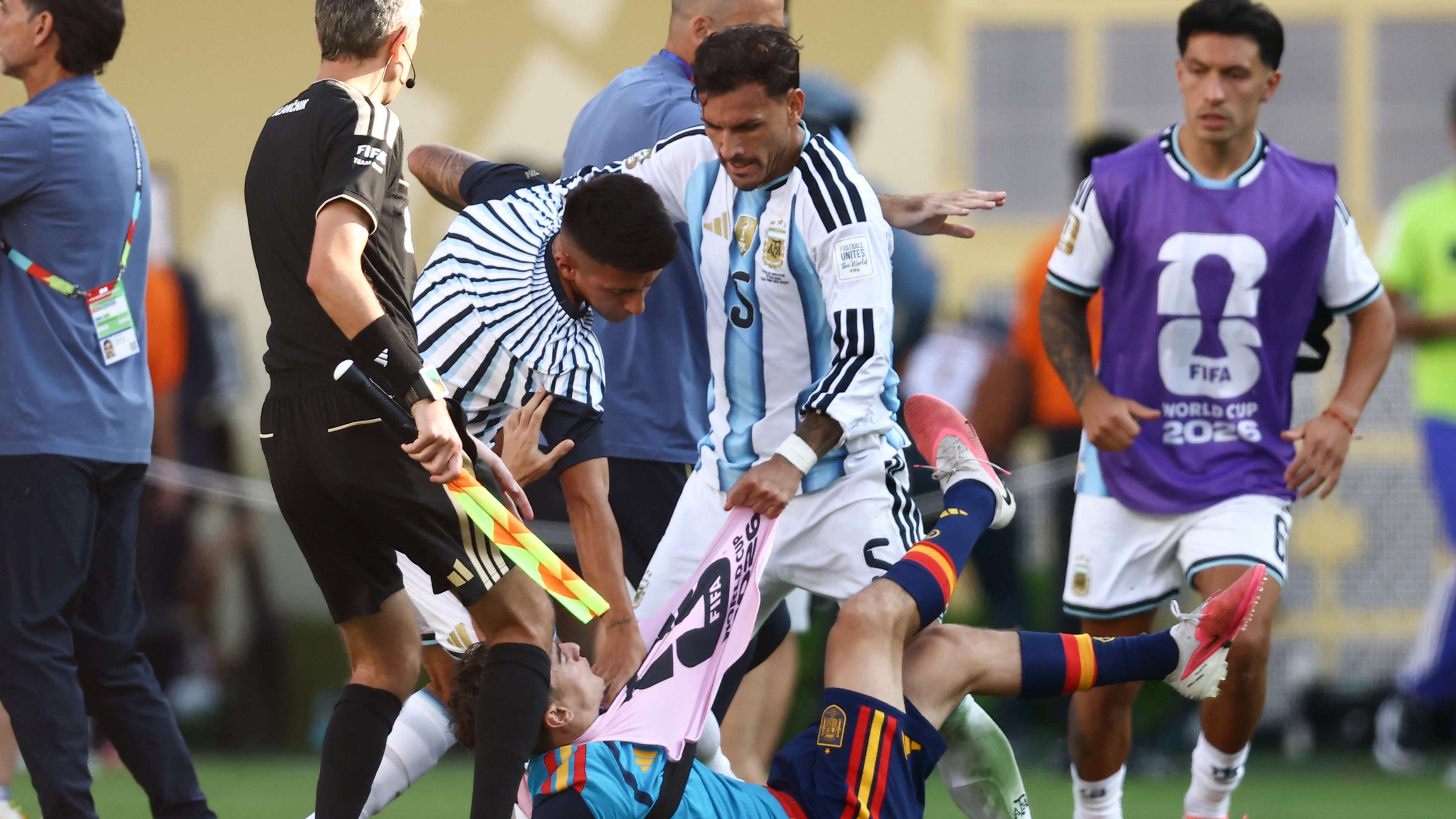
The disciplinary case concerns discriminatory chants heard during several Argentina matches at the 2026 World Cup, including the final against Spain. Spain won that match 1–0 to claim the title. FIFA’s proceedings covered incidents reported across Argentina’s games against Cape Verde, Egypt, Switzerland, England and Spain.
FIFA’s Disciplinary Committee imposed a $321,000 fine on the Argentine Football Association and ordered restrictions on crowd attendance at national-team matches. The measures were issued under provisions of FIFA’s disciplinary code. The player and staff suspensions formed part of the broader response to the incidents, making the case more than an individual dispute between the federation and the governing body.
For supporters, the attendance restrictions are especially important. They can affect the atmosphere at upcoming Argentina fixtures and place additional responsibility on the federation to demonstrate that it is addressing discriminatory conduct. The issue also highlights the challenge football authorities face in balancing disciplinary consequences with efforts to prevent repeat incidents in stadiums.
Suspensions Can Apply Across Friendlies and Official Fixtures
One detail that may influence how the sanctions play out is FIFA’s earlier decision on how Argentina could serve the suspensions. In August, FIFA approved the federation’s request for the bans to count across both friendly matches and official fixtures played under the South American Football Confederation, or CONMEBOL, whichever came first.
That arrangement gives Argentina greater flexibility than a system limited to competitive matches. A player could serve a suspension during a friendly before an important tournament fixture, depending on the team’s schedule. It may help the coaching staff manage availability, but it does not reduce the total number of matches a sanctioned player must miss.
For Argentina’s football planning, the difference between Molina’s four-match ban and Paredes’ 10-match suspension could be considerable. Both players may be unavailable for multiple fixtures, but Paredes’ longer punishment presents a more prolonged selection challenge. The team’s coaches will need to consider squad depth, midfield balance and the timing of forthcoming matches while the legal process continues.
Timing Adds to the Wider FIFA Disciplinary Debate
The Argentina case is unfolding as CAS examines a separate controversy involving the 2025 Africa Cup of Nations final between Morocco and Senegal. A final decision in that matter is expected by the end of November, according to the information available. Although the disputes concern different competitions and circumstances, the timing places renewed attention on how major football controversies are handled through appeals and arbitration.
That does not mean the two cases will produce the same outcome. Each dispute depends on its own facts, regulations and submissions. Still, the proceedings illustrate the role CAS can play when associations believe that a governing body’s disciplinary decision should be reconsidered.
What Happens Next for Argentina?
The immediate next step is for the Argentine Football Association to obtain FIFA’s full reasoning. Only then can it determine whether to pursue the matter at CAS and which elements of the decision to challenge. Molina’s reduced penalty is already a concrete change, but Paredes’ suspension and the wider sanctions remain in place unless further proceedings alter them.
For now, Argentina must prepare for the sporting consequences while weighing its legal options. Any prediction about the final outcome should be treated cautiously: CAS will assess the case on its merits, and the federation has not yet completed the process of deciding how to proceed. The dispute is therefore still open, with the next ruling potentially shaping both the players’ availability and the association’s response to FIFA’s disciplinary measures.