
Naman Dhir Emerges as a Flexible Cricket All-Rounder in India’s Plans
Naman Dhir’s call-up for India’s ODI series against the West Indies may have looked like a surprise, but it addressed a clear need. The team management and selectors were searching for another player who could bat in the lower order and contribute several overs of finger spin—a combination Washington Sundar has provided when available.
Washington’s career has been repeatedly interrupted by injuries. Since making his international debut in 2017, he has played only 34 ODIs, leaving India with reason to explore alternatives. Dhir, a batting all-rounder with experience across formats, was identified as a possible option. His selection was less about replacing an established player outright and more about giving the team another choice for a demanding role.
A role built around balance
India’s preferred profile for the position is specific: a batter capable of operating at No. 7 or 8 who can also bowl around five or six overs of spin. That flexibility can help the side maintain batting depth without sacrificing bowling options. It also gives the captain room to adjust the attack according to the pitch, match situation and opposition.
Dhir has featured in all six matches of the West Indies series so far—three ODIs and three T20Is. His opportunities with the bat have been limited, but he has shown glimpses of his potential. In the third ODI in New Chandigarh, he scored 30 from 21 deliveries, offering a brisk contribution in the lower order. His bowling returns in the ODI series were modest: he took one wicket across the three games, while also completing useful spells.
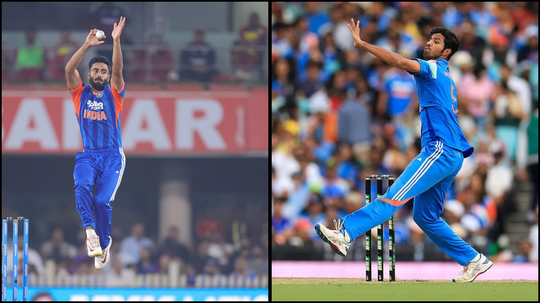
His impact became more noticeable in the T20Is. Dhir claimed three wickets in the opening match in Lucknow, which India won comfortably. He had a tougher outing in Ranchi, conceding 25 runs in two overs, but responded in the third match in Indore. His two wickets for 39 runs helped India defend a total of 223, a performance that drew praise from captain Shreyas Iyer.
“A special player,” Iyer said after the Indore match, highlighting Dhir’s willingness to bowl in a crucial phase. He noted that Dhir recognised the ball was turning and made the most of the conditions. For a player still establishing himself at international level, the ability to read a game and accept responsibility can be as valuable as the figures on the scorecard.
Backing from teammates and coaches
Abhishek Sharma, who has known Dhir since their junior cricket days, also spoke positively about his bowling potential. He said Dhir had the ability to bowl well and suggested that clear plans could help him manage pressure. During the Indore innings, Dhir was hit for two sixes in succession, but he continued to back his off-spin and adjusted his approach. Sharma felt that the experience could help him improve in future matches.
That support matters because Dhir is still learning how to balance his responsibilities at the highest level. International cricket offers little margin for error, particularly in T20s, where one expensive over can quickly change a match. Dhir’s response after being attacked showed composure, while his wickets demonstrated that he can still influence a contest even when the opposition takes risks against him.
His bowling credentials may not have been obvious to viewers of the Indian Premier League. Dhir did not bowl for Mumbai Indians in the previous season, where the Impact Player rule often allows teams to bring in a specialist bowler without requiring a batting all-rounder to complete a full role. But his lack of IPL overs should not be taken as evidence that he is an occasional bowler. He has regularly bowled in first-class, List A and T20 cricket.
Before joining the national squad in Thiruvananthapuram for the first ODI, Dhir spent nearly a week training with Mumbai Indians at Reliance Corporate Park in Navi Mumbai. Team officials said he worked on both his batting and bowling. That preparation gave him a chance to sharpen his skills before stepping into an international environment where his role was expected to be flexible.
Dhir explains his responsibilities
Dhir has described himself as a batting all-rounder and acknowledged that he was disappointed not to make more of his batting opportunity in Indore. He also stressed that bowling has been part of his cricket for years, despite the limited chances he receives in the IPL.
“I have been bowling ever since I started playing cricket, and I really enjoy it,” he said after the match. Dhir added that the coaches and captain had asked him to bat at No. 6 or 7 depending on the situation, while his bowling responsibility was to deliver two or three overs when required. That clarity could help him settle into a role that is likely to change from match to match.
His comments also underline the difference between a defined position and a flexible assignment. Dhir may not be expected to bowl a fixed number of overs in every game or bat at the same spot each time. Instead, India can use him according to conditions: as an extra batting option when the top order is exposed, or as a spin choice when the pitch offers assistance.
Where he fits in India’s World Cup prediction
Dhir’s longer-term place in India’s ODI plans remains uncertain. With the next World Cup scheduled to be played in South Africa, team balance will be shaped by conditions and the combination of pace and spin the selectors want. India could choose one specialist finger-spinning all-rounder—such as Axar Patel or Ravindra Jadeja—alongside wrist-spinner Kuldeep Yadav.
There are other contenders, too. Head coach Gautam Gambhir has indicated that India may consider playing seam-bowling all-rounders Hardik Pandya and Nitish Reddy together. Harshit Rana is another option in the wider mix, while Washington Sundar remains a natural candidate for the spin-bowling all-rounder role if he is fit and available. At present, Washington is likely to remain ahead of Dhir in the selection pecking order.
Any prediction about Dhir’s World Cup prospects would therefore be premature. His selection does, however, show that India are assessing more than one solution for the lower-order all-rounder position. Competition for places can benefit the team by creating depth and ensuring that injuries or changing conditions do not leave the selectors short of options.
For Dhir, the immediate task is to turn promising moments into consistent contributions. His 30 in the third ODI, three wickets in Lucknow and match-shaping spell in Indore have offered evidence of what he can bring. He has not yet established himself as an automatic choice, but his willingness to bowl under pressure and adapt his batting role has kept him in the conversation. In a team searching for balance, that versatility could prove to be his strongest asset.