
VAR Controversy Overshadows Real Madrid’s 3-0 Win Over Racing Santander
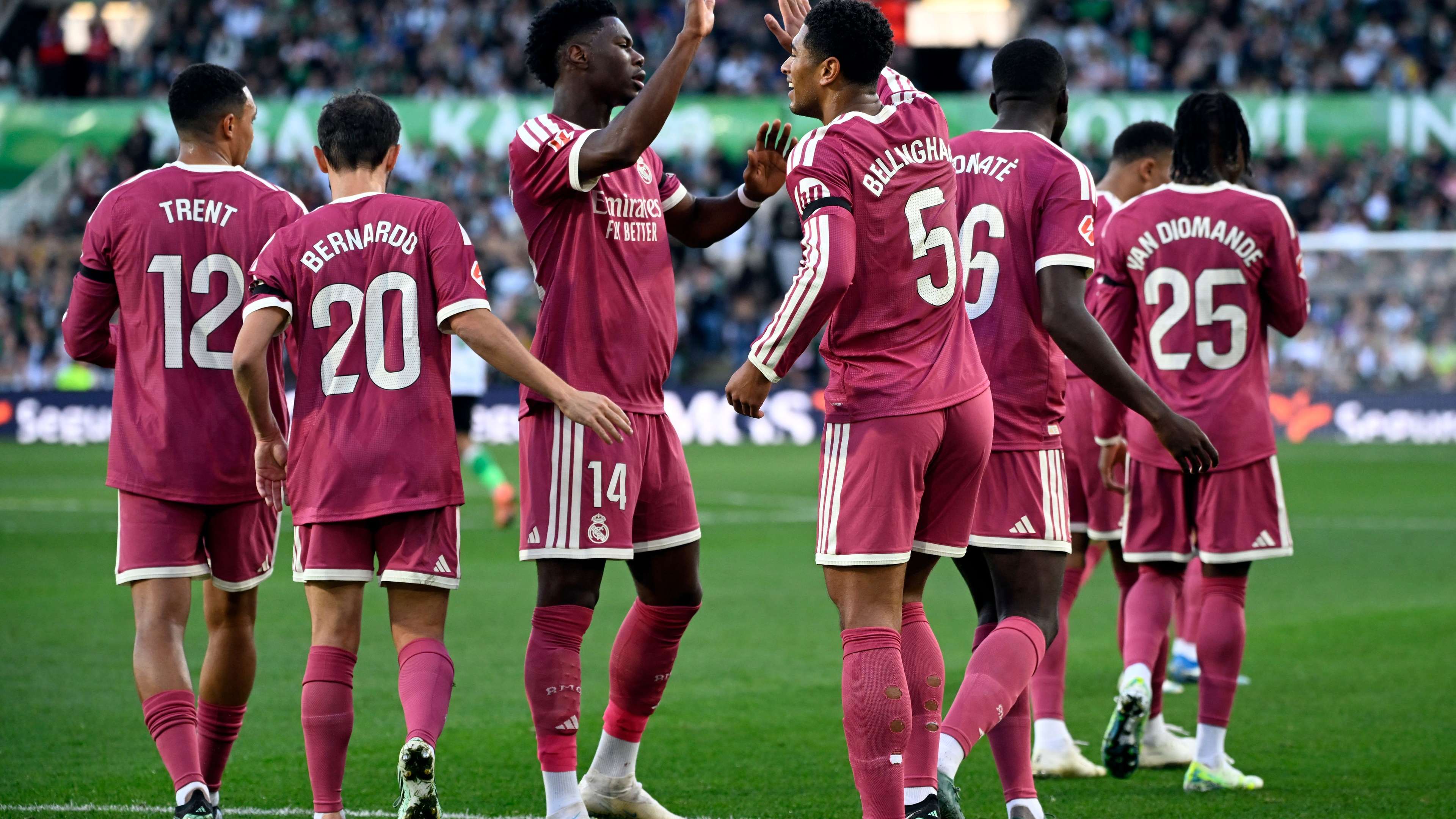
Real Madrid earned a convincing 3-0 victory over Racing Santander in the 11th round of the Spanish league, but the result was accompanied by a heated debate over two penalty decisions. The biggest flashpoint came in the 71st minute, when referee José Luis Munuera Montero overturned a penalty awarded to the hosts after reviewing a possible handball by Aurélien Tchouaméni.
The decision sparked loud protests at El Sardinero and renewed discussion about how football’s handball rules are applied. Earlier in the match, Kylian Mbappé had converted a penalty for Real Madrid after a challenge involving Racing defender Mateo Prati. That call had already angered the home crowd, making the later VAR review an especially tense moment.
Two Penalty Calls, Two Very Different Outcomes
Real Madrid’s opener arrived in the 11th minute. Munuera Montero judged that Prati had fouled Mbappé during a tussle in the penalty area and pointed to the spot. Mbappé stepped up and scored, giving the visitors an early advantage and setting off a wave of objections from Racing supporters.
Racing’s own penalty appeal came after the break. In the 71st minute, the referee initially awarded the hosts a spot-kick after his assistant alerted him to a possible handball by Tchouaméni inside the area. But the decision did not stand. The VAR team, led by Luis Mario Milla, recommended an on-field review, asking the referee to take another look at the incident.
As he walked toward the pitchside monitor, Munuera Montero told Racing coach José Alberto that he would assess the footage himself. He then asked the video officials to clarify how the ball had reached Tchouaméni’s hand, a key detail in determining whether the contact amounted to an offence.
Why the Referee Cancelled Racing’s Penalty
During the review, Munuera Montero focused on whether another player had touched the ball before it struck Tchouaméni. The VAR team confirmed that no Racing player had intervened. The footage showed Tchouaméni deliberately playing the ball himself before it rebounded onto his hand.
After requesting a clearer angle, improved lighting and a longer replay, the referee concluded that the hand contact followed Tchouaméni’s own action. He therefore reversed his original decision and cancelled the penalty. The call was met with furious reactions from the stands, where the protests grew so intense that a lighter was thrown onto the pitch.
The ruling reflects an important distinction in football’s handball guidance: contact between the ball and a player’s hand is not automatically a penalty. Referees must consider how the ball arrived, whether the player deliberately played it, the position of the arm and whether the movement made the body unnaturally bigger. In this case, the referee’s interpretation was that Tchouaméni’s touch came from his own deliberate play and the subsequent contact was not a punishable handball.
Why VAR’s Role Is Still Being Debated
The episode also highlights the fine line between VAR correcting a clear mistake and leaving a subjective decision to the referee’s judgment. The technology does not make the final call; it provides the referee with additional footage and recommends a review when it believes an important decision may need reconsideration. Munuera Montero remained responsible for interpreting the incident and deciding whether the penalty should stand.
For supporters, the contrasting calls were difficult to accept. Racing fans had already seen Mbappé score from the first penalty, then watched their own side lose a spot-kick after a lengthy review. The two incidents were not identical, however: the first involved a challenge on an attacker, while the second hinged on the sequence of touches and the interpretation of handball rules.
That difference is precisely why such decisions often produce debate. Slow-motion footage can clarify the order of events, but it does not always remove uncertainty about intent, arm position or whether a player had time to react. Even when officials follow the review process correctly, supporters may disagree with the final judgment.
Real Madrid Take the Points as Racing Focus on the Decision
Despite the controversy, Real Madrid completed a clean 3-0 win. The result strengthened the visitors’ position in the league and gave them a positive platform ahead of their next fixtures. Racing, meanwhile, were left to reflect on a frustrating afternoon in which the penalty reversal became the defining talking point.
For Madrid, the match offered more than three points: it also provided another example of Mbappé’s influence from the penalty spot and the team’s ability to manage a hostile away atmosphere. For Racing, the challenge will be to move beyond the officiating dispute and turn their attention to the next league assignment.
What the Controversy Means for the Next Matchday
Looking ahead, both clubs will need to refocus quickly. Real Madrid’s upcoming schedule includes a Champions League fixture against AEK on November 5, 2026, followed by a LaLiga meeting with Málaga on November 7. Those matches will test the squad’s depth and ability to maintain momentum across competitions.
Racing’s immediate priority will be to respond on the pitch, particularly after a result in which the crowd’s frustration overshadowed much of the football. Their performance and reaction in the next round may offer a clearer measure of whether the incident becomes a lasting distraction or simply a contentious moment in a long season.
Any football prediction for the teams’ next outings should account for more than this single refereeing controversy. Form, injuries, fixture congestion and home advantage will all matter. Still, the match at El Sardinero is likely to remain a reference point in discussions about VAR, handball interpretations and the pressure officials face when making decisive calls in front of an angry crowd.