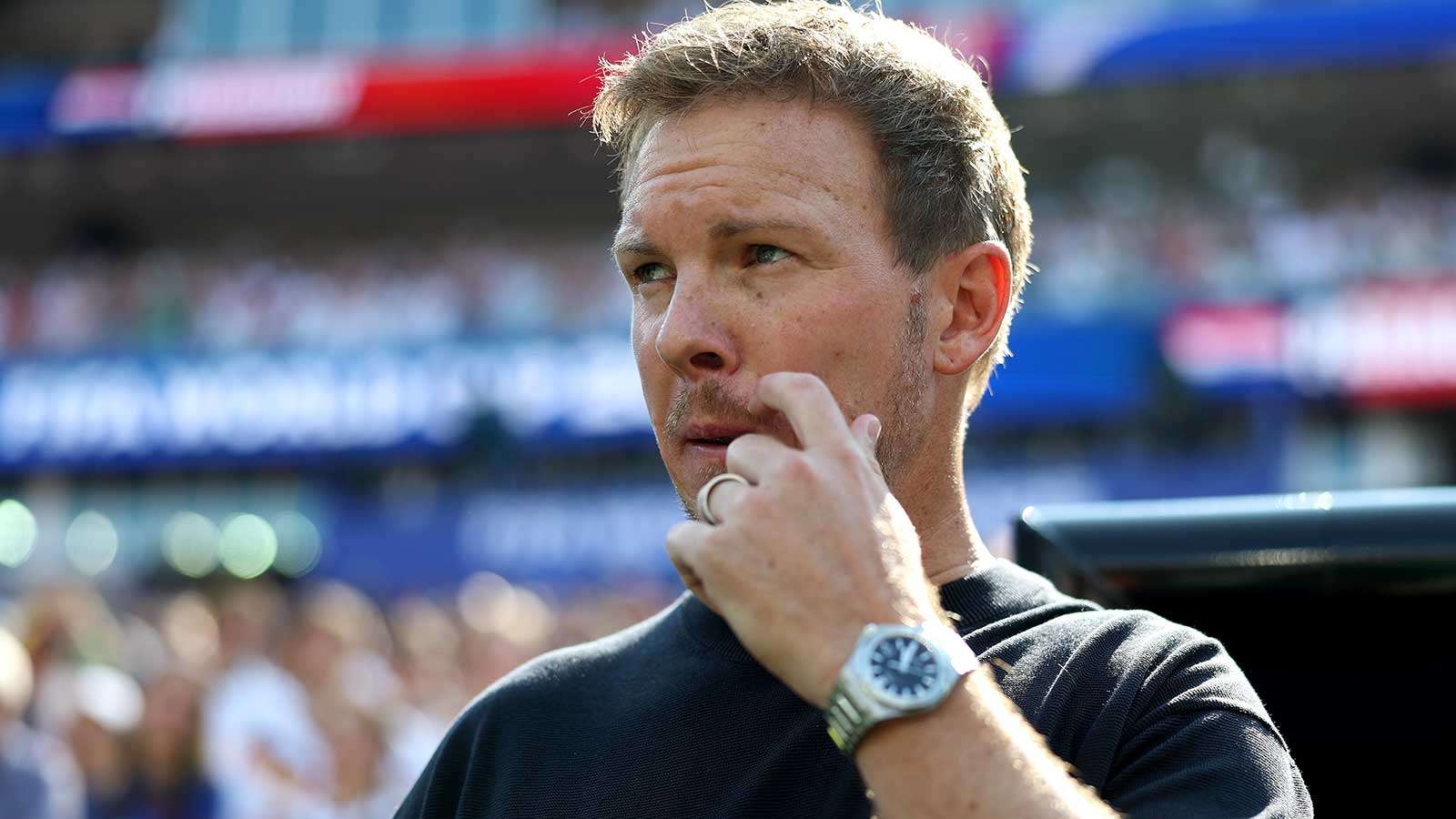

Lennart Karl’s Celebration Steals the Spotlight After Bayern Munich Beat Atlético Madrid
Lennart Karl answered the noise around his name in the most visible way possible: by scoring. The Bayern Munich teenager opened the scoring in a 2-0 away victory over Atlético Madrid, then cupped his hands to his ears and mimed talking, appearing to tell his critics that he was no longer listening.
The goal, scored in the 54th minute, was a major moment in a composed Bayern performance. But Karl’s celebration quickly became a talking point of its own, renewing debate about the 18-year-old’s public image, his response to criticism and the expectations placed on young footballers at one of Europe’s biggest clubs.
What did Lennart Karl’s celebration mean?
After celebrating with his teammates, Karl turned toward the stands and made the “blah-blah” gesture. He did not explain its meaning after the match, leaving supporters and commentators to speculate about whether it was aimed at recent media coverage, criticism from within Bayern or simply intended as a playful response to the attention surrounding him.
The moment was not entirely out of character. Karl has used several expressive celebrations in recent months, and their meaning has often been unclear. After scoring against Mainz and Sporting Lisbon late last year, he brought his fingertips together before placing a finger to his lips. In another match, he made a “calm down” gesture associated with Cristiano Ronaldo, crossed his arms in a pose reminiscent of Kylian Mbappé and later pointed toward Bayern’s substitutes’ bench before tapping his wrist as if checking a watch.
Those gestures have prompted questions about whether Karl is sending messages to particular people. Bayern manager Vincent Kompany once joked that the watch gesture might have been aimed at the young players on the bench, suggesting they needed to buy a watch. The explanation was light-hearted, but the recurring attention shows how closely fans and media are watching the teenager’s every move.
Uli Hoeneß’s comments fuel the discussion
Karl’s latest celebration came amid a growing public discussion about his attitude and development. Bayern honorary president Uli Hoeneß recently said he wanted to have a serious conversation with the young attacker. Hoeneß cautioned against treating Karl as a superstar too soon and argued that comparisons with established players, including Bayern teammate Michael Olise, could be unhelpful.
His broader point was that young players need humility as well as encouragement. In Hoeneß’s view, constant praise and protection may not prepare a prospect for the demands of elite football. Reports have also suggested that some people around Bayern are uneasy about what has been described as Karl’s glamorous lifestyle, although such claims should be treated as media characterisations rather than established facts.
The scrutiny has intensified during a recent dip in Karl’s form. That kind of uneven spell is common for an emerging player, particularly one adapting to senior football and the pressure of competing for minutes at Bayern. His goal against Atlético offered a timely reminder of his attacking ability and could mark an important step in regaining momentum.
Michael Ballack and Max Eberl disagree over the public debate
Karl’s adviser, former Germany captain Michael Ballack, has defended his client while also questioning how Bayern’s leaders have handled the situation. Ballack said Hoeneß was entitled to criticise Karl’s public image, but argued that making those comments publicly risked turning the teenager into a target.
Ballack also took issue with sporting director Max Eberl’s description of Karl as being in a dip in form. He questioned the timing and substance of that assessment, particularly as the player’s performances appeared to be improving. The exchange added another layer to a story that has moved beyond Karl’s football and into a wider disagreement about how a high-profile young talent should be managed.
Eberl, in turn, questioned whether Ballack had spoken as a television pundit or as Karl’s representative. He said he found it difficult when disagreements were conducted through the media. On Karl’s development, Eberl maintained that a temporary downturn was expected and stressed that the player was moving in the right direction.
Mats Hummels criticises the message, while teammates back Karl
Not everyone welcomed Karl’s response to the criticism. Former Germany defender Mats Hummels, speaking as a television pundit, said such gestures had become too common. He argued that criticism is an unavoidable part of professional football and comes with the visibility and rewards of the game.
Hummels also raised concerns about the influence celebrations can have on children. He said his eight-year-old son had seen young players copy similar gestures and that he had told him not to imitate them. Even so, Hummels acknowledged the strength of Karl’s performance and described the goal as an impressive response.
Bayern captain Manuel Neuer took a more relaxed view, saying there was nothing to turn into an issue. He described Karl as an important member of the group and said the team was pleased to see him deliver. Konrad Laimer, who scored Bayern’s second goal in the 74th minute, also praised the teenager’s work rate. He highlighted Karl’s effort to track back, win possession and then finish the move—an example of the all-round contribution coaches value, beyond the goal itself.
What the Atlético goal means for Karl’s season
Karl’s path has not been completely smooth. After missing the World Cup because of a serious thigh muscle injury sustained shortly before the tournament, he faced the challenge of returning to form and finding his rhythm. His recent improvement suggests he is beginning to settle again, and scoring in a significant European fixture will strengthen his confidence.
For Bayern, the key question is not whether Karl should celebrate boldly or quietly. It is whether he can keep converting promise into consistent performances while learning to manage attention that few players his age experience. A single goal cannot settle every debate, but his contribution in Madrid gave Bayern a valuable result and gave Karl a compelling moment on the pitch.
Laimer predicted that Karl had a big career ahead of him, while also noting that he still has lessons to learn. That balance may be the most useful perspective: protect the talent, demand hard work and allow the teenager room to mature. As for the next celebration, Laimer’s own simple, arms-outstretched pose might be a less controversial model. But in football, prediction is never straightforward—and Karl’s next response will likely be judged as closely as his next goal.